Gone are the tight schedules of short-distance commutes. On Thursday, BlaBlaCar officially launched BlaBlaCar Zen, a new carpooling app designed for short and medium trips. The service is more expensive than regular long-distance trips, but offers flexibility that cannot be found on traditional platforms.
This app targets the often overlooked gray areas of travel. We are talking about distances 30-100 km. This can be as simple as buying groceries, taking the train to the next town or a short run to the beach. Historically, these journeys have been underrepresented on the platform. This is not because there is no demand, but because it is too difficult to lock down a specific time.
“It’s hard to plan,” BlaBlaCar CEO Nicolas Brusson admitted in an interview with AFP.
This friction makes ad hoc ridesharing less viable over these short distances. Until now.
How BlaBlaCar Zen actually works
The essence of innovation is in the scheduling mechanism. With BlaBlaCar Zen, both drivers and passengers input their intended journeys using flexible time slots instead of strictly set start times.
The algorithm then runs in the background. Find compatible drivers and send them ride sharing suggestions. Importantly, the system prioritizes drivers who need the least detours. It’s not just about finding “one” vehicle. The most important thing is to find a route that least obstructs the driver’s path, which increases his motivation to participate.
This approach solves the question “When do I leave?” bottleneck. You don’t have to change your plan minute by minute. You just need overlapping free times.
Where can I find it now?
This app will not be released worldwide overnight. Beta testing is ongoing in some areas such as around Golfe du Morbihan and Grenoble. These tests are designed to stress test flexible logic under realistic conditions.
Starting this Thursday (December 6 ), the service will be expanded to 10 new regions in France. If you are in one of these areas, you can start using the app right away. This release includes:
- The Côte de Nacre region in Normandy
- Pays Nantais area
- Côte landaise
- Medoc
- Basque country
- Hérault
- Western Provence
The strategy here is clear. BlaBlaCar is changing from its role as a long-distance intercity connector to an everyday mobility tool. The increased costs reflect a focus on convenience and algorithms to minimize driver detours.
It remains to be seen whether higher prices will curb the occasional commute or whether convenience will take priority. Although the experiment was started in these French regions, this logic applies to any region where time is more valuable than a few euros.
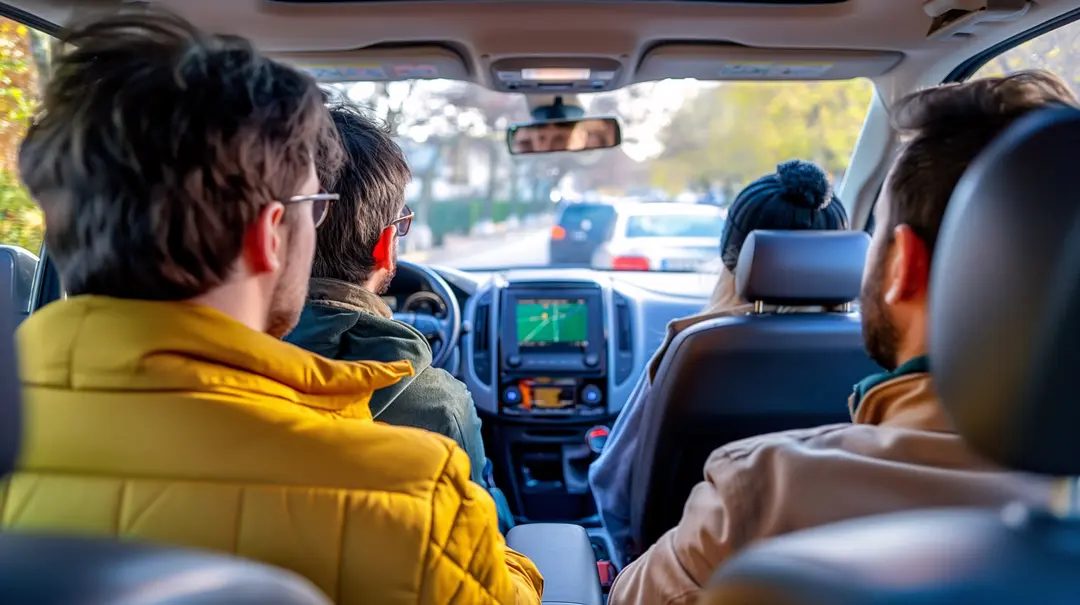
The calculation changes as the distance decreases. To convince drivers to take detours to pick up passengers, prices must be sweeter than what you’d pay on a cross-country run. Costs increase for passengers who reserve all available seats in advance. But the ceiling is hard. Prices must not exceed the rate per kilometermeter of business expenses officially confirmed by the French government. The upper limit is therefore approximately EUR 0.60 per kilometer. The trip from Vannes to Quiberon takes about an hour and costs about 35 euros.
Short leg tracking frequency
Strategy is slow. Increase the frequency if your legs are short. Turn distance contracts into a door-to-door service model.
“The idea is to increase the frequency of trips and offer another meeting time: door-to-door service.”
— Nicolas Brusson, CEO of BlaBlaCar
This method looks for miles that did not previously exist on the platform. This encourages existing users to open the app more often. BlaBlaCar has already tried short-distance transportation. Only suitable for a business trip. The trips are co-financed by employers and municipalities. Zen removes corporate subsidies.
Taxi problems
Will Zen disrupt VTC and taxi drivers who are already at war with ride-hailing apps?
Brusson doesn’t see a head-on collision. Not yet. This service comes primarily from SNCF stations. Target low density areas. You will be left out and stuck in public transport. A place where there are no taxis.
The last kilometer is a problem. Commuters get off the train. The bus won’t come. The taxi stand is empty. Zen bridges this gap. We are not trying to replace airport operations. When the infrastructure fails, it tries to get you from the dock to your front door.
Does it work? The drivers need the boost. The passengers need the convenience. Regulatory authorities must pay attention to price structures. If the EUR 0.60 limit remains unchanged, we will stick to the cost sharing model. If you change it, it becomes a commercial service. The lines are very thin.
Right now we are focusing on density. Or lack thereof. Rural stations. Suburban hubs. The map shows where there is a long open space between the train station and the nearest city center. The seats are full here. This is why the new metrics are so important. Not total mileage. Just the ones that matter for getting home.