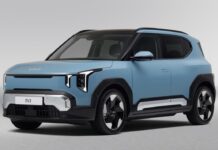
For decades, Volkswagen and Toyota have been the dominant forces in the global automotive industry. But a seismic shift is underway, with Chinese automakers rapidly gaining ground and poised to reshape the landscape within the next five years. Analysts now predict Chinese companies could control one-third of the global car market – not just as a temporary disruption, but as a permanent realignment of power.
The Rise of Chinese Automakers: A Calculated Strategy
The surge isn’t accidental. Chinese manufacturers have strategically invested in three key areas: electric vehicles (EVs), vertical integration, and aggressive supply chain development. This has given them a significant cost advantage while enabling rapid scalability and responsiveness to market changes. The result? They’re outperforming established players in key areas.
UBS analysts report that foreign markets now account for around 20% of Chinese carmakers’ industry sales, rising to 50% of their profits in some cases. Despite headwinds like European EV adoption slowdowns and protectionist tariffs, the expansion remains on track.
Why This Matters: A Shift in Global Power Dynamics
The auto industry is not just about cars; it’s a bellwether of broader economic trends. China’s ascent reflects its growing manufacturing prowess and its ability to dominate emerging technologies. This isn’t simply about cheaper cars; it’s about controlling a vital supply chain and establishing a new standard for efficiency.
The Numbers: A Dramatic Forecast
Currently, Volkswagen and Toyota collectively hold 81% of the market share in key segments. By 2030, that figure could plummet to just 58%, according to UBS forecasts. Meanwhile, Tesla’s global share is expected to grow from around 2% to 8% during the same period. The gap is closing, and quickly.
Expansion Through Localization: Building a Global Footprint
Chinese automakers aren’t relying solely on exports. They are establishing localized production facilities to bypass trade barriers and gain access to new markets.
- Thailand: SAIC Motor, Great Wall, BYD, GAC, Changan Automobile, and Chery all operate assembly plants.
- Brazil: Great Wall and BYD have established manufacturing operations.
- Europe: BYD is developing a large-scale facility in Hungary to support its growing presence.
India: A New Battleground
India represents another crucial market. While domestic players like Tata and Mahindra are gaining ground, they face competition from Chinese-owned MG Motor and BYD, which are actively expanding their presence. However, the advantage remains with China, as Ramakrishnan points out: “The EV supply chain is dominated by Chinese companies… The India EV supply chain, including electronics, is imported from China.”
Consolidation on the Horizon: Fewer Players, Higher Stakes
Frank Diana, a managing partner at Tata Consultancy Services, predicts that the EV market will consolidate. The early lead held by China positions it favorably as the industry matures, with just 10 to 15 major players dominating the future landscape. This means fewer choices for consumers, but greater efficiency and control for the companies that survive.
The bottom line: The global automotive industry is undergoing a fundamental shift. China’s strategic investments and rapid learning curve have positioned it to become a dominant force. The era of VW and Toyota’s unchallenged leadership is fading; the future belongs to those who can adapt, scale, and control the EV supply chain.