BMW is poised to redefine its electric vehicle lineup with the 2027 i3, a mid-size sedan built on a completely new platform. This isn’t simply another EV; it marks the revival of BMW’s “Neue Klasse” designation, historically used for models that saved the company in the 1960s. While the stakes aren’t quite as high this time, the i3’s success is critical for BMW’s electric future.
A Fresh Start: Not Your Grandfather’s i3
The name “i3” might evoke memories of BMW’s earlier, quirky city EV, but this new iteration is fundamentally different. It’s positioned as the electric equivalent to the gas-powered 3-series, aligning with the i5 (5-series equivalent) and i7 (7-series equivalent). The new i3 is larger than the current 3-series – 1.6 inches longer, 1.5 inches wider, and 1.6 inches taller, with a nearly 2-inch longer wheelbase.
Revolutionary Tech Under the Hood
Unlike the i5 and i7, the i3 doesn’t share a platform with its gasoline counterpart. Instead, it leverages the same advanced architecture as the iX3 SUV, boasting an 800-volt electrical system capable of accepting up to 400 kW charging speeds (though public infrastructure lags behind). It includes a standard NACS port with CCS compatibility via adapter, and supports up to 15.4-kW AC charging.
The i3’s 109 kWh battery pack isn’t just large; it’s structurally integrated into the car and features cells 20% more energy dense than BMW’s existing EVs. This translates to an estimated range of around 440 miles based on EPA testing.
The top-spec i3 50 xDrive model delivers 463 horsepower and 476 pound-feet of torque. Powering all this is a new computing system with four “supercomputers,” offering 20 times the processing power of previous models while reducing weight and complexity.
Inside the Future BMW
The i3’s interior is a dramatic departure from traditional BMW designs. The most striking feature is the Panoramic iDrive, a shallow screen spanning the dashboard. It divides into customizable sections, including a driver-facing cluster for speed and other key data. A nearly 18-inch parallelogram-shaped center touchscreen puts essential functions within easy reach.
The steering wheel design is equally unconventional, featuring spokes only at the top and bottom of the wheel. A traditional M Sport option with 4- and 8-o’clock spokes is available for those who prefer it.
Classic Design, Modern Execution
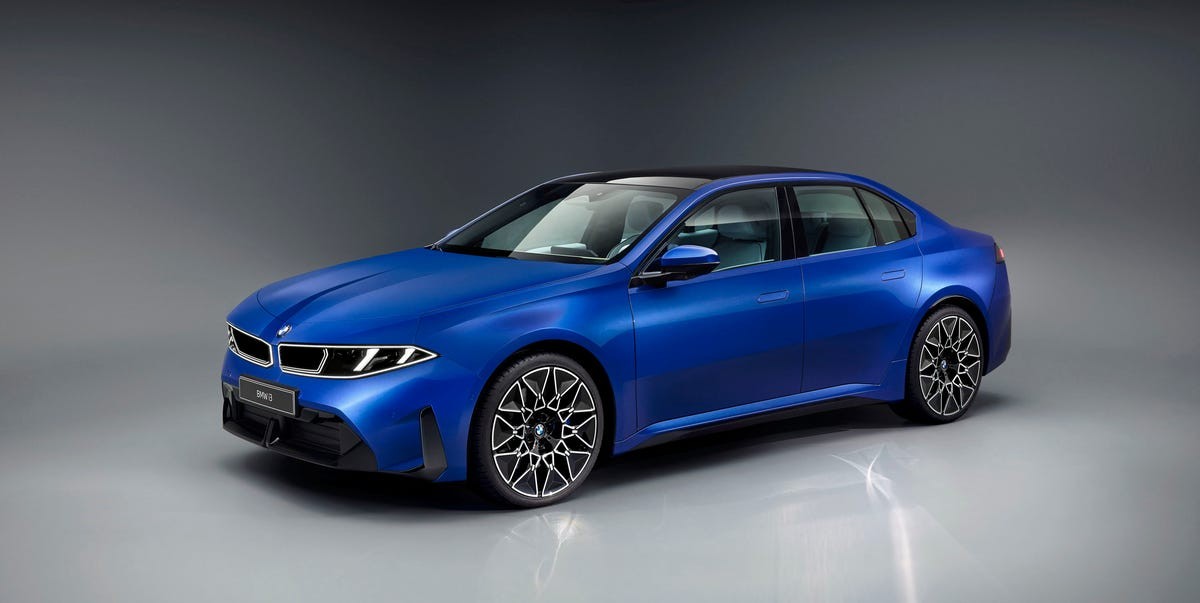
The exterior maintains familiar BMW cues – twin kidney grilles (illuminated) and four-element headlights. However, the headlights now have a distinctive sideways checkmark shape, and the front fascia slopes at a 6-degree angle, echoing the iconic “shark-nose” designs of the 1970s and 80s. BMW’s design chief, Anders Warming, calls this the “start of a new form language for the entire brand.”
A Core Model Reimagined
For decades, the 3-series has been the backbone of BMW’s lineup. Now, the company is positioning the Neue Klasse cars – including the i3 – as “the new heart of the BMW brand.” The i3 will go on sale later this year, though official pricing remains undisclosed.
The 2027 BMW i3 represents more than just another electric car; it’s a fundamental shift in BMW’s design, technology, and strategic direction. The revival of the Neue Klasse signifies the brand’s commitment to leading the EV revolution, not just participating in it.