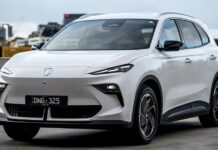
BYD, the leading global producer of electric vehicles (EVs), has unveiled its next-generation Blade Battery and a revolutionary flash charging system designed to reshape the EV landscape. The core advancement lies in dramatically reduced charging times – 10% to 70% in 5 minutes, and 10% to 97% in just 9 minutes. This isn’t just faster; it addresses a major consumer concern holding back wider EV adoption.
Unprecedented Charging Speeds and Cold-Weather Performance
The second-generation Blade Battery doesn’t just charge quickly under ideal conditions. It maintains impressive performance in extreme cold: charging from 20% to 97% takes only 12 minutes at -20°C and -30°C, only slightly slower than at room temperature. This consistency is critical, as battery performance often degrades in cold climates. The new battery also offers a 5% increase in energy density and improved longevity, making it a substantial upgrade over its predecessor. The Denza Z9GT, featuring the new battery, achieves an impressive 1036 km range on a single charge.
Flash Charging Infrastructure: A Unique Expansion Strategy
To support this technology, BYD is deploying a new generation of flash charging stations featuring a compact, waterproof design and an innovative T-shaped charging gun for easier accessibility. Critically, these stations will incorporate an idle fee to prevent overstaying, mimicking the efficiency of traditional gas stations. Each station delivers up to 1500 kW at 1000V, ensuring maximum charging speed regardless of temperature.
However, the most significant aspect of BYD’s rollout is its unconventional approach: “stations-within-stations.” Instead of building a completely new network from scratch, BYD is partnering with existing public charging providers to integrate its flash charging infrastructure into established fast-charging sites.
Mitigating Grid Strain with Energy Storage
High-power charging can strain power grids. BYD’s solution involves on-site energy storage batteries at its flash charging stations. These batteries are charged from existing fast-charging networks, allowing BYD to rapidly deploy its flash charging network without overloading the grid. This approach is described by BYD CEO Wang Chuanfu as being “as simple as installing an air conditioner,” highlighting the ease of integration.
Rapid Deployment: 20,000 Stations by 2026
BYD plans to deploy 20,000 flash charging stations this year, including 18,000 “stations-within-stations.” The company has already installed 4,239 stations in the first two months, with full operational readiness expected soon. By year-end, BYD aims to cover one-third of highway service areas with charging stations, ensuring access every 100 kilometers.
BYD’s strategy isn’t just about technological advancement; it’s about pragmatic infrastructure deployment. By leveraging existing networks, they bypass the costly and time-consuming process of building from the ground up, making ultra-fast charging a reality far sooner than would otherwise be possible.
This partnership model proves mutually beneficial; existing charging networks see increased business volume, making the collaboration highly attractive. The speed of deployment is already evident, with BYD flash charging piles reportedly integrated into TELD stations prior to the official announcement. This demonstrates the efficiency of the “stations-within-stations” approach.
BYD’s new battery and charging system are not merely an incremental improvement; they represent a strategic shift in how EVs are charged. By addressing speed, cold-weather performance, and infrastructure limitations in a single package, BYD is setting a new standard for the industry.