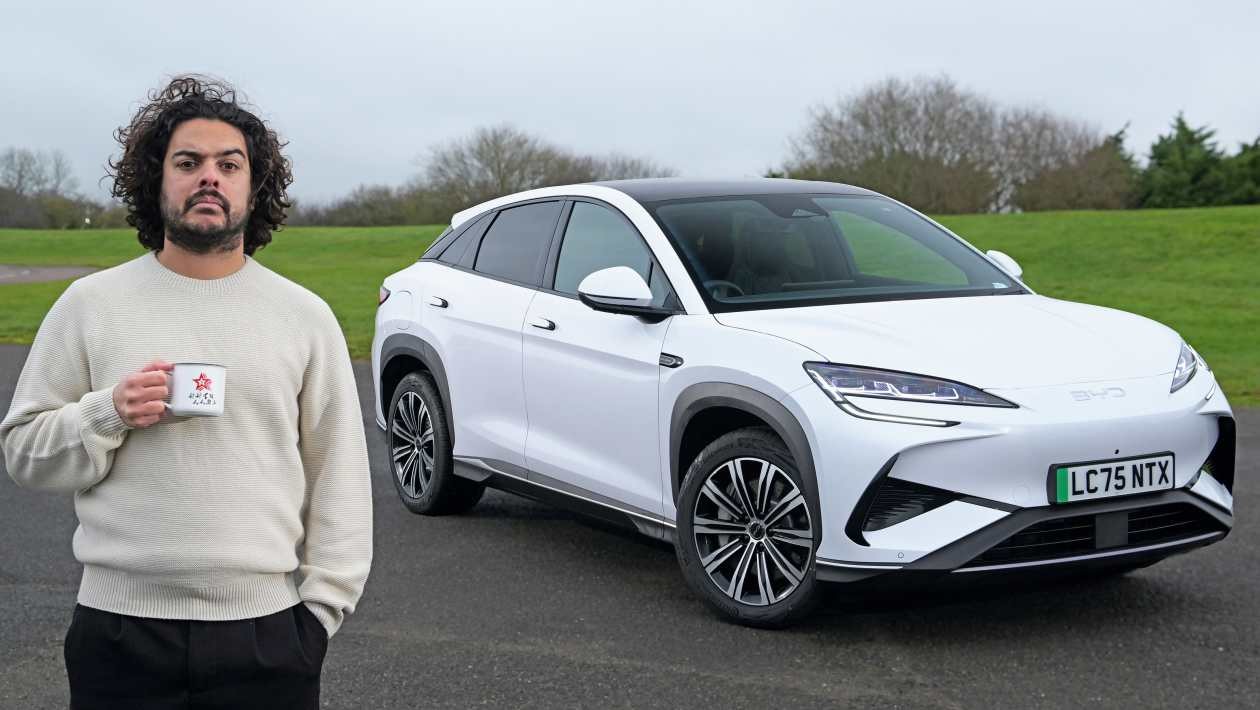
The rise of Chinese automakers is reshaping the global automotive landscape, but can these brands deliver more than just competitive pricing? The BYD Sealion 7, a large electric SUV priced at £47,000, aims to prove that Chinese EVs aren’t simply “products” but genuinely desirable vehicles. This long-term test will determine if it measures up to established rivals like the Volkswagen ID.5 and Skoda Enyaq Coupé.
Initial Impressions: Equipment and Price
The Sealion 7 doesn’t shy away from luxury, packing a 15.4-inch touchscreen, panoramic roof, and heated/cooled seats in the base Comfort trim. However, it omits features common at this price point—adaptive headlights or massaging seats—suggesting a trade-off between features and cost. The £48,100 price tag places it firmly in premium territory, raising expectations accordingly.
Performance and Range: A Mixed Bag
With a single rear motor producing 308bhp, the Sealion 7 achieves a 0-62mph time of 6.7 seconds. Its 82.5kWh battery supports up to 150kW charging, taking around 32 minutes for a 10-80% charge. The claimed range of 300 miles falls short of competitors like the VW ID.5, which offers 45 extra miles on a single charge. The flagship Ultimate trim improves range to 329 miles and charging speeds to 230kW, but still lags behind rivals like the BMW iX3 in peak charging rates.
Interior and Tech: A Balancing Act
The Sealion 7’s interior prioritizes height and visibility, though the sloping roofline creates a somewhat confined rear cabin. The touchscreen is responsive and supports wireless Apple CarPlay, but basic functions are buried in complex menus. A gimmicky rotating screen feature doesn’t add practical value. Early efficiency tests show 2.9 miles per kWh in urban conditions—below BYD’s estimates but respectable considering recent cold weather.
The Larger Question: Soul vs. Specification
The core issue isn’t whether the Sealion 7 is well-equipped, but whether it feels like a thoughtfully designed vehicle or merely a collection of features. The automotive industry is evolving rapidly, and Chinese brands are pushing hard on innovation, but they still have to prove they can match the emotional connection that consumers feel toward established legacy brands.
“The BYD will have to prove it’s worth the ambitious price tag by driving, cosseting and reassuring us to the levels we expect of its legacy-branded rivals that offer very similar, if not even better value.”
This long-term test will assess whether the Sealion 7 can deliver the driving experience, comfort, and reliability needed to compete in the crowded EV market. The initial verdict: 3.5 out of 5 stars. The true test will be whether it earns its premium price tag over the coming months.