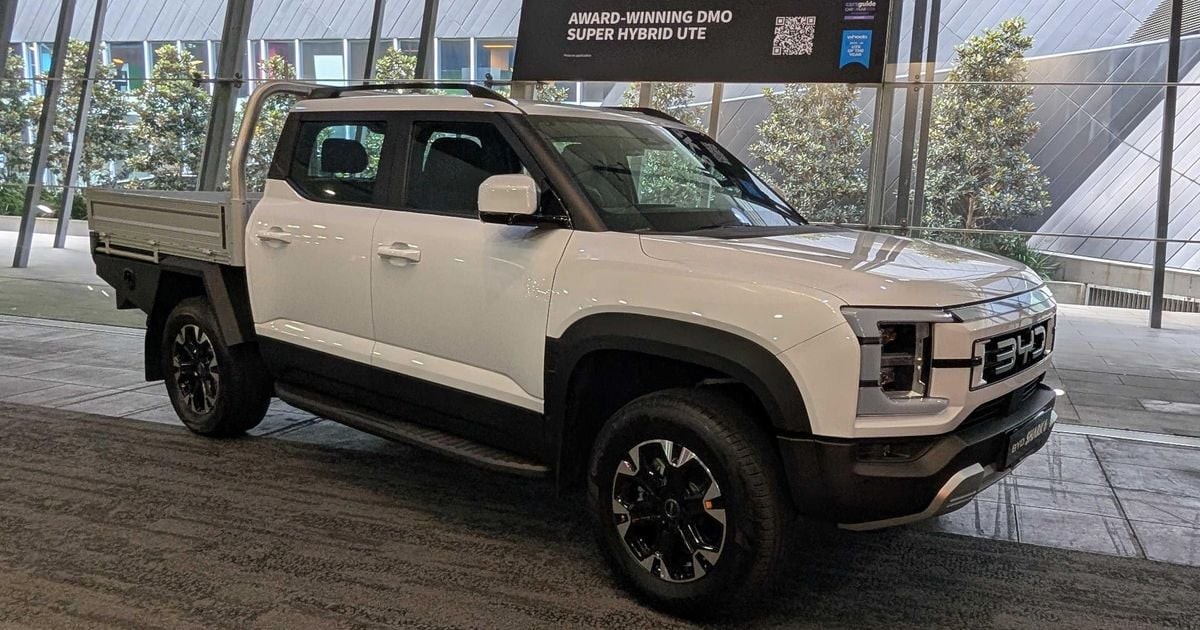
In a strategic pivot driven by local market feedback, BYD has officially launched the Shark 6 cab/chassis in Australia. This new body style was not part of the brand’s initial product roadmap, but its introduction marks a significant attempt by the Chinese manufacturer to capture the commercial and work-focused segment of the Australian ute market.
A Pivot Driven by Consumer Feedback
The decision to develop the cab/chassis version of the Shark 6 was a direct response to “the voices of consumers,” according to Liu Xueliang, BYD’s Asia Pacific head. While the Shark 6 launched in October 2024 as a standard “style-side” pickup, the demand for a more versatile, work-oriented platform became impossible to ignore.
This development is noteworthy because it highlights a shift in how global manufacturers approach regional markets. Rather than enforcing a one-size-fits-all global product, BYD is tailoring its lineup to meet the specific structural requirements of Australian drivers, who traditionally favor cab/chassis models for their ability to carry custom trays or specialized equipment.
Breaking the Diesel Dominance
The Shark 6 is currently carving out a unique niche in a segment traditionally dominated by diesel engines. Despite the transition toward electrification, the ute market remains heavily reliant on traditional powertrains, yet the Shark 6 has already achieved significant commercial success:
- It is currently the fifth most popular ute in Australia.
- It sits behind established giants like the Ford Ranger, Toyota HiLux, Isuzu D-Max, and Mitsubishi Triton.
- It has become BYD’s second-best-selling model in the country.
By offering a Plug-in Hybrid Electric Vehicle (PHEV) powertrain, BYD is challenging the status quo, proving that electrified utility vehicles can compete with diesel veterans if they meet local functional needs.
Competitive Landscape and Technical Constraints
The introduction of the cab/chassis variant addresses a specific technical hurdle. Earlier this year, BYD had to clarify that the standard Shark 6 tub could not be removed due to the PHEV hardware located beneath it. By creating a dedicated cab/chassis model, BYD has bypassed this limitation, offering a platform that is truly “work-ready.”
The Shark 6 Dynamic cab/chassis enters a competitive field with specific advantages and challenges:
- Pricing: At $55,900 (before on-road costs), the cab/chassis is $2,000 cheaper than the standard style-side version.
- Market Uniqueness: It is currently the only cab/chassis PHEV available in Australia. While competitors like the Ford Ranger and GWM Cannon Alpha offer PHEV options, they are limited to fixed-tub configurations.
- The Competition: While the GWM Cannon Alpha PHEV offers a lower starting price ($53,490), the Shark 6’s momentum as a top-selling PHEV suggests strong consumer confidence in the BYD platform.
Looking Ahead
BYD intends to continue expanding the Shark 6 lineup, with a high-performance flagship featuring a more powerful 2.0-litre turbocharged four-cylinder PHEV powertrain expected to follow.
The launch of the Shark 6 cab/chassis demonstrates BYD’s commitment to localizing its product strategy to match the specific utility requirements of the Australian automotive landscape.
In summary, BYD has successfully transitioned from a niche electric player to a mainstream ute contender by listening to Australian consumers and adapting its technology to fit traditional work-truck configurations.