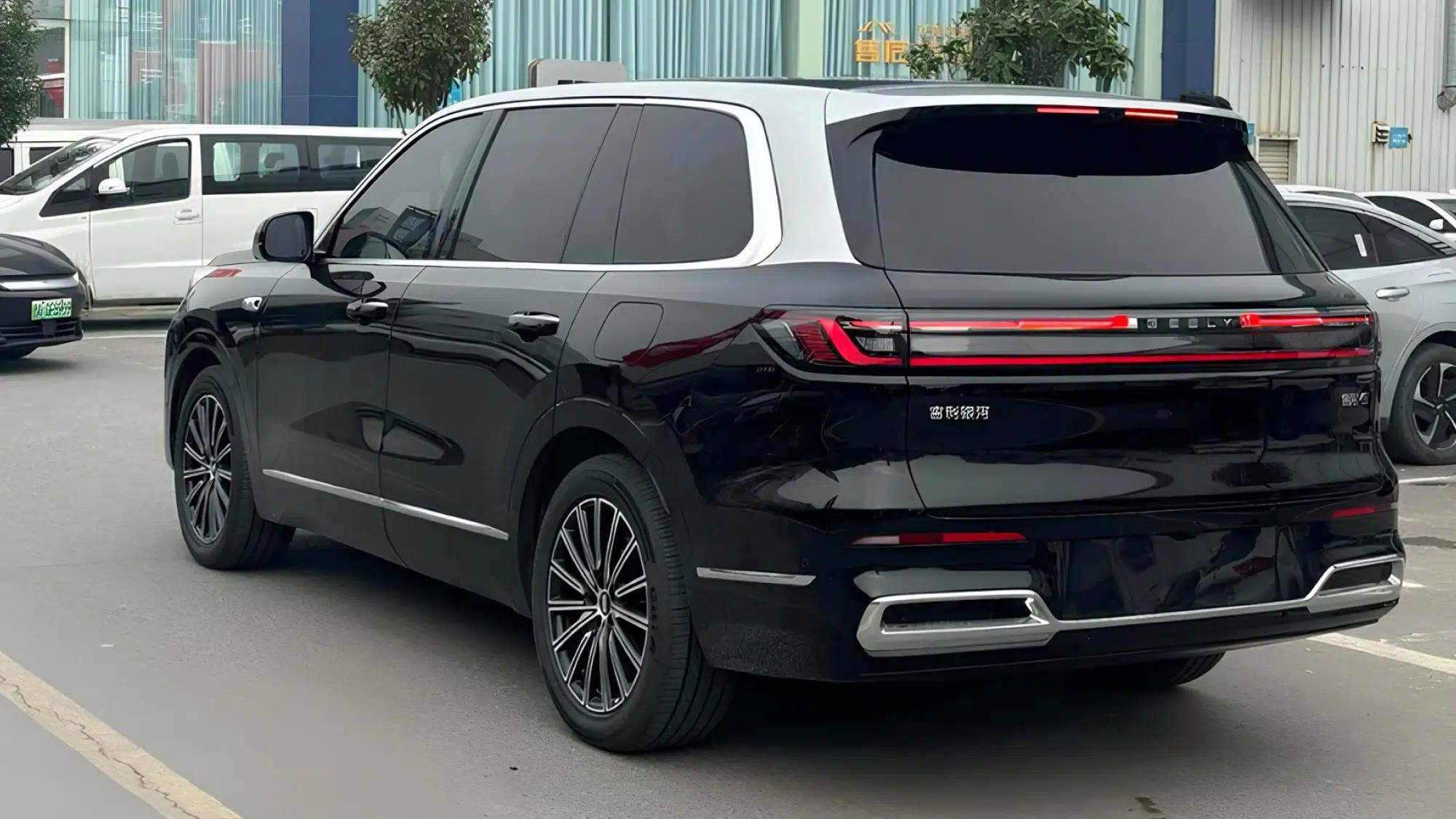
Geely is set to expand its flagship Galaxy M9 lineup with a new, premium variant arriving in China by the end of April. Following recent international praise from US-based automotive media, this update signals Geely’s push to blend high-end luxury aesthetics with cutting-edge autonomous driving technology.
Luxury Meets Aesthetics: The “Maybach” Influence
Leaked internal documents and social media reports suggest that the upcoming variant will lean heavily into a “luxury flagship” identity. The most striking changes are visual, aimed at elevating the vehicle’s status through premium styling:
- Exterior: A sophisticated two-tone “Black & Gold” color scheme, inspired by high-end luxury brands like Maybach.
- Interior: A redesigned cabin featuring dark red upholstery and a faux suede ceiling for a more premium tactile experience.
- Atmosphere: A panoramic roof equipped with a customizable “Starry Sky” lighting function to enhance the passenger experience.
- Stance: The model will feature larger 21-inch rims, giving the 5.2-meter crossover a more commanding presence.
A Massive Leap in Autonomous Intelligence
Beyond the aesthetic upgrades, the most significant technical advancement lies in the vehicle’s “brain.” The new variant will debut the G-Pilot H7 assisted driving system, replacing the previous H5 version.
This upgrade represents a major leap in computing power. By moving from the dual Nvidia Orin X setup (508 TOPS) to the Nvidia Drive Thor-U chip, the vehicle’s peak computing capacity jumps to 700 TOPS (Trillion Operations Per Second). This hardware, supported by a dedicated LiDAR sensor, enables several advanced features:
- Navigate on Autopilot (NOA): The ability to navigate between specific addresses on both urban streets and highways autonomously (though driver supervision remains mandatory).
- General Automated Evasion System (G-AES): Enhanced safety protocols for high-speed highway driving.
- Autonomous Parking: Automated maneuvering for easier urban navigation.
Why this matters: The jump in TOPS (Trillion Operations Per Second) is critical. As autonomous driving software becomes more complex, vehicles require exponentially more processing power to interpret sensor data in real-time. By integrating the Nvidia Drive Thor-U, Geely is positioning the M9 to compete with the highest tier of intelligent vehicles globally.
Core Specifications and Performance
While the technology and styling receive a significant boost, the fundamental architecture of the Galaxy M9 remains consistent with the existing model.
Dimensions and Design
The SUV maintains its large footprint, measuring 5205mm in length with a 3,030mm wheelbase, ensuring ample space for its standard six-seat (2+2+2) configuration. Its aerodynamic profile remains efficient with a drag coefficient of 0.285 Cd.
Powertrain and Range
The M9 continues to utilize its Plug-in Hybrid (PHEV) setup, offering various levels of performance:
– Base Model: A 1.5-liter turbocharged engine paired with an electric motor, delivering a combined output of approximately 219 hp and 241 hp respectively.
– Top-Trim Model: A more powerful dual-motor setup producing a combined 456 hp (340 kW).
– Battery & Range: Available with 18.4 kWh or 41.5 kWh battery options, providing an electric-only range of between 100 and 230 km (under CLTC conditions).
Conclusion
The upcoming Geely Galaxy M9 variant represents a strategic move to capture the premium SUV market by combining “luxe” design cues with industry-leading computing power. By upgrading its autonomous driving hardware, Geely is not just selling a family car, but a highly sophisticated mobile computing platform.