Honda is significantly altering its product roadmap for the North American market, delaying the next generations of several key vehicles to mitigate the financial fallout from its aborted electric vehicle (EV) strategy.
Following the cancellation of five planned EVs—a move that resulted in a $15.8 billion write-off —the Japanese automaker is shifting its focus back to hybrid technology and extending the production cycles of its current internal combustion engine and hybrid models. This strategic pivot aims to stabilize cash flow while the company recalibrates its long-term electrification goals.
The Cost of a Strategic U-Turn
In March, Honda announced the cancellation of five EV projects developed for the US market, including the Honda 0 Saloon, Honda 0 SUV, and Acura RSX. Shortly after, it terminated the joint venture with Sony to develop the Afeela sedan and SUV. These vehicles were slated to be manufactured at Honda’s plant in Marysville, Ohio, with production originally scheduled to begin between mid-2026 and late 2027.
The decision to scrap these projects reflects a broader industry trend where automakers are slowing down aggressive EV transitions in favor of more profitable hybrid technologies. Honda has confirmed it will now concentrate its EV efforts on smaller “kei” cars for Japan, specific models for China, and the 0 Alpha, which will be built in India.
Delayed Replacements for Core Models
To balance its books, Honda is stretching the lifespan of its current lineup. A memo sent to US dealers reveals that replacements for several popular models will be delayed by two to three years.
Key Model Delays
- Honda Accord: The 12th-generation Accord, which will be hybrid-only, will now begin production in early 2030. This pushes its launch two years later than the standard five-year cycle. For Australian buyers, who receive models sourced from Thailand, this delay may be even more pronounced due to regional production lag.
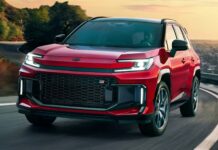
- Honda HR-V / ZR-V: The subcompact SUV, known as the HR-V in North America and the ZR-V in markets like Australia, was introduced in 2022. Its successor is now expected to arrive in 2032, two years behind schedule.
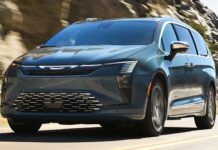
- Honda Odyssey: The family minivan, currently in its fifth generation since 2017, was considered for temporary discontinuation. However, fearing loss of market share to rivals like the Toyota Sienna and Kia Carnival, Honda opted to extend its life. A new hybrid-powered Odyssey is now targeted for March 2030.
- Acura Integra: The compact sports sedan, based on the Civic platform, will remain in production until 2032, three years longer than initially planned.
- Acura MDX: The midsize luxury SUV, launched in 2022, will see its production cycle extended to 2031.
Why This Matters for Consumers and Competitors
These delays have significant implications for both buyers and Honda’s competitors. By keeping older models on the road longer, Honda risks falling behind rivals who are rapidly updating their offerings with advanced safety features, hybrid efficiency, and modern infotainment systems.
For instance, the current Odyssey lacks all-wheel drive and a hybrid drivetrain—features now standard in competing minivans. While a hybrid update is promised for 2030, the interim years may see Honda losing ground to Toyota and Kia in the crucial family transport segment.
Similarly, extending the life of the Accord and ZR-V/HR-V means consumers will have to wait longer for next-generation technology. However, this strategy allows Honda to maximize profits from existing, proven platforms while it navigates the uncertain EV landscape.
Key Takeaway: Honda’s shift away from pure electric vehicles toward hybrids and extended model cycles reflects a pragmatic response to market realities. While this protects short-term profitability, it challenges the brand to keep its aging lineup competitive against faster-moving rivals.
In summary, Honda’s revised strategy prioritizes financial stability over rapid innovation in the EV sector. By delaying new model launches and focusing on hybrids, the company aims to recover from its massive EV write-offs while maintaining its market presence in key segments.