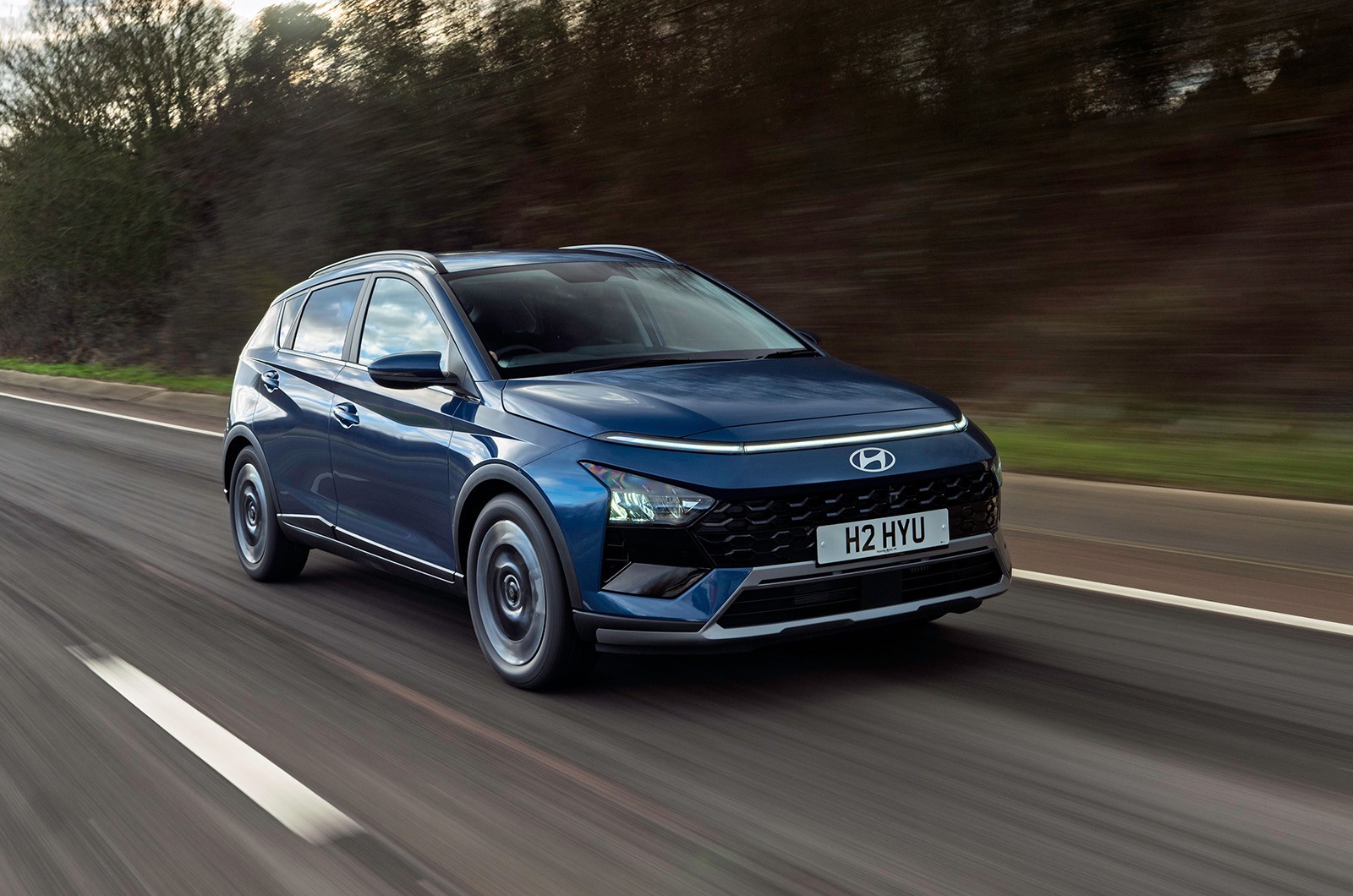
The Hyundai Bayon is a refreshingly straightforward small crossover in a market flooded with complex, expensive options. While it won’t win any beauty contests, it delivers a practical, well-equipped, and enjoyable driving experience at a competitive price.
Distinctive Design, Practical Features
The Bayon’s exterior design is subtle yet distinctive, standing out without being flashy. The unusual daytime running lights, tapered rear end, and available dark accents on the Black Line trim give it a unique presence.
Standard features are generous, including two 10.25-inch displays, LED lighting, heated seats and steering wheel, and wired Apple CarPlay/Android Auto. Higher trims (Tech Line) add 17-inch wheels, parking sensors, ambient lighting, wireless smartphone integration, and keyless entry. A Tech Pack for an extra £1000 adds a sunroof, acoustic windscreen, and a Bose sound system.
Safety is prioritized, with standard features like intelligent speed limit assistance, lane keeping assist, and forward collision avoidance.
Positioning in the Market
The Bayon fits neatly between Hyundai’s i20 supermini (cheaper by £750) and the larger Kona SUV (more expensive by £3500). The Kia Stonic is its closest competitor, offering a similar experience at a lower price.
Interior: Functional, Not Luxurious
Inside, the Bayon prioritizes usability over extravagance. The dashboard layout is logical, with physical buttons for climate control, heated seats, and infotainment. The seats are comfortable, and the steering wheel offers ample adjustment.
However, the interior materials are hard and scratchy, lacking design flair. Rear passenger space is adequate but limited by the sloping roofline. The 411-liter boot is among the largest in its class, expanding to 1205 liters with the rear seats folded.
Engine and Driving Experience
Hyundai has surprisingly removed mild-hybrid assistance, opting for a simple, non-electrified engine. The 89bhp, 1.0-liter three-cylinder engine provides enough power for everyday driving, with a 0-62mph time of under 10 seconds.
The Bayon is surprisingly engaging to drive, thanks to its light weight (just over 1000kg) and well-tuned chassis. The manual gearbox offers more feedback than rivals like the Volkswagen T-Cross or Nissan Juke.
On 16-inch wheels, the ride is comfortable, absorbing bumps well. 17-inch wheels introduce some firmness. The steering is not as sharp as the Ford Puma but better than the Toyota Yaris Cross or Skoda Kamiq.
Value and Verdict
The Bayon represents good value, especially in Black Line trim with its smaller wheels and lower price. The Tech Line is worth considering if wireless smartphone integration and a better stereo are essential.
Fuel economy is solid, achieving high-40s MPG in real-world tests. The Bayon is an enjoyable, practical, and affordable crossover that stands out for its straightforward approach in a segment often dominated by over-engineered alternatives.
The Hyundai Bayon is a compelling option for buyers who want a no-nonsense small crossover that delivers on both practicality and driving enjoyment.