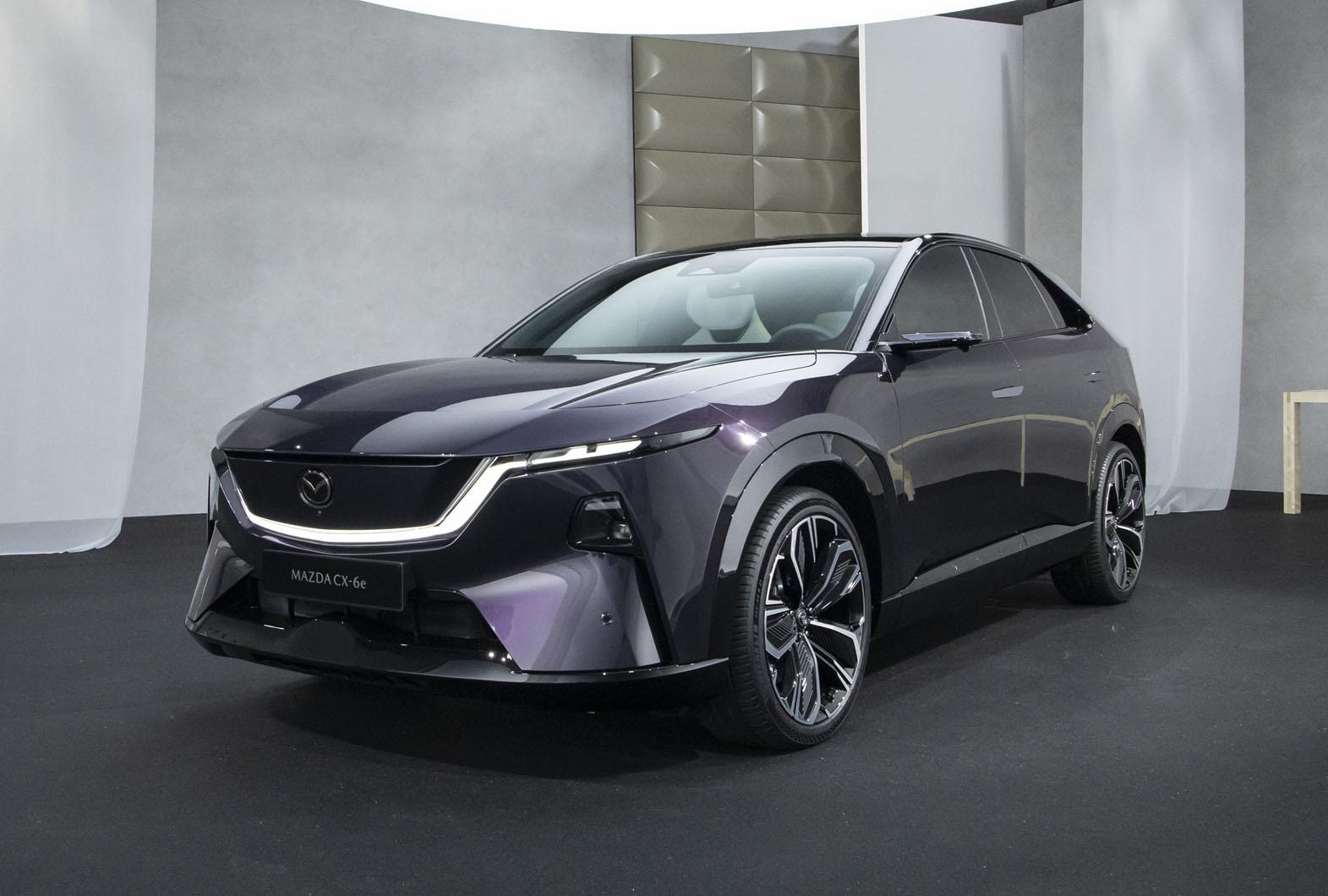
Mazda has unveiled the CX-6e, an all-electric SUV that signals a dramatic shift in the brand’s interior design philosophy. The vehicle, first shown at the Brussels motor show, features a massive 26-inch infotainment screen, replacing traditional instruments with an augmented head-up display and pushing Mazda further into the high-tech automotive landscape.
Radical Design and Tech Integration
The CX-6e is not just an electric variant of the existing CX-60; it’s a deliberate exploration of future cabin designs. The car eliminates the conventional instrument cluster entirely, instead relying on an enlarged head-up display for critical driving information. Other notable firsts for Mazda include camera-based side mirrors and integrated Bluetooth speakers in the front headrests.
The decision to embrace such a screen-heavy design came from Mazda’s Japanese leadership, according to Europe design boss Jo Stenuit. This move is not about personal preference – Stenuit admits he isn’t a “massive fan” of larger screens – but rather a calculated attempt to create a globally appealing interior. Screens, unlike physical controls, transcend cultural preferences and language barriers, making the car more adaptable to international markets.
Positioning and Market Strategy
The CX-6e is designed as the electric counterpart to the combustion-powered CX-60, though it boasts slightly larger dimensions: 4.85 meters long, 1.935 meters wide, and 1.67 meters tall. This suggests Mazda intends the CX-6e to compete directly with rivals like the Audi Q6 e-tron, emphasizing a premium, technologically advanced experience.
The SUV will launch in mainland Europe by mid-2026, with the UK following six months later. It will be one of only two all-electric models offered by Mazda in the UK, alongside the mechanically similar 6e saloon.
Why This Matters
Mazda’s move into screen-dominated interiors reflects a broader industry trend: automakers are increasingly betting on minimalist, digital-first experiences. While some may resist the loss of tactile controls, the shift is driven by consumer demand for seamless integration of technology and the desire to create a globally unified design language. The CX-6e is a test case for Mazda, potentially shaping the interiors of future models and solidifying the brand’s position in the competitive EV market.
The CX-6e represents a deliberate step forward for Mazda, embracing screens as a universal language of automotive design and signaling a clear direction for future interiors.