



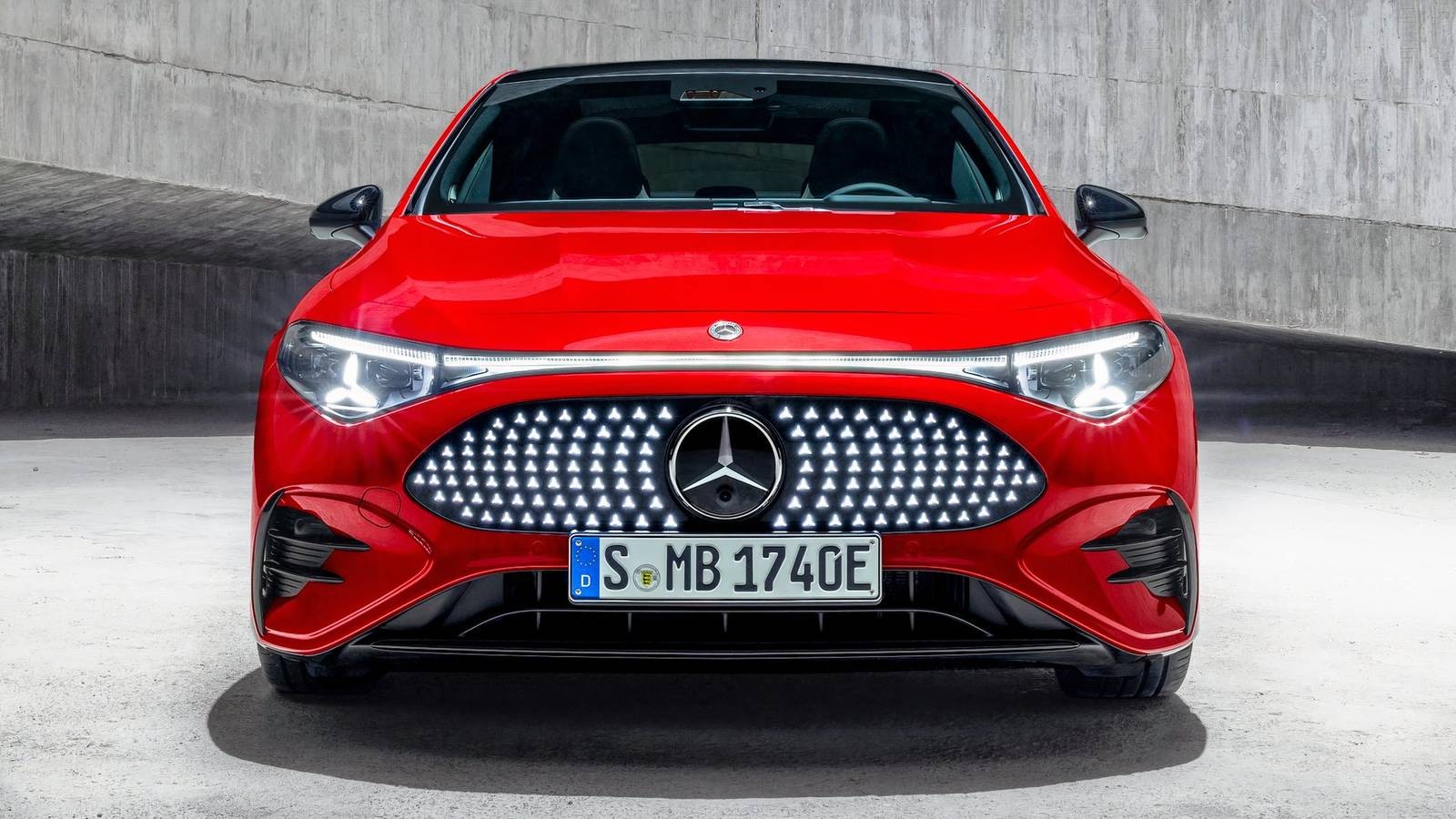
Mercedes-Benz is preparing to launch its all-new 2026 CLA electric car, and it’s positioned to directly compete with Tesla’s popular Model 3. With a starting price of $47,250 and an EPA-estimated range of 374 miles, the CLA aims to undercut Tesla on range and charging capabilities while offering a more premium experience.
Key Specifications & Models
The CLA will launch in two configurations: the rear-wheel-drive (RWD) CLA 250+ and the all-wheel-drive (AWD) CLA 350 4MATIC.
- CLA 250+ (RWD): Priced at $47,250, this model delivers 268 horsepower and 247 lb-ft of torque, achieving a range of up to 374 miles.
- CLA 350 4MATIC (AWD): Starting at $49,800, it offers a more powerful 349 hp and 380 lb-ft of torque, but range drops slightly to 312 miles.
Both models utilize an 85 kWh battery capable of ultra-fast charging at up to 320 kW, exceeding Tesla’s current maximum charging speeds.
How the CLA Stacks Up Against the Tesla Model 3
The CLA is strategically targeted at the Tesla Model 3 Premium trims, which account for a significant portion of Tesla’s sales volume. While the Model 3 starts at a lower $42,490, the CLA offers advantages in certain areas:
- Range: The CLA 250+ outpaces the Model 3 Long Range (RWD) with 374 miles versus 363 miles.
- Charging Speed: Mercedes-Benz’s 320 kW charging capability is faster than Tesla’s 250 kW.
- Luxury & Build Quality: Historically, Mercedes-Benz has a reputation for superior interior quality and build refinement compared to Tesla.
However, Tesla maintains advantages in raw performance: the Model 3 variants generally offer more horsepower and quicker acceleration. The Mercedes CLA has a higher top speed of 130 mph vs 125 mph for Teslas.
Market Context & Implications
Tesla currently dominates the EV market in the U.S., controlling over 40% of sales as of late 2025. While the CLA alone won’t dethrone Tesla, it represents a growing wave of competitive EVs poised to erode Tesla’s market share.
The CLA is one of many next-generation EVs hitting the market that together will chip away at Tesla’s dominance.
This competition will force Tesla to innovate and potentially adjust pricing strategies to maintain its lead. For consumers, this means more choices and potentially better value in the EV segment.
The CLA’s arrival signals a shift in the EV landscape, where legacy automakers are seriously challenging Tesla’s once-uncontested position.