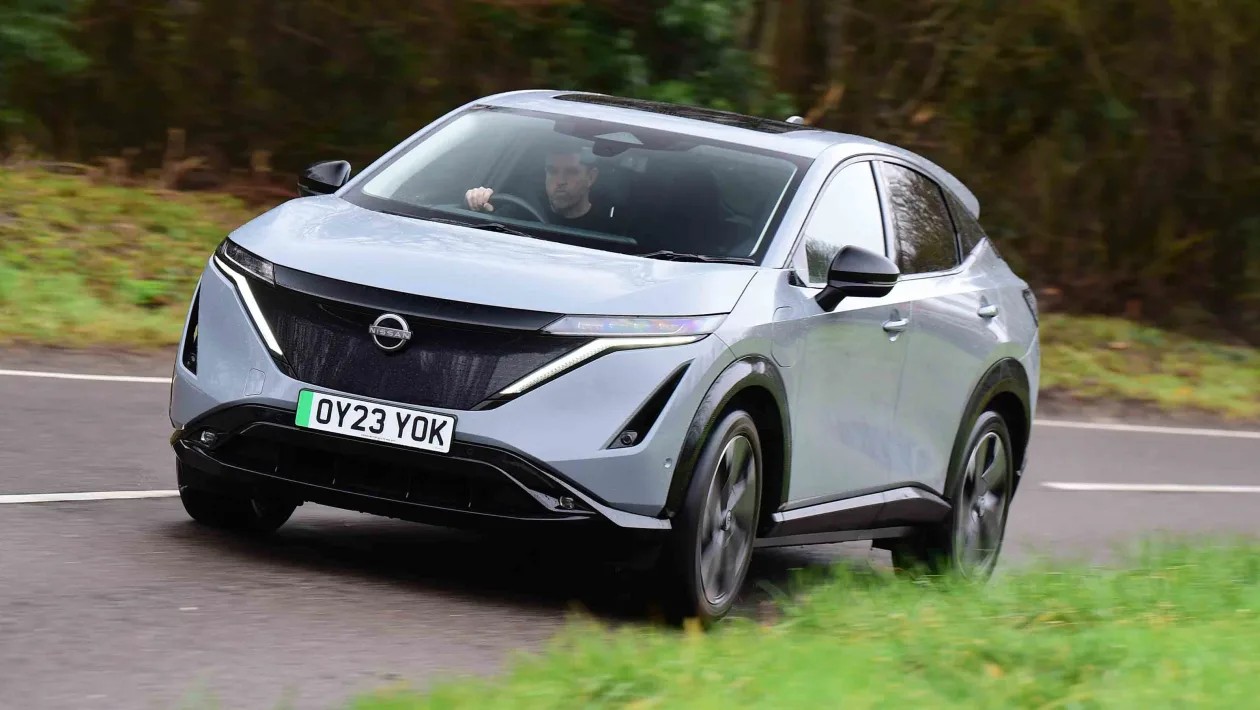
The Nissan Ariya marks a significant step forward for the Japanese automaker in the competitive electric SUV market. This all-electric family vehicle combines practicality with zero-emission driving, boasting a refined interior and competitive pricing. However, while the Ariya delivers on many fronts, its real-world efficiency and dated technology hold it back from being truly class-leading.
Design and Interior Quality
The Ariya stands out with its distinctive styling, particularly in eye-catching colors like Akatsuki Copper. Inside, the cabin impresses with premium materials and solid build quality, surpassing many Volkswagen ID-branded rivals. Higher trim levels, such as the Advance and Evolve, come well-equipped with features like a 12.3-inch infotainment system, wireless phone charging, a 360-degree camera, and heated/ventilated seats. The electric sliding center console in the Evolve trim adds a touch of luxury.
Despite the upscale feel, the infotainment system’s screen resolution appears dated, and its responsiveness doesn’t match the slickness of Renault’s system (given the shared CMF-EV platform). The Nismo trim offers sporty touches like a red-marked steering wheel, but overall, the interior remains largely similar to lower trims.
Performance and Driving Experience
The Ariya offers a comfortable and refined ride, ideal for family life. Its suspension effectively absorbs road imperfections, even on larger wheels, making long journeys a breeze. The vehicle’s weight (around 1,950–2,220 kg depending on the battery and drivetrain) is noticeable, but the Ariya handles corners with sufficient grip.
Nissan offers two battery options: a 63 kWh unit with around 250 miles of range and an 87 kWh unit with up to 329 miles. The entry-level 63 kWh model delivers 214 bhp, while the 87 kWh version offers up to 239 bhp. All-wheel-drive models (e-4ORCE) provide 302 bhp, accelerating from 0–62 mph in 5.7 seconds. The Nismo variant boosts power to 429 bhp, achieving a 0–62 mph sprint in 5.0 seconds. Despite the performance numbers, the Ariya’s driving experience isn’t particularly thrilling; it prioritizes comfort over sporty handling.
Range, Charging, and Running Costs
The Ariya’s real-world efficiency lags behind competitors like the Genesis GV60 and Skoda Enyaq. The 63 kWh model manages around 3.7 miles per kWh, while the 87 kWh e-4ORCE achieves approximately 3.0–3.2 miles per kWh. Charging times vary: a 10–80% top-up at up to 130 kW takes around 30 minutes.
Home charging takes approximately 10 hours for the 63 kWh battery and 14 hours for the larger 87 kWh unit using a 7.4 kW wallbox. The Ariya includes a standard heat pump for improved winter range, unlike some rivals where this feature is optional.
Running costs should be low, especially for company car drivers benefiting from low Benefit-in-Kind (BiK) tax rates. However, insurance groups are high (30–41), and pricier models may incur additional luxury car tax.
Depreciation and Ownership
The Ariya is expected to retain between 49–59% of its original value after three years, with better retention for models equipped with the larger 87 kWh battery. This is slightly higher than the Hyundai Ioniq 5, but lower than some Skoda Enyaq variants.
Conclusion
The Nissan Ariya is a solid electric SUV that excels in comfort, refinement, and interior quality. However, its mediocre efficiency, dated infotainment, and uninspiring driving dynamics prevent it from reaching its full potential. Despite these shortcomings, the Ariya remains a competitive option in the rapidly expanding EV market, particularly for buyers prioritizing practicality and a premium cabin experience.