



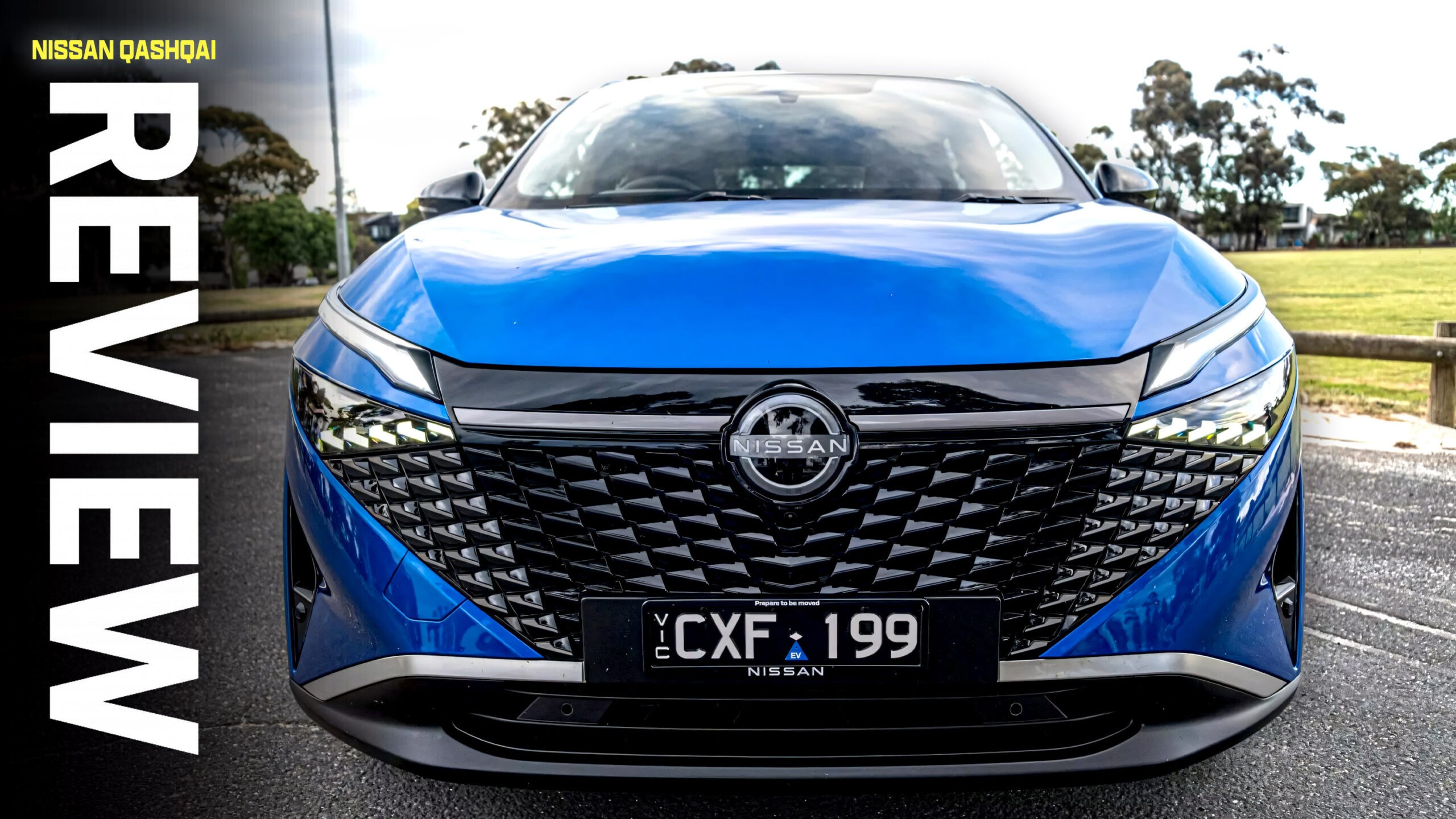
The compact SUV market is crowded, with popular options like the Toyota RAV4, Kia Sportage, and Hyundai Tucson dominating sales charts. Amidst this competition, the Nissan Qashqai stands out as a smaller, yet capable contender. Nissan’s recent challenges haven’t diminished its ability to produce compelling vehicles, and the updated 2025 Qashqai e-Power demonstrates this. This review focuses on the mid-range Ti e-Power trim, assessing whether it can hold its own in a highly competitive segment.
What’s New for 2025?
The latest Qashqai features subtle but noticeable updates. The front fascia has been redesigned with sharper LED headlights and a more aggressive grille, giving it a modern look. The rear also receives tweaks, including clear LED taillights and a new bumper. However, the powertrains remain unchanged: buyers can choose between a 1.3-liter turbocharged four-cylinder or the e-Power hybrid system.
The Qashqai’s pricing starts at AU$39,037 ($25,500) for the base ST model, rising to AU$58,990 ($38,500) for the top-spec N-Design e-Power. The Ti e-Power tested here falls in the middle, starting at AU$50,990 ($33,300).
Interior and Tech
The cabin sees minimal changes, which is not necessarily a drawback. It’s well-built for its price point, though it doesn’t offer the same level of refinement as some competitors. The 12.3-inch infotainment screen supports wireless Apple CarPlay and Android Auto, but lacks the upgraded Android-based system found in European models. A digital gauge cluster is available on higher trims, enhancing the premium feel.
While functional, the infotainment system isn’t class-leading. Physical buttons for volume and shortcuts are welcome, but the piano black plastic feels cheap. Higher trims offer optional soft-touch Alcantara surfaces for added luxury. The cabin space is adequate, though slightly smaller than the Toyota RAV4 or Hyundai Tucson, potentially making it less ideal for larger families.
The e-Power Hybrid System: Driving Like An EV Without Plugging In
The standout feature of the Qashqai is its e-Power hybrid powertrain. A 1.5-liter three-cylinder engine acts solely as a generator for the electric motor, which drives the wheels. This setup delivers a unique driving experience, often feeling like an EV. The transition between electric and engine power is seamless, and the Qashqai can operate in near-silent mode during low-speed driving.
Nissan claims a fuel efficiency of 4.8 l/100 km (49 US mpg), but real-world testing yielded around 5.3 l/100 km (44.3 US mpg), still impressive for a hybrid SUV. Acceleration to 100 km/h (62 mph) takes approximately 8 seconds, making it sufficiently quick for everyday driving.
The steering is well-weighted but lacks feedback, a common trait in modern vehicles. The regenerative braking system is effective, though not a full one-pedal setup.
The Verdict
The 2025 Nissan Qashqai e-Power remains a compelling option in the compact SUV segment. It offers a stylish design, a refined interior, and the unique appeal of its e-Power hybrid system. While it doesn’t quite match the Hyundai Tucson Hybrid in terms of performance, it provides a smooth and efficient driving experience at a competitive price. Despite Nissan’s recent struggles, the Qashqai proves that the company still knows how to build a good car.
Ultimately, the Qashqai e-Power stands as a solid choice for buyers seeking a fuel-efficient, hybrid SUV that feels remarkably like an EV without the need for charging.