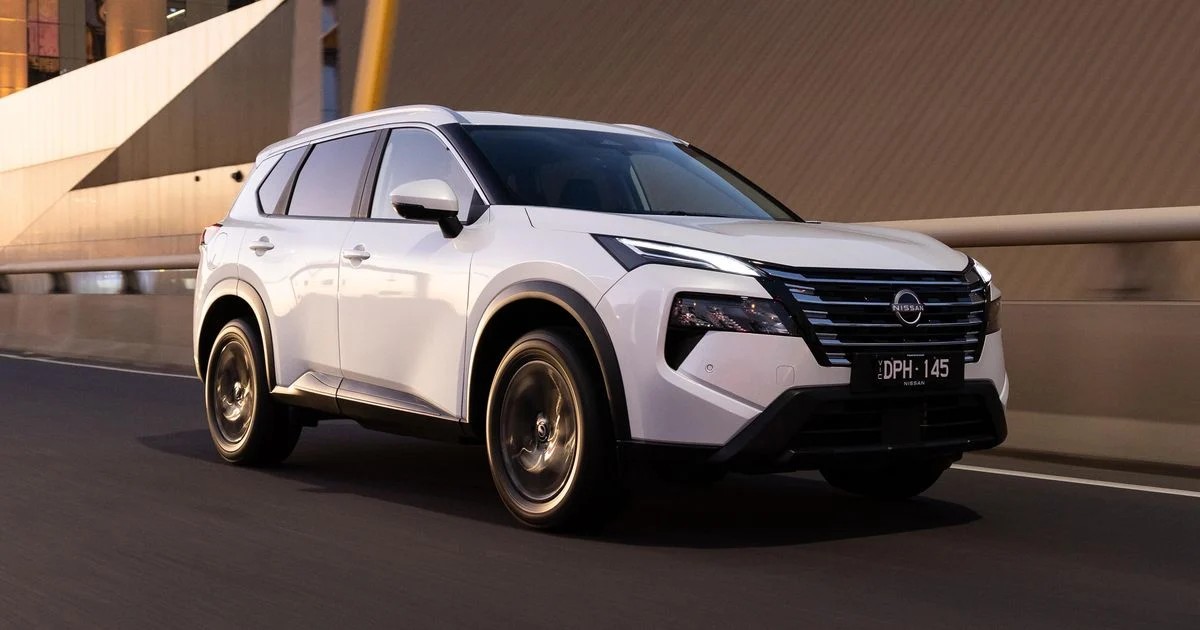
Nissan is broadening its hybrid lineup for the popular X-Trail SUV in Australia, responding to growing consumer demand and competitive pressure from rivals like Honda, Kia, and Toyota. The expansion will include two-wheel drive (FWD) e-Power variants, giving buyers more affordable options.
Hybrid Demand Drives Nissan’s Strategy
Nissan Oceania managing director Andrew Humberstone confirmed the move, citing the X-Trail’s strong sales performance. The company aims to increase its market share by offering a wider range of hybrid configurations. The decision comes as other automakers aggressively push hybrid options, with Honda recently reducing its petrol-only CR-V variants and Toyota phasing out petrol RAV4s entirely. Kia has also expanded its Sportage Hybrid lineup.
What’s Changing?
Currently, all hybrid X-Trail e-Power models in Australia come standard with all-wheel drive (AWD). The new FWD options will likely lower the price point, making the hybrid technology more accessible to a broader audience.
The X-Trail e-Power uses a unique system: a 1.5-liter turbocharged three-cylinder engine acts as a generator, powering electric motors (either a single 150kW/330Nm or dual 150kW/330Nm and 100kW/195Nm setup) that drive the vehicle. Fuel economy in FWD models is expected to improve slightly, dropping from around 6.1L/100km in AWD versions to approximately 5.8L/100km.
Seven-Seat e-Power Remains Unclear
While Nissan offers seven-seat e-Power variants in Europe, it remains uncertain whether these will be imported to Australia. Currently, all electrified X-Trails in the Australian market are limited to five seats.
Delayed EV Focus
The expansion of hybrid options coincides with Nissan’s decision to “indefinitely delay” the launch of its fully electric Leaf model in Australia. This reflects a broader shift in strategy, with the company prioritizing hybrid technology over pure electric vehicles in the near term.
This move by Nissan underscores the growing importance of hybrid powertrains as a bridge between traditional combustion engines and full electrification, particularly in markets like Australia where EV adoption is still developing.