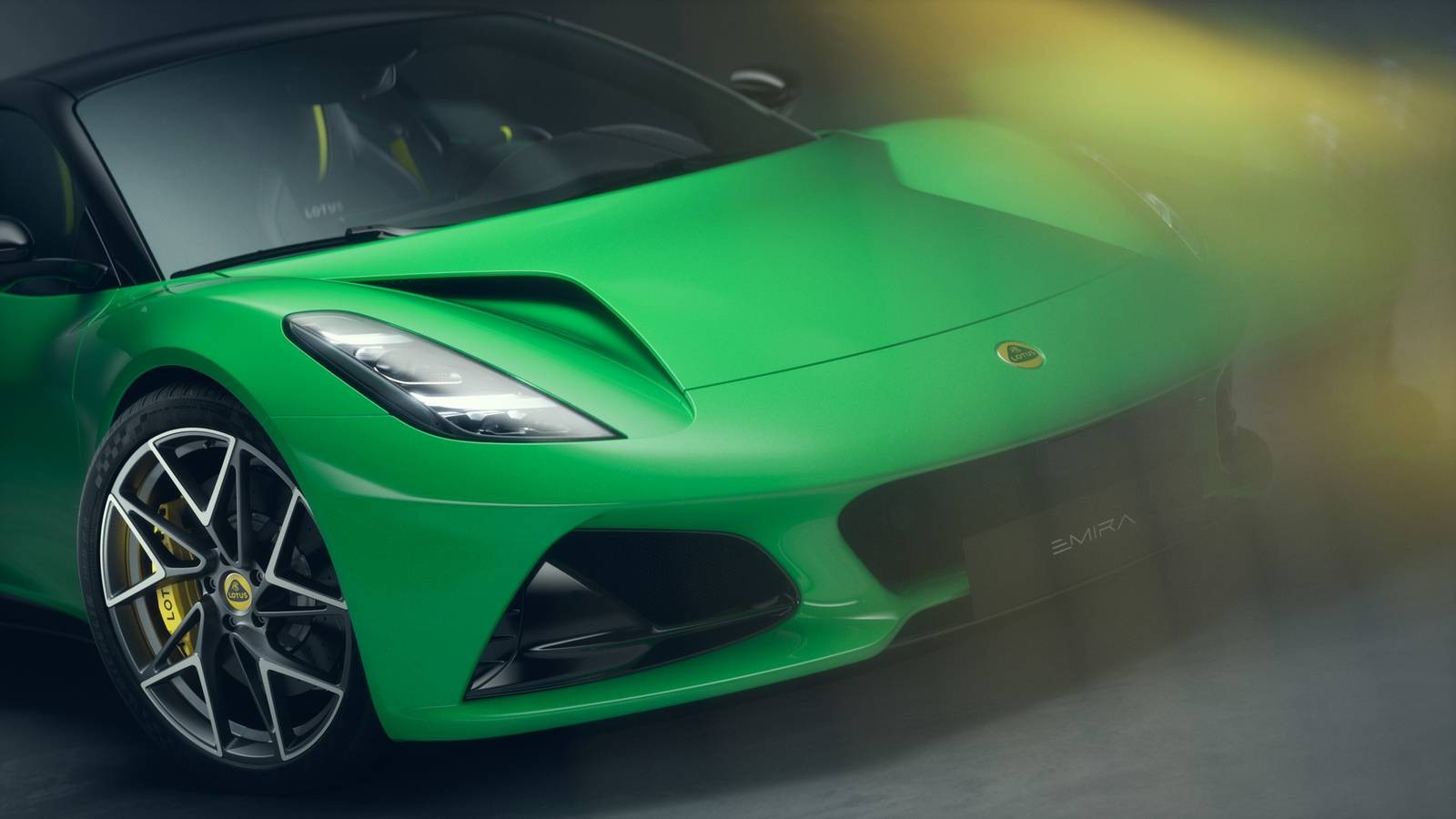
In an era where automotive trends lean heavily toward massive SUVs and heavy electric vehicles, the concept of a “lightweight sports car” is becoming a relic of the past. While mainstream manufacturers focus on mass appeal and daily usability, a small group of enthusiasts continues to chase a different dream: the visceral connection between driver and machine.
At the center of this tension stands the Lotus Emira. It is a car that defies modern logic, making it a difficult choice for the average buyer, yet a holy grail for those who truly love to drive.
The Weight of Progress
The primary challenge for modern sports car manufacturers is a growing battle against physics. To meet contemporary safety standards, cars must incorporate reinforced pillars, heavy crash structures, and advanced electronic systems. This “weight creep” is the enemy of performance.
While technology like adaptive suspension can mask a heavy car’s shortcomings, it can never truly replicate the agility of a lightweight chassis. This creates a fundamental dilemma for brands like Lotus: How do you maintain a “lightweight” identity when safety and technology demand more mass?
Why the Emira is a “Difficult” Choice
For the rational consumer, the Lotus Emira often fails the cost-benefit analysis. Compared to rivals like Porsche or Japanese manufacturers, the Emira faces several hurdles:
– Practicality: It offers almost zero usable cargo space.
– Reliability & Service: Finding a dealership or specialized service center can be a challenge.
– Value Proposition: It is often easier (and cheaper) to find higher horsepower in more mainstream performance cars.
– Daily Comfort: Unlike a BMW Z4 or a Porsche Cayman, the Emira is not designed to be a comfortable daily commuter.
A Final Tribute to Internal Combustion
The Emira holds a special significance because it represents the final chapter of the internal combustion engine (ICE) for Lotus. As the brand pivots toward a fully electric future, the Emira serves as a farewell to 75 years of gasoline-powered heritage.
The heart of this farewell is the 3.5-liter supercharged V6, sourced from Toyota. While using a third-party engine might seem unoriginal, it was a strategic masterstroke. This powertrain is legendary for its reliability and tunability. When paired with a supercharger, it delivers an instantaneous throttle response and a distinctive mechanical soundtrack that turbocharged engines simply cannot match.
The Enthusiast’s Edge: Mechanical Purity
What makes owners “evangelists” for the Emira isn’t just the speed, but the sensory experience. In a world of digital interfaces and simulated sensations, the Emira retains elements of mechanical purity:
– Hydraulic Steering: While most competitors have moved to electric power steering—often criticized for feeling “numb”—the Emira’s hydraulic rack allows drivers to feel the road’s texture and camber directly through their fingertips.
– Tactile Engineering: Features like the exposed linkage in the manual gearbox remind the driver that they are operating a precision machine, not just a computer on wheels.
– The Manual Connection: Although an automatic is available, the manual transmission remains the soul of the “man and machine” philosophy that defines the brand.
The Future: From Lightweight to High-Power
As Lotus moves toward electrification, the brand faces a massive identity shift. The upcoming Lotus Evija, a 2,000-horsepower electric hypercar, weighs roughly 4,200 pounds. This is a staggering departure from the lightweight philosophy established by founder Colin Chapman, whose obsession with weight reduction once dominated Formula 1.
The question for the next decade is whether Lotus can translate its legendary “lightweight” DNA into the electric era. Even if their EVs are heavier than their petrol predecessors, their ability to maintain superior power-to-weight ratios compared to other electric giants will determine if the brand remains a specialist icon or becomes just another high-performance manufacturer.
The Lotus Emira is not a rational purchase; it is an emotional one—the final, mechanical salute to an era of driving that is rapidly disappearing.