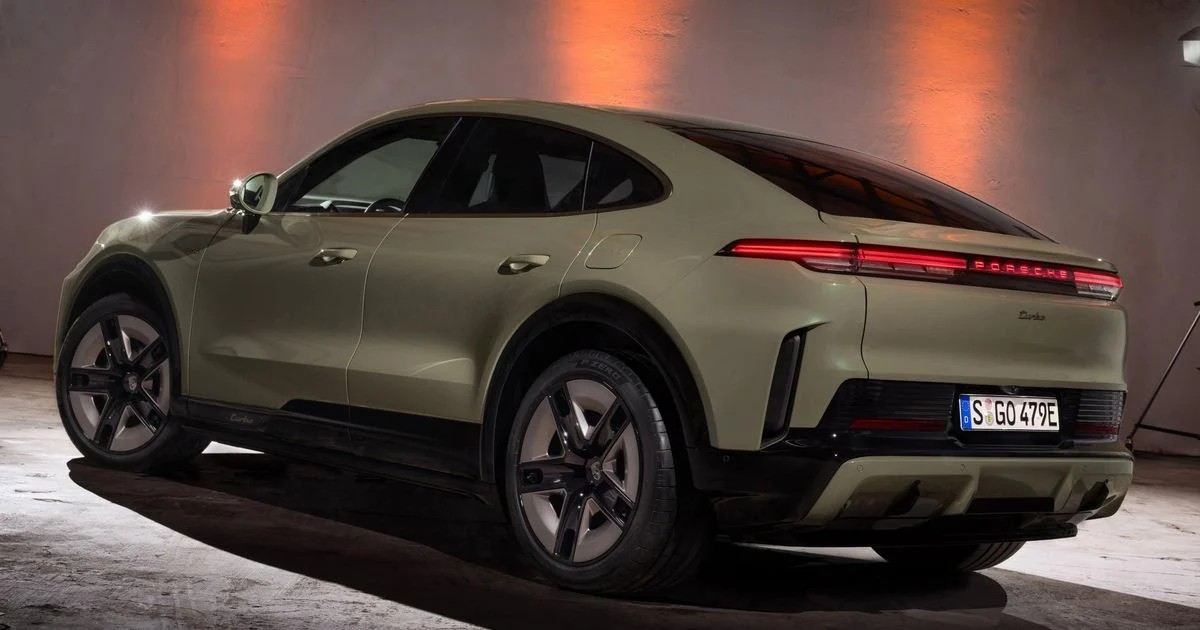
Porsche has officially pulled the curtain back on the 2026 Cayenne Coupe Electric, a more athletic and aerodynamically optimized sibling to the standard Cayenne Electric SUV. This marks only the second time in the Cayenne’s history—spanning four generations since 2002—that the manufacturer has offered a coupe-style silhouette for this flagship model.
By adopting a sweeping “flyline” roof reminiscent of the iconic 911, Porsche isn’t just chasing aesthetics; they are leveraging physics to improve electric vehicle performance.
Aerodynamics and Efficiency
The most significant advantage of the Coupe’s sloping roofline is its improved aerodynamics. The vehicle features a drag coefficient of 0.23 Cd, a notable improvement over the 0.25 Cd found on the standard SUV.
This “slippery” shape does more than just look good; it directly impacts battery efficiency. Thanks to reduced wind resistance, the Cayenne Coupe Electric is expected to travel approximately 15km further on a single charge than its SUV counterpart.
To manage airflow, the Coupe utilizes several active aerodynamic features:
– Front bumper cooling-air flaps to regulate temperature.
– Extendable vertical side spars at the rear bumper.
– An active rear spoiler, specifically redesigned to complement the unique tailgate shape.
Interior Technology and Practicality
Inside, the Coupe follows the high-tech direction of the broader Cayenne Electric lineup. The cabin is dominated by a sophisticated digital ecosystem, including the OLED ‘Flow Display’ infotainment system and a suite of massive digital screens. Notably, the vehicle offers the option for four automatic doors, which can be operated via touchscreen icons.
However, the stylistic choice of a coupe silhouette necessitates certain trade-offs in utility:
- Seating: The standard configuration is a four-seat layout with a central storage console. While a “2+1” seating option is available, rear headroom is more limited than in the SUV.
- Cargo Space: The sloping rear significantly reduces boot capacity. The Coupe offers 534L (expanding to 1,347L with seats folded), compared to the SUV’s 781L (1,588L folded).
- Versatility: Despite the smaller boot, the Coupe retains a 90L “frunk” (front trunk) and maintains a heavy-duty towing capacity of up to 3,500kg.
Performance Tiers and Range
Porsche is launching the Coupe with three distinct power outputs, catering to different driving priorities:
| Model | Power (Normal / Overboost) | 0–100 km/h | Top Speed | Est. Max Range |
|---|---|---|---|---|
| Cayenne Coupe Electric | 300kW / 325kW | 4.8s | 230 km/h | 658 km |
| Cayenne S Coupe Electric | 400kW / 490kW | 3.8s | 250 km/h | 666 km |
| Cayenne Turbo Coupe Electric | 630kW / 850kW | 2.5s | 260 km/h | 632 km |
Note: Range estimates vary based on model and driving conditions.
For driving enthusiasts, Porsche offers an optional Lightweight Sport Package. This package can reduce the vehicle’s weight by up to 17.6kg through the use of a carbon fiber roof, carbon body trim, and exclusive 22-inch wheels. The interior is also enhanced with motorsport-inspired details, such as the classic Pepita pattern fabric and a Racetex headliner.
Pricing and Availability
The Coupe variant carries a premium over the standard SUV models. Based on current Australian pricing structures, the lineup is expected to start as follows:
- Base Cayenne Coupe Electric: From $173,600
- Cayenne S Coupe Electric: From $194,600
- Cayenne Turbo Coupe Electric: From $272,100
(All prices exclude on-road costs)
The Cayenne Coupe Electric is expected to arrive in showrooms shortly after the standard Cayenne Electric SUV later this year.
Conclusion
The Cayenne Coupe Electric represents Porsche’s attempt to marry high-performance luxury with aerodynamic efficiency. While buyers sacrifice some cargo volume for its striking silhouette, the gains in range and driving dynamics position it as a specialized, high-tech alternative to the traditional family SUV.