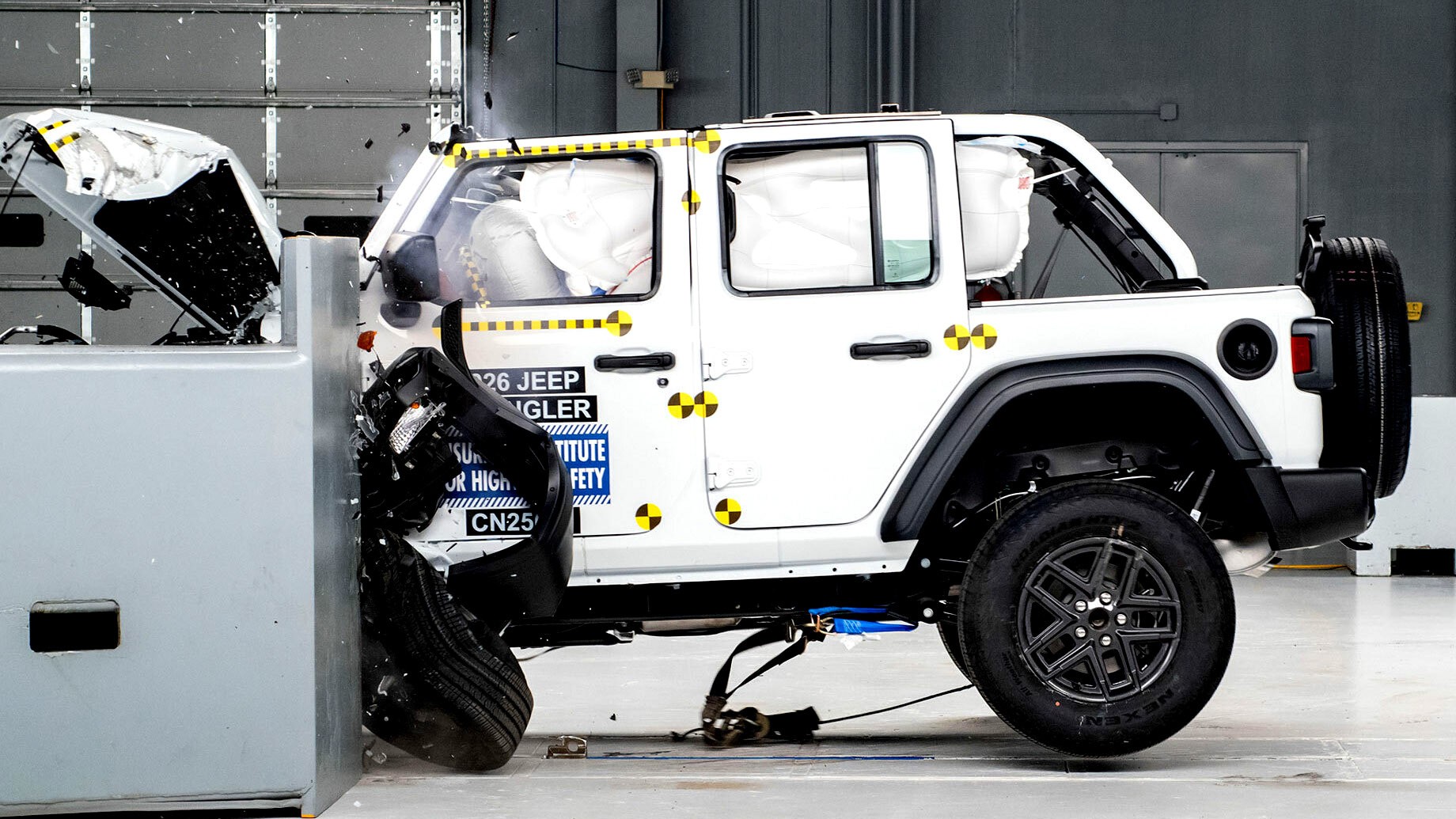
For years, the Jeep Wrangler faced a glaring safety flaw: an alarming tendency to flip onto its side during crash tests. The Insurance Institute for Highway Safety (IIHS) has confirmed that the 2026 model has finally passed the driver-side small overlap crash test without overturning—a problem that first surfaced in 2019 and persisted through the 2022 redesign.
The Long-Standing Problem
The issue stemmed from the Wrangler’s high center of gravity combined with structural weaknesses that allowed it to tip during a moderate-speed impact. The IIHS highlighted the danger, pointing out that even partial rollovers dramatically increase the risk of occupant ejection, a risk exacerbated by the Wrangler’s removable roof and doors and its lack of side curtain airbags.
Jeep attempted fixes in 2022, but the revised Wrangler still flipped during testing, demonstrating that the initial changes were insufficient. The IIHS noted that the 2022 model almost immediately lifted into the air upon impact and rolled completely onto its side.
Structural Changes Deliver Results
The 2026 Wrangler’s success is attributed to significant modifications to the frame rails. These changes, which also apply to the 2026 Gladiator, have allowed the vehicle to remain upright during the same test conditions. In the latest test, the Wrangler crashed into the barrier at 40 mph, was knocked sideways, but remained stable, with only the rear wheels briefly lifting off the ground.
The improvements earned the 2026 Wrangler an “acceptable” rating in the small overlap test—a substantial upgrade from its previous “marginal” grade. The IIHS also acknowledged that the new model offers solid overall protection.
Remaining Concerns
Despite the major step forward, the IIHS noted that the 2026 Wrangler still poses a high risk of leg and foot injuries to the front passenger during a similar crash.
The resolution of this high-profile safety flaw is a significant win for Jeep and its customers. The issue highlighted the trade-offs inherent in the Wrangler’s design—namely, its off-road capability versus on-road stability—and forced a necessary correction. The 2026 model demonstrates that these compromises can be mitigated without sacrificing the vehicle’s core identity.