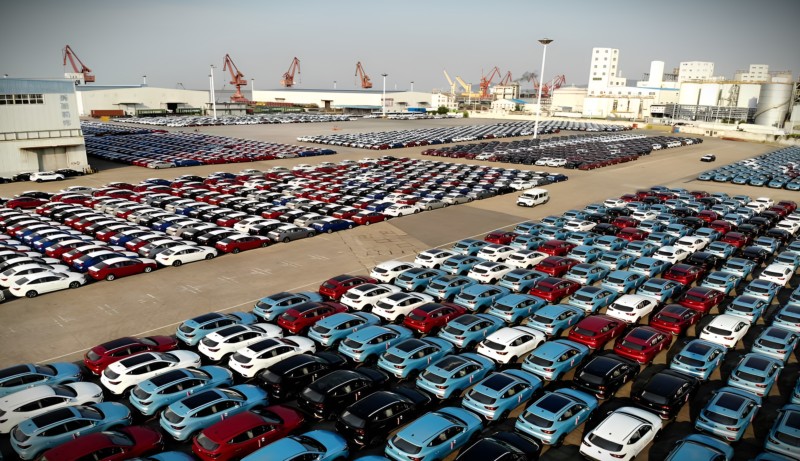
China’s new-energy vehicle (NEV) market remains one of the world’s fastest-growing automotive sectors, with November 2025 data revealing both established automakers and emerging startups driving expansion. The figures demonstrate a sustained push toward electrification, but also show nuanced shifts in brand performance and market share.
BYD Leads, But Growth Slows
BYD reported approximately 480,186 NEV deliveries in November—a 5.25% decrease year-over-year. This decline is partly offset by a 19.93% increase in battery-electric passenger vehicle sales (237,540 units), while plug-in hybrid deliveries fell by 22.41% (237,380 units).
This split highlights a broader trend: pure EVs are gaining traction faster than plug-in hybrids as battery technology improves and charging infrastructure expands.
The company’s Ocean & Dynasty series accounted for the bulk of sales (423,558 units), with additional contributions from FCB (37,405), Denza (13,255), and Yangwang (703). BYD also reported a record 130,000+ overseas NEV sales, solidifying its position as China’s leading NEV manufacturer with cumulative sales exceeding 14.7 million units.
Geely Surpasses Competitors with Hybrid Strength
Geely NEV, excluding Zeekr and Lynk & Co, led disclosed sales with 132,661 units. The Galaxy series played a key role, demonstrating that blending plug-in hybrids with fully electric models remains a viable strategy for maintaining momentum.
Emerging Brands Gain Traction
Several startups are rapidly increasing their production and deliveries. HIMA reported 81,864 units, while Leapmotor delivered 70,327 NEVs. Zeekr (part of Geely) and Lynk & Co combined for 55,146 sales, with Zeekr contributing 28,843 units and Lynk & Co at 26,303. Xiaomi Auto continued its growth with over 40,000 deliveries, expanding its retail network to 131 cities with 441 stores and 249 service points.
Established Players Adapt
SAIC Group disclosed 149,900 NEV sales in November, driven by its sub-brands. IM Motors reached 13,577 units (its third consecutive month above 10,000), while SAIC Passenger Vehicle sold 42,000 NEVs with the MG4 Anxin Edition. SAIC Maxus and SAIC-GM added 8,000 and 11,000 NEV sales, respectively.
Li Auto maintained its position in the extended-range SUV segment with 33,181 deliveries, while Voyah reported 20,005 units in the premium market. Avatr saw a 21.4% year-over-year increase, delivering 14,057 vehicles for its ninth straight month above 10,000 units.
The Bigger Picture
The November numbers demonstrate a maturing NEV market where competition is intensifying. While BYD remains dominant, established automakers like Geely and SAIC are leveraging their existing infrastructure to capture significant market share. The growth of startups such as Xiaomi, Leapmotor, and HIMA shows that innovation and rapid scaling are viable strategies for success.
The key takeaway is that China’s NEV landscape is no longer just about a single leader. It’s becoming a multi-brand ecosystem where diverse models and approaches compete for consumers’ attention.