The U.S. automotive market is witnessing a significant shift in consumer preference. As the disappearance of federal tax credits makes fully electric vehicles (EVs) more expensive, and geopolitical tensions drive fluctuations in fuel prices, hybrid vehicles have emerged as the pragmatic middle ground.
This isn’t a sudden fad; it is a sustained trend. According to S&P Global Mobility, hybrid registrations surged from 3.1% in mid-2020 to 16.3% by mid-2025. Leading this charge is Toyota, which captures nearly half of the hybrid market, followed closely by Honda. Within the luxury segment, Lexus remains the dominant force, largely thanks to its highly successful hybrid lineup.
However, as luxury pricing climbs, a compelling question arises: Do you need a luxury badge to enjoy a premium hybrid experience?
The Lexus ES: The Gold Standard of Luxury Hybrids
The Lexus ES has been a pillar of the luxury sedan market since its U.S. debut in 1989. Its hybrid iteration, introduced in 2013, set a benchmark for blending fuel efficiency (roughly 45 mpg) with high-end craftsmanship.
The upcoming iterations promise even more sophistication, featuring:
– Enhanced Aerodynamics: A sleeker profile for better efficiency.
– Increased Power: A 2.5-liter four-cylinder engine paired with an electric motor delivering 244 horsepower.
– High-End Tech: A massive 14-inch touchscreen and premium audio systems.
The Catch: The Price of Prestige
Luxury comes at a steep cost. With base MSRPs starting around $44,590 and often exceeding $53,000, the ES is increasingly out of reach for many. As new car prices continue to trend upward, the barrier to entry for Lexus owners continues to rise.
The Honda Accord: A High-Value Challenger
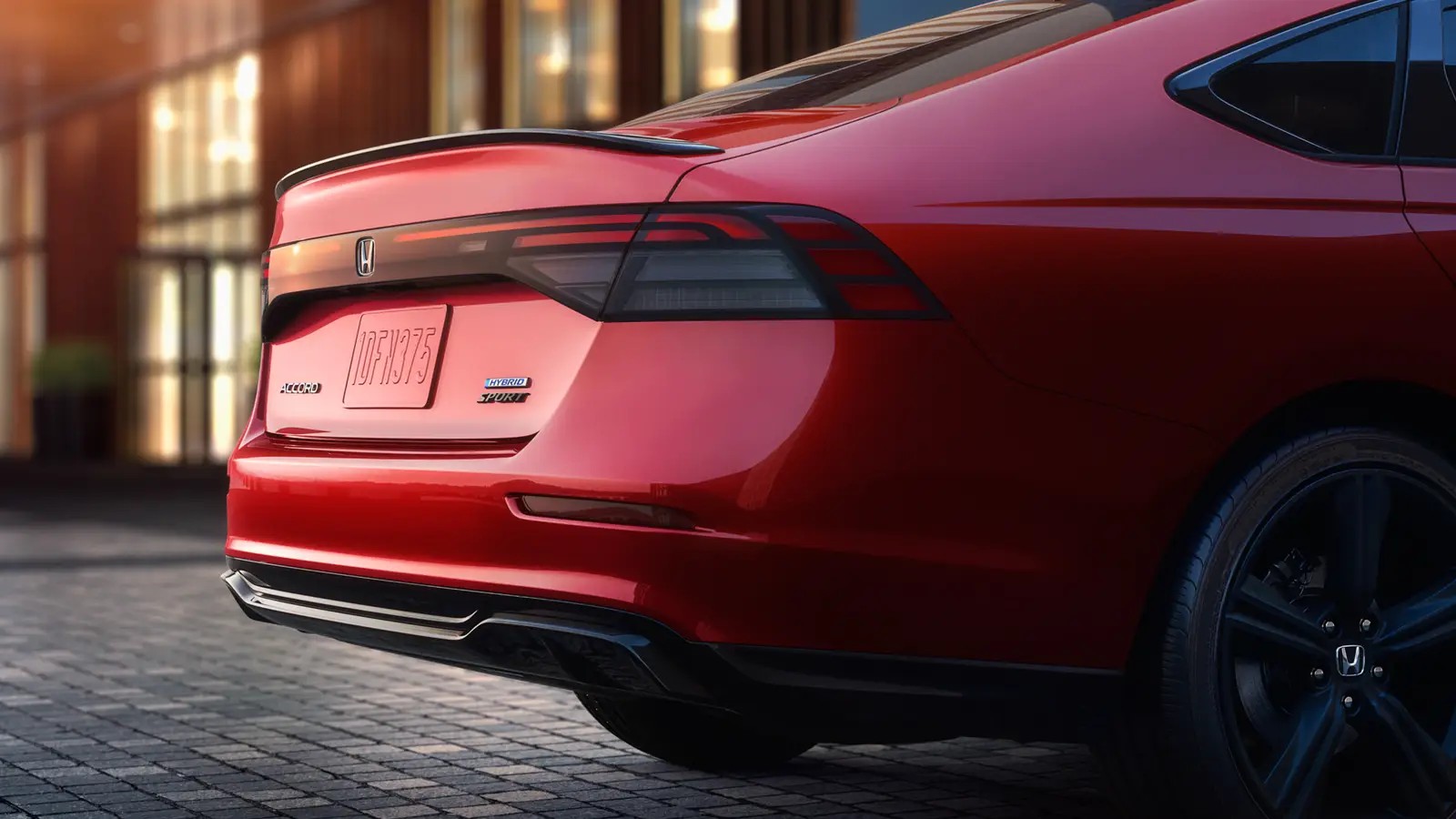
While Honda’s luxury arm, Acura, typically competes with Lexus, the mainstream Honda Accord Hybrid is quietly carving out a niche that challenges the ES on several key fronts. It targets a specific type of buyer: the “value-conscious premium seeker.”
1. Driving Dynamics vs. Plush Comfort
While the Lexus ES is designed for a “floating” sensation of isolation and comfort, the Accord is widely regarded as a driver’s car. Its two-motor hybrid system produces 204 horsepower and 247 lb-ft of torque, offering an engaging steering feel and superior handling that appeals to those who actually enjoy the act of driving.
2. Surprising Interior Space
A common drawback of hybrid vehicles is that heavy battery packs often “eat” into cabin or trunk space. Honda has defied this trend. The Accord boasts a remarkably roomy interior, with rear-seat legroom (40.8 inches) and front-seat headroom (39.5 inches) that outperforms even high-end luxury rivals like the BMW 5 Series and the Volvo S90.
3. The “Premium-Lite” Experience
The Accord does not attempt to mimic the opulence of a Lexus, but it offers a sophisticated tech suite that feels modern and intuitive:
– Large Displays: A 12.3-inch central touchscreen and a 10.2-inch digital driver display.
– Smart Integration: Built-in Google and Alexa, alongside wireless Apple CarPlay and Android Auto.
– Safety First: The standard Honda Sensing suite has earned the model high marks in IIHS safety testing.
Reliability and Long-Term Value
In the hybrid market, reliability is the ultimate currency. While Lexus traditionally holds the crown for long-term dependability, Honda is a close second. The 2025 Accord holds a respectable 82/100 overall score from J.D. Power, with an 80/100 rating specifically for quality and reliability.
For many drivers, the decision comes down to a calculation of “cost per mile of enjoyment.” The Accord offers high fuel efficiency (approx. 44 mpg), premium tech, and proven longevity without the “luxury tax” associated with a Lexus badge.
The Bottom Line: If your goal is pure status and isolation, the Lexus ES remains the leader. But for drivers seeking a balance of performance, massive interior space, and modern technology at a much more accessible price point, the Honda Accord Hybrid is a formidable—and perhaps more logical—alternative.