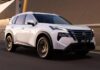
Saic (Shangjie), the joint brand by Huawei and SAIC under HIMA, will begin accepting pre-orders for its new mid-to-large sedans, the Z7 and Z7T, on March 23. These models directly compete with the Xiaomi SU7 in the 250,000 to 350,000 yuan ($36,200 to $50,700 USD) price bracket. The move comes as part of a broader trend in China’s electric vehicle market, where manufacturers aggressively copy design and functionality to quickly capitalize on trends.
Key Specs and Features
Both the Z7 and Z7T have already received regulatory approval from the MIIT (Ministry of Industry and Information Technology). They will fully integrate Huawei’s Tuling smart platform and Qiankun intelligent driving system. The vehicles sport a sleek exterior, featuring a closed-off grille, narrow headlights, and a three-section air intake. At the rear, they have a continuous taillight design with a diffuser.
Dimensions are consistent across both models: 5036-5051 mm in length, 1976-1980 mm in width, and 1445-1465 mm in height, all on a 3000 mm wheelbase. Powertrain options include single-motor (264 kW/354 hp) and dual-motor configurations. The dual-motor ‘Ultra’ version combines a 170 kW front motor with a 264 kW rear motor, delivering combined speeds of 239-242 km/h. Battery supply is secured through CATL or CALB.
Strategic Timing and Competitive Pressure
Saic’s launch timing appears deliberately aggressive, potentially forcing Xiaomi to expedite the release of its next-generation SU7. Rumors initially pointed to an April launch for the SU7, but Xiaomi abruptly announced a March 19 release date—likely in response to the Z7’s March 23 pre-sale start.
This dynamic reflects a common pattern in the Chinese EV sector: rapid product cycles and relentless competition. The Z7’s 905 km claimed range even edges out the Xiaomi SU7’s 902 km, though real-world performance will determine if this is more than just a marketing tactic.
Questionable Development Speed and Past Performance
The speed at which Saic has brought these models to market raises questions. Just ten months after the SAIC-Huawei partnership was announced, the Z7 and Z7T are already ready for pre-orders. This suggests that the Z7/Z7T is likely based on an existing SAIC platform (possibly derived from the RC7 under the defunct Marvel brand) rather than a fully original design.
This approach mirrors Saic’s earlier H5 model, which also saw rapid development and poor sales (only 2,727 units sold in February). The H5’s failure casts doubt on whether simply replicating existing models with Huawei’s software will guarantee success for the Z7.
In conclusion: Saic’s aggressive launch of the Z7 and Z7T represents a calculated attempt to disrupt Xiaomi’s momentum in the EV market. Whether this strategy will succeed remains to be seen, given the company’s history of rapid but often lackluster product releases. The race to dominate the Chinese EV landscape is only intensifying.