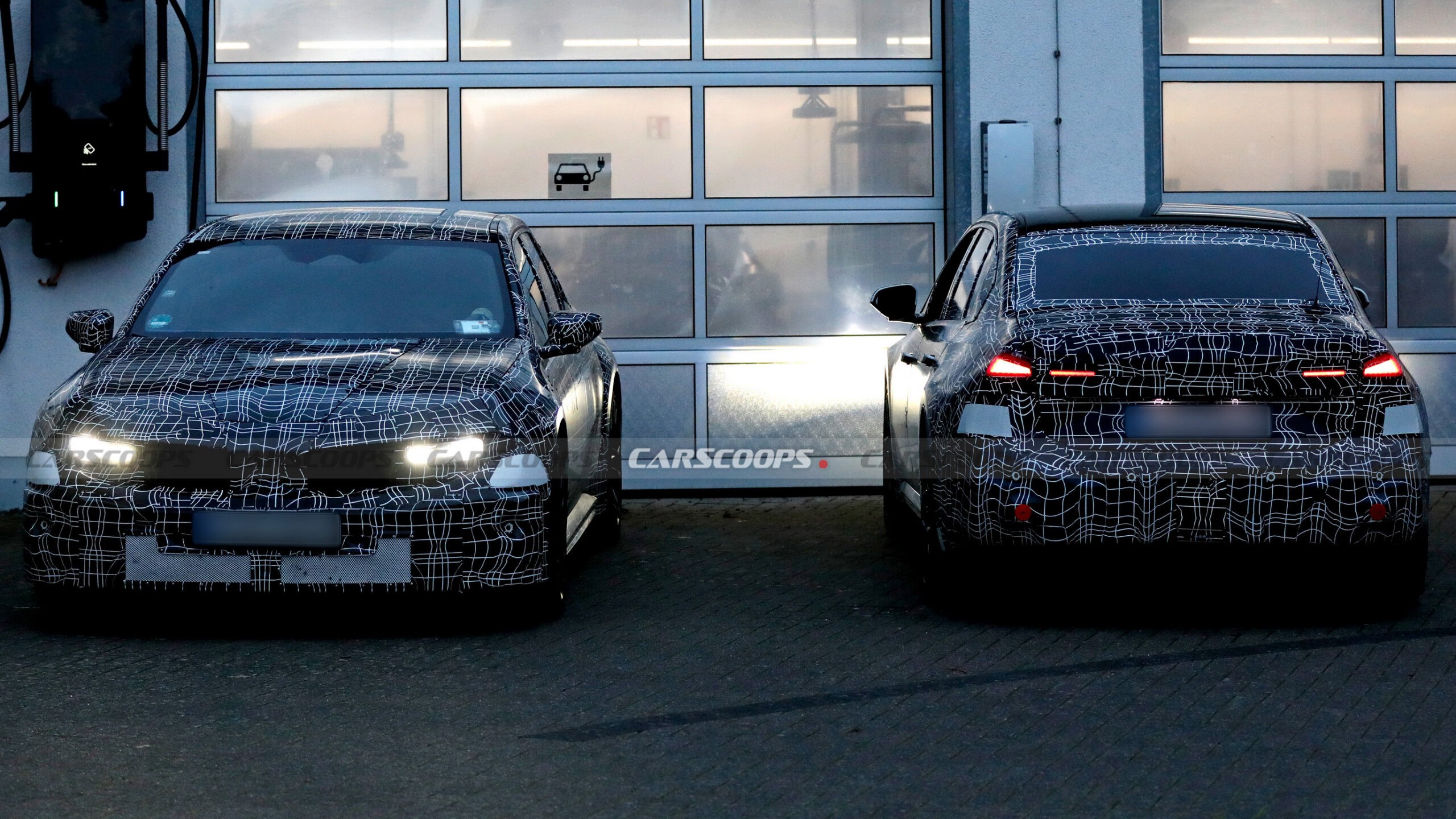
BMW is preparing a significant overhaul of its lineup, with 40 new or updated models planned. Central to this shift are the redesigned 3-Series and its fully electric counterpart, the i3. Recent spy shots reveal a striking divergence in design between the two, signaling a more pronounced separation than previously seen.
Distinct Exterior Designs
Both vehicles will adopt BMW’s “Neue Klasse” front end, but beyond that, the differences are immediately apparent. The gasoline-powered 3-Series features a prominent lower intake with an active shutter grille, while the i3’s front bumper is heavily camouflaged. However, it’s expected to maintain a similar, though refined, design.
The most noticeable split lies in the rooflines: the i3 boasts a relatively flat profile, contrasting with the 3-Series’ subtle slope. This extends to the rear doors, where the 3-Series has an almost vertical partition, while the i3 adopts a more angular, triangular shape. Even minor details, such as the placement of the fuel or charging door, differ significantly. The 3-Series has it positioned higher on the rear fender, while the i3’s charging port sits lower and more centrally.
This commitment to distinct exteriors suggests limited shared components – a bold move that increases manufacturing complexity but reinforces the identity of each model.
Interior Upgrades: Panoramic Displays and New Controls
Inside, both models are set to receive significant updates. Spy photos reveal a freestanding display and a redesigned steering wheel. Most notably, both cars will feature a pillar-to-pillar Panoramic iDrive display integrated at the base of the windshield, providing an immersive digital experience.
i3: A Performance Focus
The i3 is expected to build on the success of the iX3, potentially adopting a similar dual-motor all-wheel-drive system. This setup delivers up to 463 horsepower and 476 lb-ft of torque, enabling a 0-62 mph acceleration in 4.9 seconds with a top speed of 130 mph. Powering this performance is a 108.7 kWh lithium-ion battery pack, offering a WLTP range of up to 500 miles. The i3 also supports 400 kW DC fast charging, replenishing the battery from 10-80% in just 21 minutes.
BMW plans to expand the i3 range with more affordable, rear-wheel-drive variants, sharing powertrain options across the electric lineup.
3-Series: Evolution on the CLAR Platform
The 3-Series will continue to evolve on BMW’s CLAR platform. While specific details remain scarce, reports suggest an updated engine lineup, including a new M350 variant exceeding 400 horsepower. This evolution reflects a more measured approach, retaining the familiar characteristics of the 3-Series while incorporating modern enhancements.
BMW’s decision to deliberately diverge the designs of the 3-Series and i3 represents a strategic shift toward clearly defined identities for its combustion and electric vehicles. This approach not only caters to different buyer preferences but also streamlines manufacturing complexities, ensuring both models stand out in a competitive market.