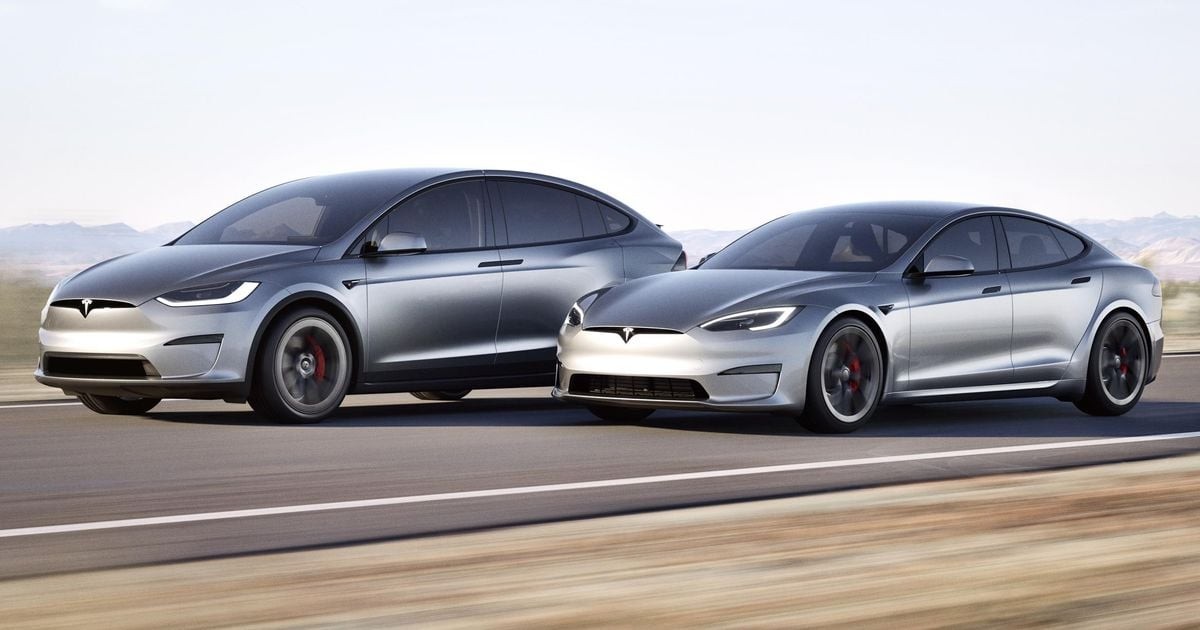
Tesla will discontinue production of its Model S and Model X vehicles by the end of the year, shifting factory space to manufacturing its Optimus humanoid robots. The decision, announced by CEO Elon Musk during the company’s 2025 earnings call, signals a sharp pivot toward automation and away from the high-end EVs that once defined Tesla’s premium brand.
Declining Sales and Revenue
The move comes as Tesla reported a 3% revenue decline in 2025, reaching $94.8 billion, coupled with an 8.6% drop in global vehicle deliveries to 1,636,129 units. Sales of the Model S and X, already discontinued in right-hand drive markets since 2023, have been dwindling; only 50,850 units across the Model S, Model X, and Cybertruck were delivered last year—a significant decrease from the 85,133 units sold in the prior year.
This shift isn’t just about production numbers; it’s about where Tesla sees the future of its business. The company is betting heavily on autonomous technology, and the Model S/X production lines are seen as an inefficient use of space compared to scaling up robot manufacturing.
The Optimus Factory Takeover
Musk stated that the Fremont, California factory space currently used for the Model S and X will be repurposed into an “Optimus factory” with a long-term goal of producing one million robots annually.
“It’s time to bring the Model S and X programs to an end with an honourable discharge,” Musk said. “We are really moving into a future that is based on autonomy.”
This transformation reflects Tesla’s ambition to dominate not just the EV market but the broader robotics industry. The company plans to increase employee headcount at Fremont as robot production ramps up.
Autonomous Future and Next-Generation Models
Tesla’s vision extends beyond robots. Production of the autonomous Cybercab is slated to begin in April, with Musk predicting that “the only vehicles we’ll make long-term will be autonomous vehicles” aside from the next-generation Roadster, set for a debut in April as well.
The Model S, Tesla’s first high-volume vehicle launched in 2012, and the Model X, a large SUV featuring distinctive “falcon-wing doors” released in 2015, were instrumental in establishing Tesla as a luxury brand. However, their end of production marks a decisive break with the past, prioritizing automated solutions over traditional consumer vehicles.
The discontinuation of these models highlights Tesla’s aggressive approach to innovation; the company is willing to sacrifice its legacy products to accelerate into what it believes is the next era of transportation and automation. The transition may be “slightly sad,” as Musk admits, but the company is committed to an autonomous future.