


Ignoring your car’s cooling system can be catastrophic. Freezing coolant expands, cracking engine blocks – a preventable disaster. Coolant (antifreeze) degrades over time, losing its corrosion protection and becoming less effective at regulating temperature. Regular testing and replacement are crucial. Fortunately, a reliable coolant tester costs as little as £8. But which one performs best?
How We Tested
We evaluated seven popular testers in two scenarios: first, with fresh Prestone coolant rated to -37°C. Second, we tested each on coolant from a vehicle that hadn’t been serviced since 2021 to assess their accuracy with degraded fluid. Ease of use and price were also considered.
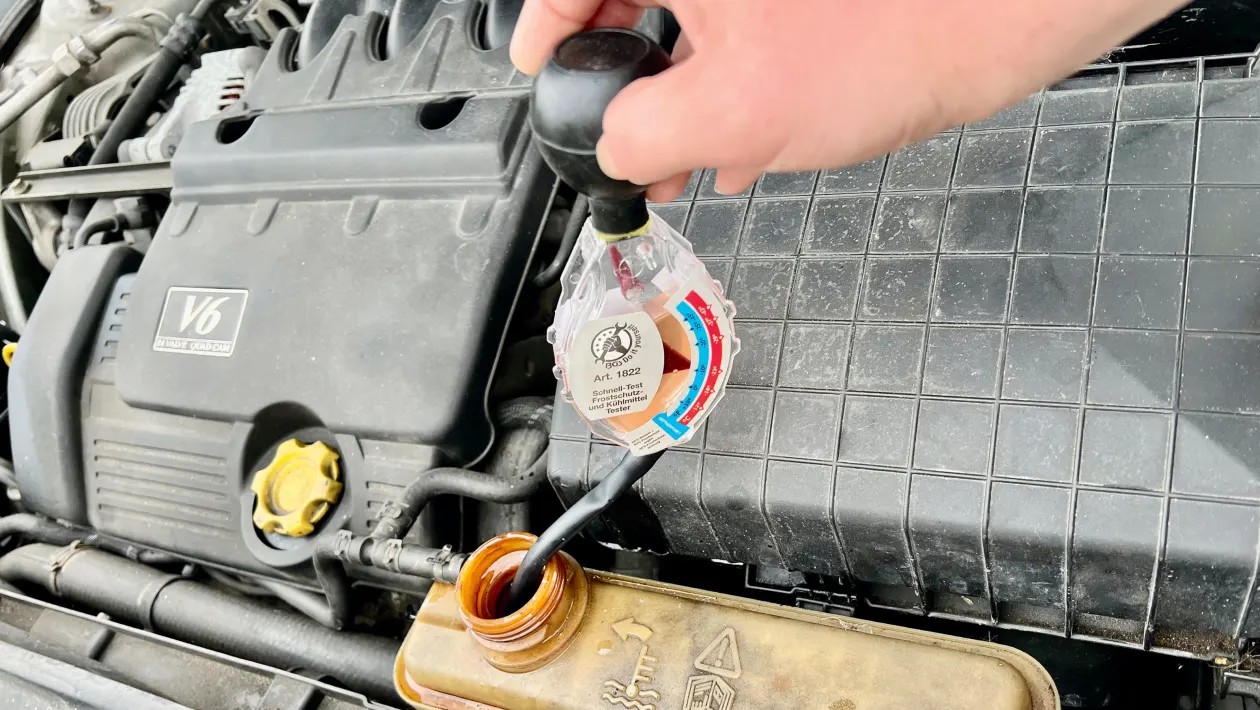
Top Pick: BGS DIY 1822 Anti-freeze Tester – The Best Value
Price: ~£7.82
Fresh Coolant Test: -37°C (accurate)
Car Sample Test: -7°C (correctly indicated need for change)
Rating: 5.0/5 Stars
Designed to TüV standards and available on Amazon, the BGS tester is remarkably simple. Insert the tube, squeeze, wait for the liquid to fill, and read the dial. It accurately showed full protection with fresh coolant and correctly identified a coolant change was needed in our older test vehicle. At under £8, this is an essential and affordable addition to any toolbox.
Sealey Twin-rotor Anti-freeze Tester – Workshop Quality, High Price
Price: ~£26.95
Fresh Coolant Test: -28°C (slightly under-read)
Car Sample Test: -5°C
Rating: 4.5/5 Stars
The Sealey feels durable, but at three times the price of the BGS, it’s hard to justify unless professional use demands extra longevity. While operation is similar (squeeze, fill, read), results were slightly conservative. Still, a cautious reading is preferable to a false sense of security.
Halfords Anti-freeze Tester – Accurate and Easy to Use
Price: ~£13.99
Fresh Coolant Test: -32°C to -37°C
Car Sample Test: +5°C to -15°C
Rating: 4.5/5 Stars
Pipette-type testers are generally less precise, providing a temperature range instead of an exact number. The Halfords tester uses floating discs to indicate protection levels and is remarkably leak-free compared to some competitors. Readings aligned with expectations, making it a sturdy and reliable option.
Silverline Anti-freeze Tester – Too Similar to Halfords
Price: ~£8.10
Fresh Coolant Test: -32°C to -37°C
Car Sample Test: -6°C to -16°C
Rating: 3.5/5 Stars
Almost identical in appearance to the Halfords tester, the Silverline’s readings were accurate, but its extraction tube tended to drip, creating a mess. The Halfords model felt more precise and stable.
Sealey Tube-Type Anti-freeze Tester – Inconsistent Results
Price: ~£11.95
Fresh Coolant Test: -20°C (under-read significantly)
Car Sample Test: 0°C (incorrectly indicated no protection)
Rating: 3.0/5 Stars
This Sealey tester uses a scale instead of discs, but performed poorly. It under-read the protection offered by fresh coolant and failed to register any protection in the car sample. Accuracy is questionable.
Simply Anti-freeze Tester – Messy and Inaccurate
Price: ~£10
Fresh Coolant Test: -26°C to -31°C
Car Sample Test: +5°C to -15°C
Rating: 2.0/5 Stars
Despite its simplicity, the Simply tester leaked coolant excessively, even dripping into the engine bay. It also under-read the fresh coolant’s protection level, with one disc failing to move.
Draper Anti-freeze Tester – Avoid at All Costs
Price: ~£10.50
Fresh Coolant Test: -24°C
Car Sample Test: N/A (failed to register protection)
Rating: 1.0/5 Stars
The Draper tester is unreliable. It couldn’t accurately read the coolant’s protection level and even shattered after a single use, despite careful handling.
The Verdict
Rotary-dial testers (like the BGS) offer the most consistent results. The Halfords tester is the best pipette-style option. Ignoring coolant health risks engine damage. A simple test can prevent costly repairs.


