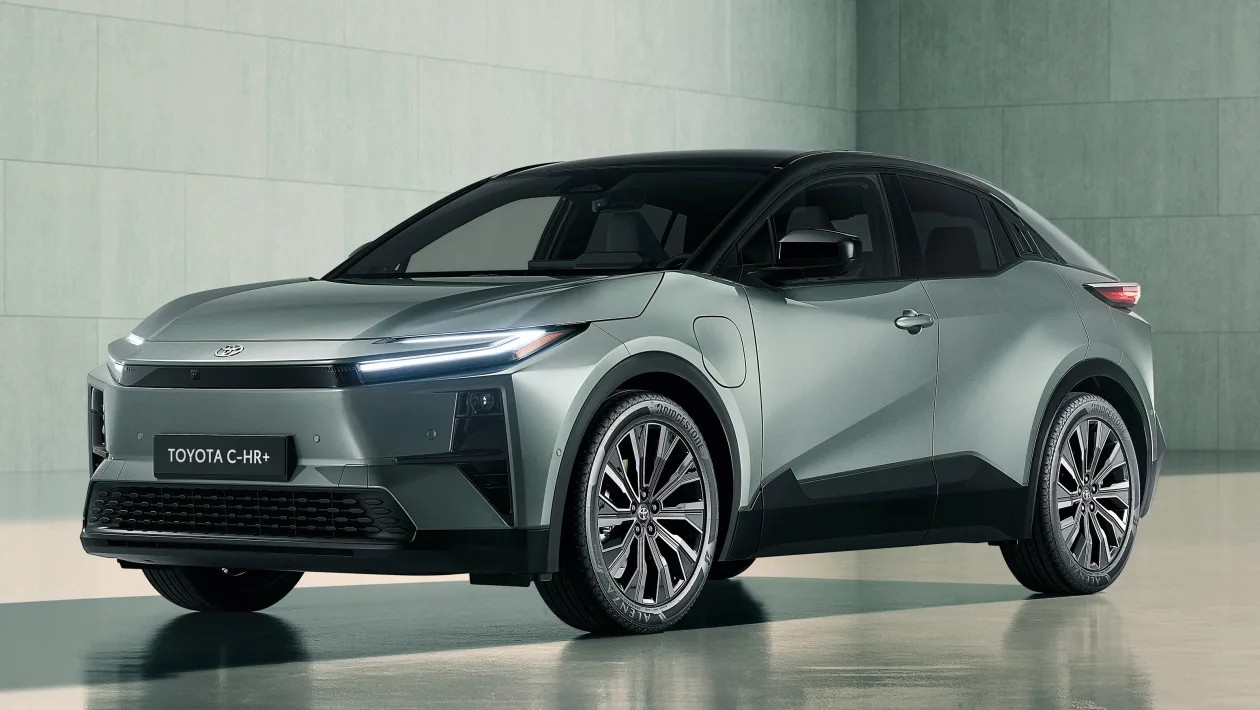
Toyota’s all-electric C-HR+ has been approved for the UK government’s £1,500 Electric Car Grant, making it a more competitive option in the rapidly expanding EV market. This move positions Toyota to challenge rivals like the Skoda Elroq, Kia EV3, and Renault Scenic, all vying for dominance in the electric C-segment SUV category.
Price Adjustments and Trim Levels
The grant brings the base-level C-HR+ ‘Icon’ trim to £32,995 — still £3,000 more than the new Urban Cruiser EV, but more accessible to buyers. Mid-range ‘Design’ models start at £36,150, while the top-spec ‘Excel’ begins at £40,150. These prices reflect the car’s positioning as a premium offering, with features that justify the cost.
Battery Options and Range
The C-HR+ comes with two battery choices: a 57.7kWh version for the Icon, delivering a range of up to 284 miles, and a larger 77kWh option for the Design and Excel trims, extending the range to 376 miles. This flexibility caters to drivers with varying needs, from daily commutes to longer journeys.
What This Means: Market Competition and Consumer Choice
The inclusion of the C-HR+ in the ECG scheme is significant. Government incentives directly influence purchase decisions, and this move could drive more consumers towards electric vehicles. It also intensifies competition, forcing automakers to refine pricing and feature sets to remain attractive. The EV market is maturing, and manufacturers are adapting quickly to stay ahead.
Interior and Specifications
The Icon trim features 18-inch alloys, an 11kW onboard charger, a 7-inch digital driver display, and a 14-inch touchscreen. Higher trims add features such as electric boot lids, tinted windows, and upgraded upholstery. The Excel trim also offers a 22kW onboard charger for faster charging speeds and additional safety technologies.
Performance and Technical Details
The C-HR+ uses Toyota’s e-TNGA platform, shared with the bZ4X. The electric motor delivers 165bhp with the smaller battery, while the larger battery option provides either 221bhp or a more powerful 338bhp dual-motor 4×4 configuration. Acceleration times range from 7.3 to under 5 seconds for the top-end model. Charging speeds are reasonable, with a 150kW charger providing an 80% top-up in approximately 28 minutes.
Space and Practicality
While the C-HR+ offers stylish design, its 412-liter boot is smaller than competitors like the Skoda Elroq (470 liters). Interior space is also tighter compared to other options in the segment, though Toyota prioritizes design over maximum volume.
In conclusion, the Toyota C-HR+ is now a more viable electric vehicle thanks to the government grant, but buyers must weigh its higher price and compact dimensions against its features and competitive range. The car’s success will depend on Toyota’s ability to convince consumers that its design and technology justify the cost.