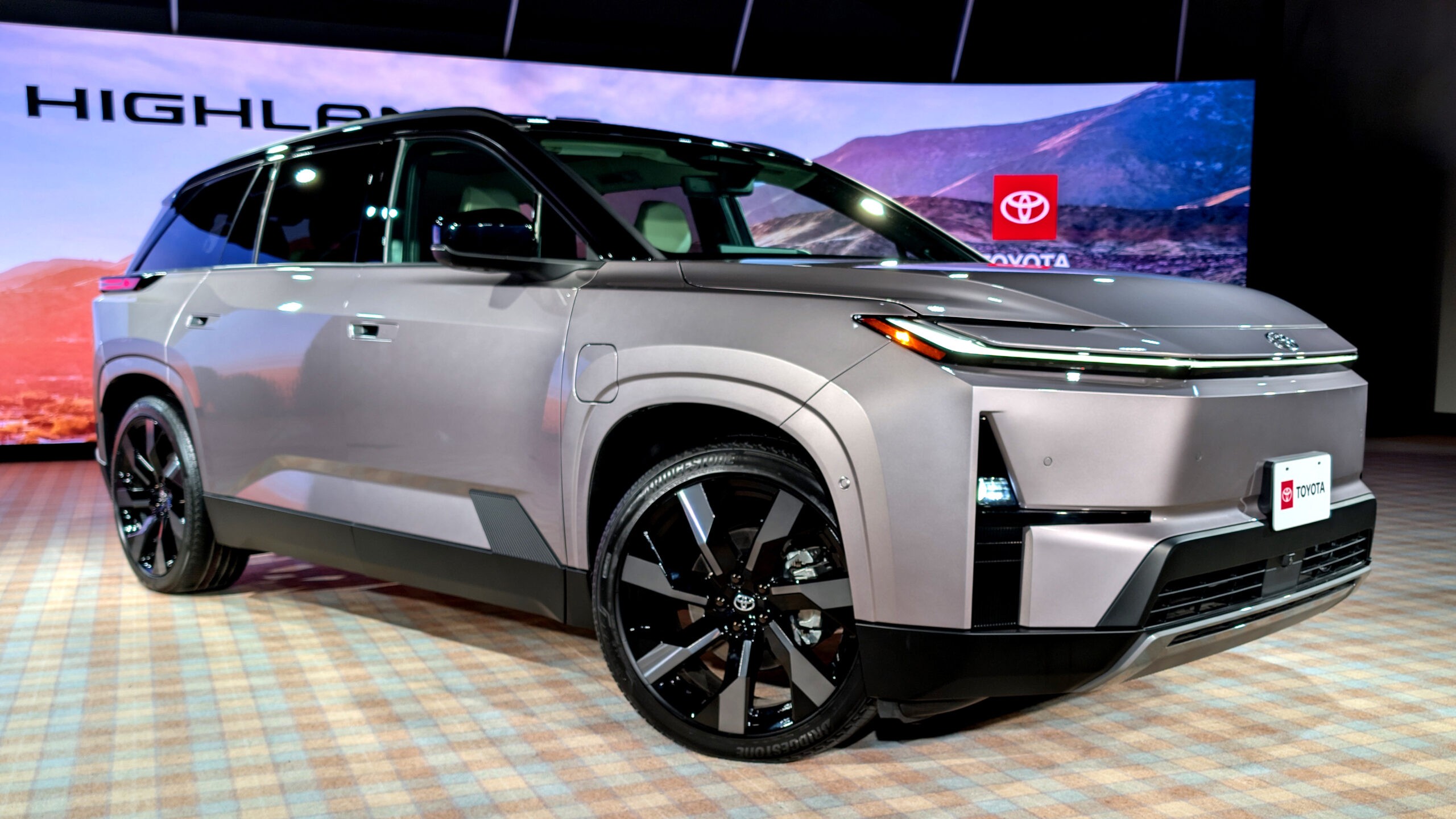
For over two decades, the Toyota Highlander has been a consistent performer in the mid-size SUV market. It’s never been a flashy vehicle, but its reliability and practicality have made it a mainstay for families. Now, Toyota is making a bold move: the next-generation Highlander, arriving in 2027, will be exclusively electric. This isn’t just an update—it’s a complete overhaul, dropping gasoline options entirely.
A New Era for the Highlander
The shift to an all-electric powertrain marks a significant departure for the Highlander. Buyers won’t have the option of a gas-powered model, regardless of budget. This decision reflects Toyota’s commitment to electrification and a clear bet on the future of SUVs. The new Highlander also introduces a redesigned platform, increased dimensions, and a host of new technologies.
Bigger, Bolder Styling
Visually, the 2027 Highlander adopts Toyota’s latest design language, notably the “hammerhead” front-end popularized by the Prius and BZ series. The SUV is larger overall:
- Length: 198.8 inches (+3.9 in.)
- Width: 78.3 inches (+2.3 in.)
- Wheelbase: 120.1 inches (+7.9 in.)
These increased dimensions translate to a more spacious interior, improved third-row access, and better battery packaging underneath the floor. Toyota states the revised proportions aren’t just for looks; they’re integral to maximizing cabin space and usability.
Inside the Electric Highlander
The interior features a modern design centered around a 14-inch infotainment screen and a 12.3-inch digital gauge cluster. Physical buttons are retained for essential functions like climate controls, a welcome inclusion for many drivers. Both trims come standard with SofTex upholstery, heated front seats, and customizable ambient lighting. A panoramic glass roof is available on the base XLE trim and standard on the Limited.
The second row offers captain’s chairs as standard, with an optional bench available for seven-seat configurations. Toyota claims the third row can comfortably accommodate adults, though real-world usability may vary; shorter passengers will likely find it more livable.
Cargo space is rated at 45.6 cubic feet with the third row folded and 15.9 cubic feet with it upright. While spacious, it’s slightly less than the gas-powered Grand Highlander, which offers over 57 cubic feet behind the second row.
Powertrain and Range Options
The 2027 Highlander offers several powertrain configurations:
- FWD XLE: 77.0 kWh battery, 287 miles of range, 221 hp, 198 lb-ft of torque.
- AWD XLE: 77.0 kWh or 95.8 kWh battery, 270–320 miles of range, up to 338 hp, 323 lb-ft of torque.
- Limited: Standard AWD, 95.8 kWh battery, 320 miles of range, 338 hp, 323 lb-ft of torque.
AWD models include paddle shifters for regenerative braking, Multi-Terrain Select, and Crawl Control, even on an EV. The Highlander will feature a North American Charging Standard (NACS) port for DC fast charging, with estimated 10–80 percent charge times of around 30 minutes.
Tech and Safety Features
The Highlander debuts Toyota Safety Sense 4.0, including updated driver-assistance systems like pre-collision braking, adaptive cruise control, and lane-tracing assist. The Limited trim adds Traffic Jam Assist, Advanced Park, and a panoramic view monitor. A standout feature is vehicle-to-load capability, allowing the SUV to power external devices or act as a backup power source.
Production and Pricing
The 2027 Highlander will be manufactured in Toyota’s Kentucky facility, with batteries sourced from North Carolina. This domestic production should help mitigate tariff concerns and potentially keep prices competitive. However, the EV market is cooling off, and Toyota is entering a more cautious landscape. Pricing remains undisclosed, but a starting price above $50,000 is likely.
Toyota’s bold move to an all-electric Highlander signals confidence in EV demand and a commitment to electrification, despite recent market headwinds. The vehicle’s success will hinge on competitive pricing and delivering the practicality families expect from the Highlander name.