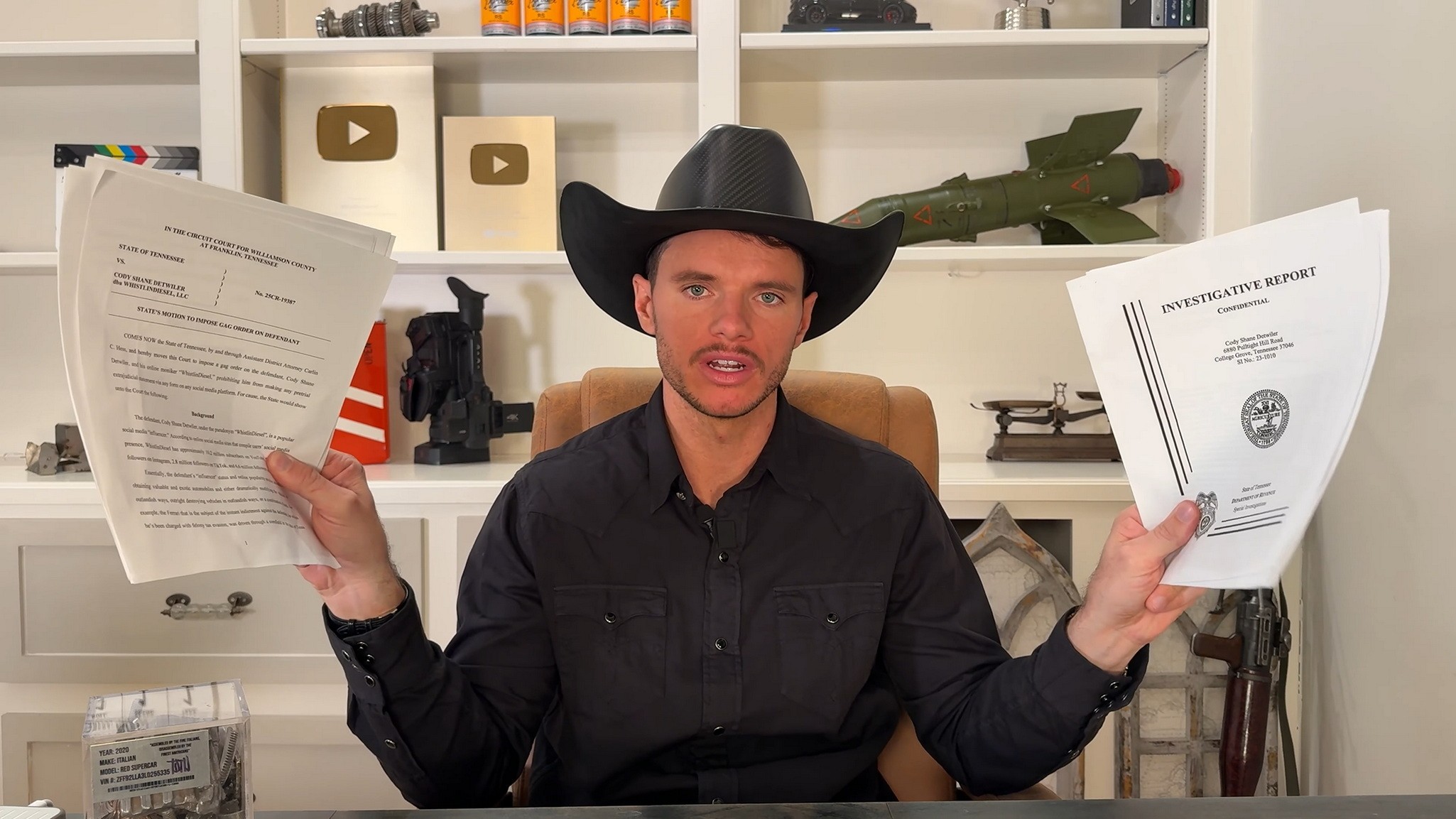
YouTube personality Cody “WhistlinDiesel” Detwiler claims Tennessee authorities deliberately waited to arrest him on tax evasion charges, then moved to silence him by seeking a gag order. The case revolves around his Montana-registered Ferrari F8, which was later destroyed in Texas. Detwiler asserts the state intentionally delayed contact regarding potential tax issues to build a stronger case, then executed the arrest with maximum public impact.
State’s Delayed Action and Alleged Deception
According to Detwiler, state representatives were aware of the Ferrari’s out-of-state registration over a year ago. When his accountant inquired whether Detwiler should transfer ownership to Tennessee, he alleges officials advised against discussing the matter with him and recommended leaving assets untouched until the investigation concluded. This suggests a deliberate strategy to gather evidence before engaging with Detwiler directly.
“They picked the wrong guy to run an example on,” Detwiler stated in his video, implying the state underestimated his public reach and willingness to fight back.
Gag Order Dispute: First Amendment Challenge
The state is now pushing for a gag order, citing concerns that Detwiler’s large online following could influence a jury or incite hostility against state workers. Detwiler argues this is unconstitutional retaliation for his public disclosures about the case, and that the order would prevent him from defending himself, responding to claims, or monetizing content related to the prosecution. The hearing for this gag order is scheduled for Monday, December 8th.
What This Means: Power Dynamics and Public Scrutiny
This situation underscores the potential for abuse of power in investigations, especially when high-profile individuals are targeted. The state’s alleged strategy of delaying contact to strengthen its case, coupled with the gag order attempt, raises questions about transparency and fairness. The case also highlights how social media can amplify legal battles, forcing authorities to confront public scrutiny in real-time.
The outcome of the gag order hearing will likely set a precedent for how public figures can discuss ongoing legal proceedings, particularly in cases with significant online presence. Whether Detwiler’s claims hold up in court remains to be seen, but the case has already sparked debate about the limits of state power and the right to free speech.