Long before Volkswagen Group acquired Bugatti and unleashed the Veyron upon the world, the company proved it possessed the engineering chops to build its own hypercar. Under the iron-fisted leadership of Ferdinand Piëch, VW didn’t just dabble in performance vehicles; it engineered a W12-powered beast that broke world records and redefined the limits of naturally aspirated power.
The story begins not with a production car, but with a series of ambitious concepts that laid the groundwork for an era of automotive excess.
From Concept to Prototype: The W12 Lineage
The saga started at the 1997 Tokyo Motor Show with the W12 Syncro. This concept was a technological marvel designed to showcase VW’s engineering prowess. Its heart was a 5.6-liter engine created by mating two 2.8-liter VR6 units—engines adapted from high-performance Golf hot hatches.
Producing 414 horsepower and sending power to all four wheels via a six-speed sequential transmission, the Syncro was a legitimate supercar candidate. Its striking design, penned by the legendary Giorgetto Giugiaro of Italdesign, turned heads and signaled VW’s intent to compete in the high-performance arena.
A year later, the W12 Roadster debuted at the 1998 Geneva Motor Show. While it retained the powerful W12 architecture, VW made a significant mechanical shift: the open-top version switched to a rear-wheel-drive layout. At the time, Volkswagen claimed this lighter, more agile configuration could accelerate from 0 to 62 mph in just four seconds.
The Nardo Record: Breaking Limits
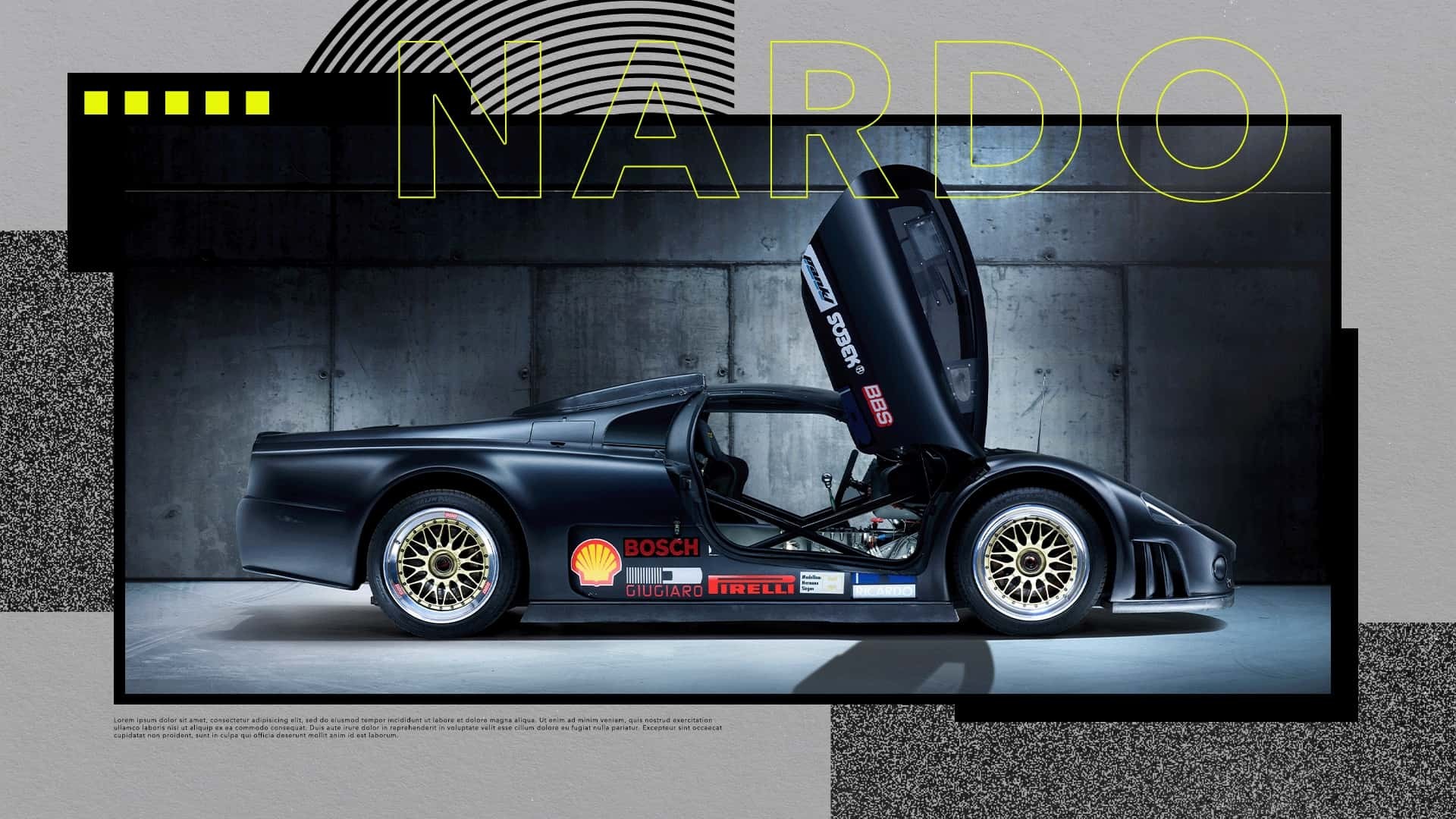
The W12 project reached its zenith in 2001 with the W12 Nardo, a vehicle built with one singular purpose: to break the 24-hour average speed record at Italy’s Nardo Ring. By this stage, the engine had evolved significantly. Displacement increased to 6.0 liters, yet the weight remained controlled at 527 pounds. Power output soared to 591 hp, and the vehicle’s curb weight was trimmed to an ideal 2,646 lbs with a perfect 50:50 weight distribution.
The results were staggering. The W12 Nardo could sprint to 62 mph in under 3.5 seconds and reach a top speed exceeding 217 mph. While it didn’t quite match the legendary McLaren F1, it stood as one of the fastest naturally aspirated cars ever constructed.
The First Attempt: October 2001
Ferdinand Piëch personally attended the first attempt on October 14, 2001. The car averaged 183.452 mph (295.238 km/h) over the 24-hour run, securing nine records. However, Piëch was dissatisfied. Known for his demanding standards, he insisted the team return to break the psychological barrier of 186 mph (300 km/h).
The Second Attempt: February 2002
On February 23, 2002, VW returned to Nardo with two prototypes. During the endurance run, the team stopped every 80 minutes to refuel, change tires, and swap drivers—all while the clock continued to tick.
The effort paid off dramatically. The W12 Nardo broke six world records and six international class records, achieving a new highest average speed over 24 hours of 322.891 km/h (200.635 mph). This was a massive improvement over the previous attempt and cemented the car’s legacy in automotive history.
Why It Never Reached Production
Despite its technical brilliance and record-breaking performance, the W12 Nardo never entered production. Several factors contributed to this decision:
- Brand Positioning: In the early 2000s, a supercar bearing the Volkswagen badge did not align with the brand’s identity or market strategy.
- Corporate Strategy: Volkswagen Group had recently acquired Bugatti, Lamborghini, and Bentley. The focus shifted to the Bugatti Veyron, which took priority as the group’s flagship hypercar.
- Engineering Legacy: Although the car itself didn’t go into production, its engine technology did. The W12 powertrain found its way into the Audi A8, Volkswagen Phaeton, and Touareg. Bentley carried the W12 torch the longest, using it in models until the final Batur in 2024.
The End of an Era
The W12 Nardo remains a testament to the “Piëch era”—a period defined by technological ambition and a willingness to invest heavily in engineering breakthroughs. It was a time when Volkswagen Group explored extremes, from the quad-turbo W16 in the Veyron and Chiron to the ludicrous W18 in the 1999 Bugatti Chiron concept.
Today, as Porsche sells its stake in Bugatti Rimac and the group shifts toward electrification and hybridization, the W12 Nardo serves as a poignant reminder of what was possible. With the naturally aspirated V12 in the Lamborghini Revuelto now representing the largest engine in the VW Group’s portfolio, the W12 Nardo stands as a final, glorious chapter in the age of internal combustion excess.
Conclusion: The Volkswagen W12 Nardo was more than just a concept; it was a declaration of engineering capability that predated the Bugatti Veyron. Its record-breaking achievements at Nardo highlight a pivotal moment in automotive history, showcasing the peak of naturally aspirated performance before the industry shifted toward turbocharged and electric powertrains.