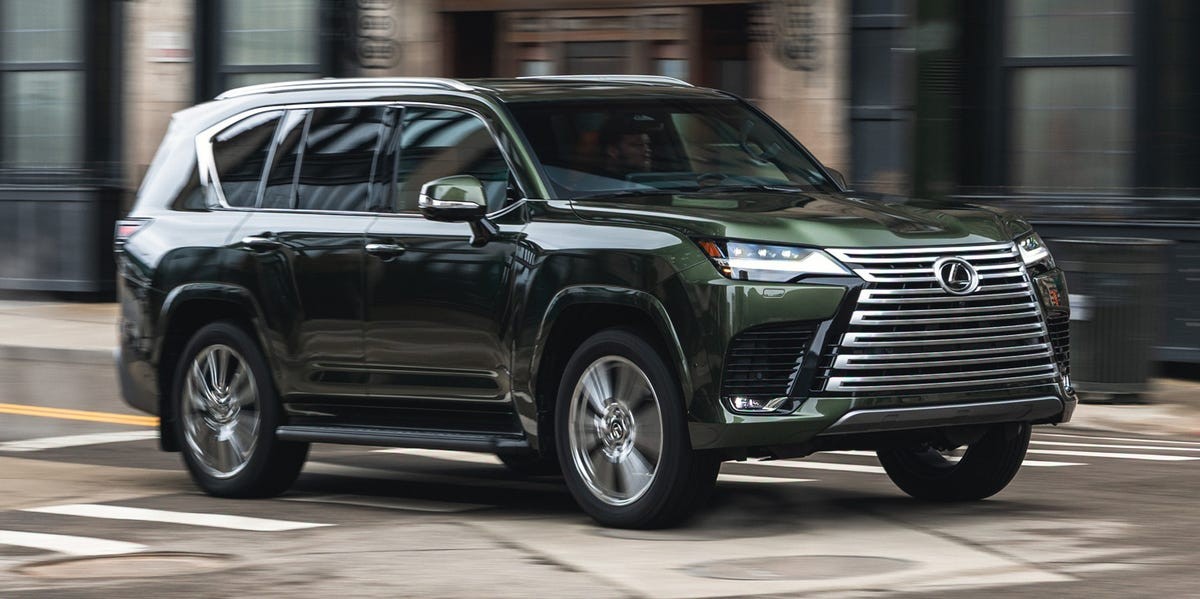
It is the most expensive thing in the lineup. That is its job.
The 2027 Lexus LX700h hybrid sits atop the luxury SUV ladder. Above the non-hybrid LX606, naturally. If you are shopping for a car that whispers old money but screams off-road tank, you are here. The interior is rich. High quality. There is even a version with just two seats in the back for the people who want to be chauffeured into the wilderness.
But here is the catch. It is also a real mud-monster. Three locking differentials. Skid plates. A solid rear axle that laughs at gravel. It can go where most SUVs go home to rest.
So why complain?
The packaging. For a vehicle this big, the interior space feels… pinched. The third row exists in some versions but it is cramped. Legroom? A myth. The cargo space behind it? Tiny. The floor? High enough to strain your back loading a suitcase.
Then there is the hybrid powertrain. It is quicker. More powerful than the gas-only LX600. But the fuel economy? Do not hold your breath. The benefit is marginal. Maybe even nonexistent compared to the non-hybrid. It leaves a question hanging in the air: is the badge with the biggest number actually the right one?
If you want a roomy family hauler, look at the TX. It has more space, more sanity. But it cannot tow as much, the interior is less flashy, and it will break if you hit a serious trail.
What Changes in 2027?
Nothing.
Expect the exact same LX700h. No redesign. No surprise updates. Just another year of the same reliable, over-engineered beast.
Pricing and Performance: The Meat
You are paying for power. Lots of it.
- Engine: Twin-turbo 3.4L V-6
- Hybrid Add-on: One electric motor
- Combined HP: 457
- Transmission: 10-speed automatic
- Drivetrain: 4WD standard
The gas engine is the same as the LX600. The electric motor adds 48 extra ponies. Total system output? 457 hp. That number matters. The 10-speed auto and four-wheel drive handle the rest.
The electric motor can push the LX700h alone at low speeds. Why does that matter? Off-road. Creeping up a rocky incline requires finesse. A gas engine sputters and stalls. An electric motor glides. Precise control without kicking the tires up into your grill.
Overtrail Trim: The King
If you are serious, get the Overtrail. It has locking differentials everywhere. Front, center, rear. It comes with 33-inch all-terrains on 18-inch steel-rimmed wheels (hidden behind alloy covers). A front skid plate is standard. A 2,400-watt inverter is included, too.
That inverter is not a toy. It turns your car into a generator. You can camp miles from power grids and still charge your laptop or run a mini-fridge. Useful for overlanders. Pointless for suburban soccer moms.
On the road? Refined. Powerful. Acceleration is sharper than the gas model. The switch between gas and electric is invisible.
0-60 in 5.5 Seconds
That is fast for a six-figure SUV.
It beats the LX600 to 60 mph by half a second. Does it feel fast? Yes. Is it scary? Not really. The weight keeps you honest.
Towing
Max towing: 8,000 lbs.
Same as the non-hybrid. Plenty for a decent-sized trailer or a boat. Don’t expect to tow a mansion.
Fuel Economy: The Disappointment
This is where the marketing gloss fades.
- EPA City: 19 mpg
- EPA Highway: 22 mpg
- C/D Highway Test (75 mph): 20 mpg
Our highway test was harsher. The LX700h got 20 mpg. The gas-only LX600 got 21 mpg in the same conditions.
So why pay more for less fuel economy?
The hybrid system helps in the city with stop-and-go traffic, but out on the open road? The V-6 has to pull a ton of weight. The battery adds weight, too. It all balances out to a mediocre result. If you drive 5,000 highway miles a year, save your money on gas. Spend it on better coffee instead.
Inside: Luxury vs. Logistics
The front seats? Supremely comfortable. Massage feature standard. Forward visibility is excellent, which makes this hulking tank feel smaller than it is. Good design.
Second Row
Most trims get a bench. Three across. The Ultra Luxury trim swaps this for two captain’s chairs. Reclining. Opulent. But they delete the third row. And the legroom shrinks. It feels tighter, despite being “more luxurious.” Regal, yes. Spacious? Debatable.
Third Row
If you kept the third row (deleteable in Overtrail for more cargo), adults can fit. Their heads fit. Their torsos fit. Their knees? Forget it. The hybrid battery and rear axle sit right under the floor. Legs get pinned. Feet get squished. It is good for emergencies. Not good for road trips.
Cargo Space
- All seats down: 62 cubic feet
- 3-Row models (seats up): 7 cubic feet
- 2-Row models (seats in): 31 cubic feet
Seven cubic feet behind the third row is almost comical. It holds a duffel bag. Maybe two if they are soft. Delete the third row to get usable space.
Tech: Three Screens and a Speaker System
Lexus loves screens. There are three standard displays:
- 8.0-inch: Driver cluster
- 12.3-inch: Infotainment center
- 7.0-inch: Climate/vehicle controls
Wireless Apple CarPlay and Android Auto are standard. A head-up display is there, too.
Sound matters. The standard 10-speaker system is decent. Upgrade to the Mark Levinson 25-speaker system if you care about bass. It comes standard on Luxury and Ultra Luxury trims. Optional elsewhere. Audiophiles will thank you.
Safety Features
The standard suite is robust. Automated emergency braking (detects pedestrians and cyclists). Adaptive cruise control. Lane-keeping assist.
But there is one gap. No hands-free highway assist like the Cadillac Super Cruise or GM’s newer tech. You must keep your hands on the wheel. Your attention on the road. Lexus plays it safe. Literally.
Crash test scores? Check the IIHS or NHTSA site. They do the boring work so you don’t have to.
Warranty: Lexus Plays Long
The warranty is industry-standard for luxury brands, but still generous.
- Limited Warranty: 4 years / 50,00 miles
- Powertrain: 6 years / 70,00 miles
- Hybrid Components: 8 years / 100,0 miles
- Maintenance: 1 year / 10,0 miles free
Eight years for the hybrid bits. That should cover most buyers through their entire ownership. Reliability is Lexus’s bread and butter. They expect these to last.
Final Thoughts
The data above hasn’t changed since our last test because the car hasn’t changed. And it probably won’t.
The 2027 LX700h is a study in contradictions. It is faster than its gas cousin. It looks cooler off-road. But it sips gas at the same rate. It offers less usable interior space than competitors half the price. It demands a premium for… refinement? Yes. Brand prestige? Also yes.
You buy the LX700h because you want the badge. You want the capability. You don’t buy it because the math adds up. It never really does. And that is fine. Some things aren’t about logic.