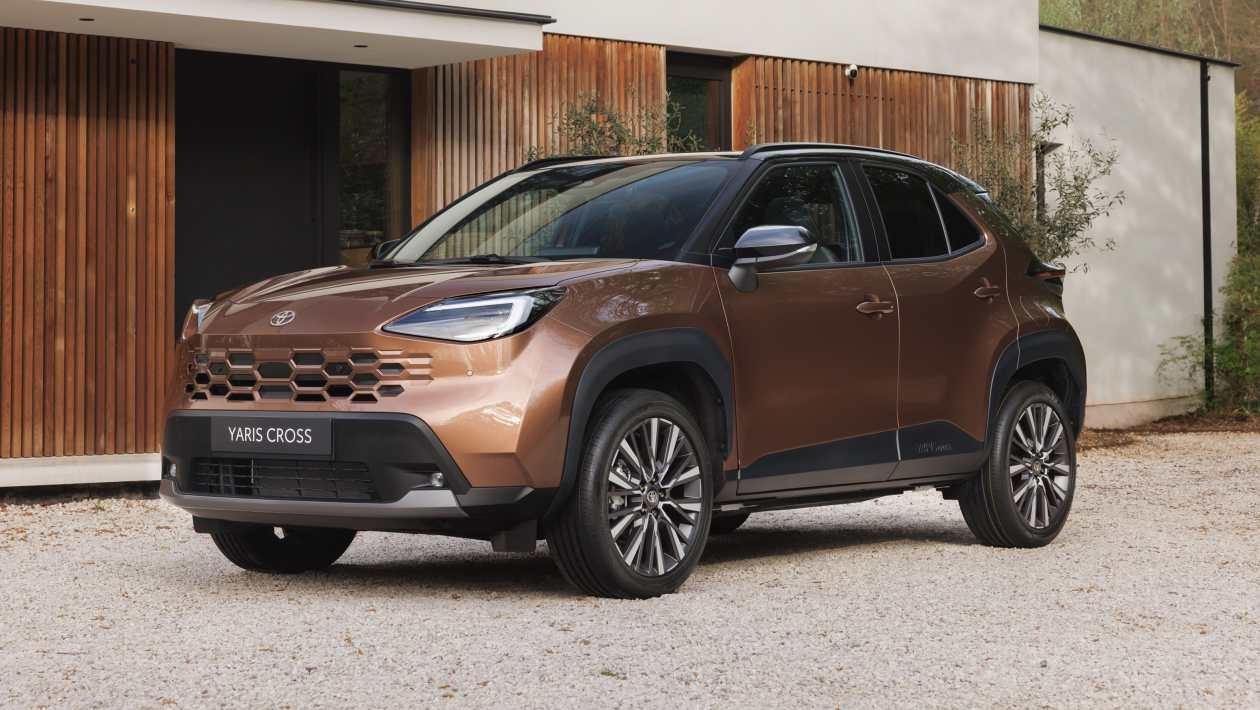
Toyota has officially unveiled the updated Yaris Cross, a refreshed version of its compact B-segment SUV designed to maintain its edge in an increasingly crowded market. With a sharper exterior, upgraded interior materials, and refined hybrid technology, the newcomer aims to defend its territory against established rivals and aggressive new entrants.
A Sharper, More Modern Aesthetic
The most immediate change is the vehicle’s visual identity. Toyota has moved away from its previous styling in favor of a more cohesive, aggressive look inspired by the larger RAV4.
Key design updates include:
– Redesigned Front Fascia: A new hexagonal grille that blends seamlessly into the car’s bodywork.
– Integrated Lighting: The low-set LED daytime running lights have been removed, with lighting elements now integrated directly into a more streamlined headlight unit.
– New Accents: Customers can choose from two new color options and redesigned 17- or 18-inch alloy wheels, depending on the chosen trim level.
Upgraded Interior and Connectivity
While the exterior receives a facelift, the interior focus is on perceived quality. Toyota is introducing higher-grade materials to elevate the cabin experience, such as the new SakuraTouch fabric inserts available on the premium Excel trim.
In terms of technology, the Yaris Cross remains highly competitive:
– Digital Cockpits: All models come equipped with digital instrument clusters.
– Infotainment: The base “Icon” trim features a 9-inch screen, while all higher trims receive a larger 10.5-inch display.
– Smartphone Integration: Apple CarPlay and Android Auto are standard across the range.
Efficient Hybrid Performance
Under the hood, the Yaris Cross continues to rely on its highly efficient 1.5-litre hybrid powertrain. While the system produces a modest 129bhp—resulting in a 0-62mph time of 10.7 seconds—it prioritizes economy and refinement over raw speed.
Following recent revisions aimed at reducing noise, vibration, and harshness (NVH), the powertrain remains a leader in fuel efficiency, capable of achieving nearly 60mpg. Buyers can choose between front-wheel drive and all-wheel drive configurations, with the lineup topped by the enthusiast-focused GR Sport trim.
The Competitive Landscape: Legacy vs. Newcomers
The timing of this update is critical. The Yaris Cross enters a “battleground” segment where it must fight on two fronts:
- The Established Guard: It faces seasoned competitors like the Ford Puma and Nissan Juke, which have long held sway in the compact SUV market.
- The New Wave: Ambitious new players, such as the BYD Atto 2 and Jaecoo 5, are entering the fray. These newcomers often leverage aggressive pricing and higher-spec standard equipment to lure buyers away from traditional brands.
While Toyota’s pricing (expected to range between approximately £27,295 and £33,095 ) may put it at a slight disadvantage regarding “standard kit” compared to some Chinese rivals, the brand relies on its core strengths: proven reliability, high resale values, and a superior driving experience.
The updated Yaris Cross relies on a balance of refined hybrid efficiency and brand trust to stay relevant against a new generation of high-tech, low-cost competitors.