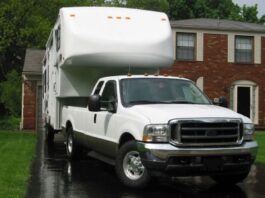

We’ve all been there. You’re standing in your driveway, holding two bags of groceries, a box of books, and maybe a puppy. This is manageable. Next, you try to get 3 more bags of milk and 1 box of oranges. Your arms shake. You dropped the milk. It is inefficient. This is dangerous. This is what happens when you exceed the vehicle’s payload limits.
Cars, trucks, and SUVs not only move metal from A to B, they also carry weight. Weight changes everything.
What is payload?
Let’s clarify the terminology. Payload is more than just luggage you throw in the back seat. This is the total weight of everything in the vehicle, in addition to the vehicle’s own weight. These include:
- Passengers : Everyone in the vehicle is counted as payload. A 150-pound driver means the engine, brakes, and suspension must support 150 pounds.
- luggage and cargo : Boxes, tools, camping gear, food, pets.
- Aftermarket Changes : Heavy roof racks, winches and lift suspension kits can take away from the available cargo capacity.
Most people think that the trunk is in the trunk. it is not. This is the total for all the ship.
Why payload matters
Overloading a vehicle is not just a nuisance; This is dangerous.
- Extended braking distance : Increased weight also increases kinetic energy. The brakes have to work harder and longer to stop.
- Increased risk of tire damage : Tire overload causes extra heat. They can explode, especially on highways.
- Handling problems : Suspension bottoming, body tilting and reduced steering sensitivity are common when the payload is exceeded.
- Mechanical Distortion : Effect on transmission, engine and transmission systems. Wear and tear accelerates.
Safety is not just about avoiding accidents. This is to maintain the functionality of the vehicle.
How to calculate the load capacity of a vehicle
You don’t need a physics degree to solve this problem. You only need two numbers.
- Vehicle weight : Vehicle weight with all standard equipment, full fuel tank and without passengers or luggage. This can be found in the owner’s manual or on the sticker on the driver’s door frame.
- Gross Vehicle Weight Rating (GVWR) : The maximum weight a vehicle can carry, including itself, passengers, cargo and fuel. This information can also be found on a sticker on the door frame or in your instruction manual.
Payload Capacity = GVWR – Vehicle Weight
That’s it. Subtract the vehicle weight from the GVWR to get the payload.
Example:
GVWR: 6,000 lbs
Curb Weight: 4,500 lbs
Payload Capacity: 1,500 lbs
Now this is where people get stuck. They look at 1,500 pounds and think, “I can throw 1,500 pounds behind me.” Not quite.
Passenger factor
Remember that passengers are important. If the vehicle has 5 seats and there are an average of 170 seats per passenger.
It’s a simple math problem, but it can prevent your rear spring from blowing out and your suspension from sinking into the asphalt. All you need to know to know how much weight your gear can hold are two numbers. Gross Vehicle Weight Rating and curb weight.
The total weight of vehicles has strict upper limits. This is the maximum weight allowed for the entire vehicle loaded with fluids, passengers and luggage. This number cannot be found by guessing. This is determined by the manufacturer. Check the user manual. Check the sticker on the driver’s door frame. Although it is also listed in some online databases, the door sticker is usually the most direct source of information.
The weight of the vehicle is the weight of the vehicle itself. No people. No tools. No boxes. This includes a full tank of fuel and all fluids needed to keep the engine running. Draining the oil and emptying the tank will reduce the amount, but the vehicle’s standard weight assumes it is ready to drive.
The simplicity of this formula is brutal. The weight of the car can be deducted from the total weight of the vehicle. The result is payload capacity.
The load capacity is calculated by subtracting the vehicle’s weight from the vehicle’s total nominal mass.
Let’s look at the numbers. Consider a truck with a gross weight of 3,500 pounds. The weight of the vehicle is 3,000 pounds. Perform the subtraction calculation.
Subtracting 3,000 pounds from 3,500 pounds is exactly 500 pounds. This is the payload. Converted to the metric system, it is about 227 kilograms. This is the weight of passengers, equipment and luggage that can be safely loaded before damaging the frame or breaching safety standards.
Does this method change depending on the car model? Not really. The math is the same whether you drive a car, an SUV or a utility vehicle. The limits vary by suspension, but the limits are defined by these two classifications.
Loading capacity of the truck
When you move into truck territory, your margin for error narrows. People tend to underestimate the weight of the truck itself. A half ton truck doesn’t actually weigh half a ton. The weight of the vehicle is often a large part of the total weight of the vehicle before it is loaded with a shovel.
The difference between payload and towing is important here. The payload is located in the bed and cabin. Towing is what happens behind the bumper. Even when towing a light trailer, the weight of the tongue adds to the overall weight and can exceed the payload.
Check the sticker on the door frame. Find the maximum loading capacity. If it’s listed at 1,400 pounds, that includes everything: driver, passenger, fuel and anything in the back. Only 800 pounds can be left for two adults and a dog. that’s it. No extra weight. No need for a heavy toolbox. Just fit it into the remaining gap.
The most important thing is to weigh it before loading it into the truck. You can use a scale at your local cat facility or a public scale to tell you the actual weight. Subtract this value from the total weight of the vehicle. The difference is what you can add. If the math doesn’t work out, you can’t carry it
You can’t build a house by loading long boards into a compact station wagon. This is not true. On the other hand, you don’t need huge, heavy equipment to carry bag after bag.
The payload of a truck is completely different from that of a car or SUV. We are usually talking about heavier cargo. In the US, these vehicles are classified by their gross vehicle weight rating (GVWR). There are two ways to distinguish this. By weight or work class. Although they overlap, they serve different purposes.
The US government has established eight specific weight classes based on GVWR.
- Class 1: Up to 6,000 lbs (2,722 kg)
- Class 2: Up to 10,000 lbs (4,536 kg)
- Class 3: Up to 14,000 lbs (6,350 kg)
- Class 4: Up to 16,000 lbs (7,258 kg)
- Class 5: Up to 19,500 lbs (8,845 kg)
- Class 6: Up to 26,000 lbs (11,793 kg)
- Class 7: Up to 33,000 lbs (14,969 kg)
- Class 8: Over 33,000 lbs.
The Department of Transportation (DOT) classifies these into broader categories. Categories 1 and 2 are light trucks. Levels 3-5 are intermediate. All items above level 6 are heavy.
The position of the track in this hierarchy is important. It determines how much extra weight you can safely carry without damaging the frame or voiding your warranty.
How much cargo can the vehicle really carry?
Look at the passenger car. Mathematics has changed.
Most drivers don’t think about payload. Unlike truck owners who calculate the weight of their cargo before taking it on the road. Families packing for vacation don’t have to worry about whether they’ve reached their payload limit. They just want everyone and their luggage to fit. Cars have lower payload capacities than trucks anyway. Luggage that exceeds the weight limit rarely fits in the trunk or back seat of a sedan. Dangerous loads are usually not only too heavy, but also too large for the vehicle.
However, the payload is important. It affects your trip planning and driving comfort. Passengers count toward that limit. The manufacturer assumes 150 pounds (68 kg) per person. Each empty seat is free weight room. With the three rear seats open, it can handle up to 450 pounds (204 kg) before becoming unstable. Pack accordingly.
How SUV Payload Differs from Sedans
SUVs handle more weight than sedans. Why? Bigger frames. Stronger suspensions. Higher Gross Vehicle Weight Rating (GVWR). But payload isn’t infinite. Even a large SUV has a hard limit. In addition to this, there is a risk of suspension failure, brake problems or loss of control.
The formula remains the same.
- GVWR minus Curb Weight equals Payload Capacity.
- Subtract the driver, passengers and fuel from this figure to find the actual cargo limit.
An empty SUV seat isn’t free space. This is potential weight waiting to happen.
Where Payload Limits Matter Most
Payload isn’t just about the trunk. It’s about every ounce inside the vehicle. Roof racks add weight high up. That changes handling. Cargo in the back shifts weight rearward. This reduces the weight of the front wheels and the steering grip.
Payload isn’t just what you carry. This depends on what you are carrying, where you place it and the weight of the passengers.
Check your door jamb sticker. It lists your specific vehicle’s payload limit. Don’t guess. Don’t assume. Check it out.
Which vehicle has the largest payload?
Full-size pick-up trucks are pioneers. Ford F-150, Chevrolet Silverado 1500, Ram 1500. Some have payloads over 2,000 pounds (907 kilograms). Large SUVs like the Cadillac Escalade and Chevrolet Suburban weigh close to this, often over 680 pounds. But they are not trucks. They don’t even address it.
Mid-size SUV? Typically 1,000 to 1,300 pounds (453 to 590 kilograms). A compact crossover? Typically less than 1,000 pounds (453 kg). car? Typically 800-1100 pounds (363-499 kilograms). The lower the vehicle, the less luggage it can carry. simple physics.
Why do payloads affect safety?
Overloading changes the behavior of the car. Please tighten the brakes. The stopping distance increases. Tires wear faster. Suspension parts sag or break. The steering wheel shakes. It is difficult to predict the overloading of vehicles in emergency situations. It didn’t react as expected.
Payload distribution is also important. If there is a heavy object in the trunk, the center of gravity shifts backwards. This can lead to something like this
Payload is more than just carrying your gear. This prevents the vehicle from tipping over when the load is heavier.
Many buyers consider SUVs to be the ultimate hybrid. It offers the hauling utility of a pickup truck and the comfort and seating of a sedan. In fact, its carrying capacity is somewhere in the middle of the pack. It can carry more than a normal car. But it doesn’t have the practicality of a truck.
The internal shape helps. Folding the rear seats usually provides a flat and spacious trunk. This makes it easier to transport large items such as kayaks and furniture. But physical space is not a bottleneck. Safety is.
SUVs sit higher off the ground. This raises the center of gravity. Load the vehicle and shift the weight upwards. The physics change instantly. Stability decreases. The risk of rollover spikes.
An SUV cannot be treated as a work truck. The design does not support it. Manufacturers know this. This is why many have integrated electronic stability control in their chassis systems. It literally helps keep the vehicle upright when things go sideways.
Regulators have also noticed this trend. The National Highway Traffic Safety Administration (NHTSA) intervened.
Since September 2004, all vehicles with a Gross Vehicle Weight Rating (GVWR) of less than 10,000 pounds have been required to carry a specific label.
This sticker is attached to the door jamb. It states the maximum combined weight of passengers and cargo.
This is not advice. This is a hard limit. Exceed it, and you’re playing with fire. High-center-of-gravity vehicles have no room for error. They tip.
So what happens when the load exceeds these limits? Can the vehicle be modified to carry more cargo? The answer involves understanding the difference between payload and towing. And it starts with looking at the frame.
It is wise to follow the payload limits. But what happens when you have a heavy trailer or a bed full of gear? Can you push past the number on the sticker? You’ve found a truck you like, but its rated capacity feels tight. This is where the choice of manufacturer matters.
Almost every brand offers a towing package. These are more than just signs. These are feature upgrades designed to help you handle more stress. The content varies by manufacturer, but the goal is the same: better performance and safer towing.
The standard package may include a trailer wiring harness. A sturdy hook and a safety chain are usually added. There is probably a bigger engine under the hood. The brakes have been updated. The cooling system has been improved. These changes improve the overall functionality of the truck.
But this is the harsh truth. Overloading is dangerous. You, your passengers and everyone on the road are at risk. If the police stop you for having too much weight, you can get a ticket for dangerous loading. No one wants that kind of headache. Check your numbers before you load up.
The following information covers the payload characteristics of certain makes and models from 2006 to 2009. Use these numbers to plan your load. Note that payload includes the cockpit and everything inside the cabin, including passengers, cargo and fuel.
Acura payload
Acura kept things relatively modest for this era. The MDX was a workhorse and could carry over 1,100 pounds in later years. The RDX and TSX were tighter on capacity.
| Year | Model | Max Load (lbs) |
|---|---|---|
| 2006 | MDX | – |
| RL | – | |
| RSX | – | |
| TL | – | |
| TSX | – | |
| 2007 | MDX | 1158 |
| RL | – | |
| RDX | 870 | |
| TL | – | |
| TSX | 850 | |
| 2008 | MDX | 1158 |
| RL | – | |
| RSX | 870 | |
| TL | – | |
| TSX | 850 | |
| 2009 | MDX | 1158 |
| RL | – | |
| RSX | 870 | |
| TSX | 850 |
If you want to dig deeper into the limits of Acura’s design, additional metrics such as GVWR, GAWR, GCWR, cargo capacity, vehicle weight and towing capacity can be used for further analysis.
Audi payload
Audi products are versatile. The A8 and S8 both have a payload of 1,213 pounds. The TT is much lighter, weighing in at 728 pounds. Many 2007-2009 models are not detailed in this overview. This may be due to trim differences or regional differences.
| Year | Model | Max Load (lbs) |
|---|---|---|
| 2006 | A3 | – |
| A4 | – | |
| A6 | – | |
| A8 | 1213 | |
| S4 | – | |
| TT | 728 | |
| 2007 | A3 | – |
| A4 | – | |
| A6 | – | |
| A8 | – | |
| Q7 | – | |
| RS4 | – | |
| S4 | – | |
| S6 | – | |
| S8 | 1213 | |
| 2008 | A3 | – |
| A4 | – | |
| A5 | – | |
| A6 | – | |
| A8 | – | |
| Q7 | – | |
| R8 | – | |
| RS4 | – | |
| S4 | – | |
| S5 | – | |
| S6 | – | |
| S8 | – | |
| TT | – | |
| 2009 | A3 | – |
| A4 | – | |
| A5 | – | |
| A8 | – | |
| Q7 | – | |
| R8 | – | |
| S4 | – | |
| S5 | – | |
| S8 | – | |
| TT | – |
See Acura GVWR, Acura GAWR, Acura GCWR, Acura Cargo Capacity, Acura Curb Weight, Acura Towing Capacity for full specs.
BMW Payload
BMW’s payload figures show a clear hierarchy. The M5 and 3 Series sedans typically weigh around 1,058 pounds. The Z4 was much lighter, around 550 lbs. The X5 and X6 SUVs can carry even more cargo, up to 1,290 pounds for the 2009 X5.
| Year | Model | Max Load (lbs) |
|---|---|---|
| 2006 | 325 | 325 1058 |
| 330 | 330 1058 | |
| 525 | 525 1102 | |
| 530 | 530 1102 | |
| 550 | 550 1102 | |
| 650 | 650,838 | |
| 750 | 750 1058 | |
| 760 | 760 – | |
| M3 | – | |
| M5 | 1058 | |
| M6 | 941 | |
| X3 | 1025 | |
| X5 | – | |
| Z4 | 551 | |
| Z4M | 584 | |
| 2007 | 328 | 328,926 |
| 335 | 335 1058 | |
| 525 | 525 1102 | |
| 530 | 530 1102 | |
| 550 | 550 1102 | |
| 650 | 650,838 | |
| 750 | 750 1058 | |
| 760 | 760 1058 | |
| Alpina B7 | – | |
| M5 | – |
Payload numbers don’t lie. They indicate how much weight a truck or SUV can carry before it goes bad. We calculated the numbers for Chevrolet, Chrysler, Dodge, Ford and GMC from 2006 to 2009. This is the raw data for the maximum payload. No fluff. These numbers are important when packing for a trip or on a job site.
Chevrolet Payload Specifications
Chevrolet’s line-up at the time was huge. Capacity ranges from the flagship Silverado HD to the family hauler.
2006 Chevrolet Models
* Avalanche 1500: 1,387 lbs.
* Avalanche 2500: 2072 lbs.
* Colorado: 1,532 lbs.
* Express: 2,306 lbs.
* HHR: 900 lbs.
* Silverado 1500: 1,913 lbs.
* Silverado 1500 Hybrid: 1,162 lbs.
* Silverado 1500 SS: 1,253 lbs.
* Silverado 1500 HD: 3,129 lbs.
* Silverado 2500 HD: 3,606 lbs.
* Silverado 3500 HD: 5,169 lbs.
* Suburban 1500: 1,731 lbs.
* Suburban 2500: 2,828 lbs.
* Tahoe: 1,522 lbs.
* Blazer: 1,194 lbs.
* TrailBlazer EXT: 1,429 lbs.
*Note: Aveo, Cobalt, Corvette, Equinox, Impala, Malibu, Monte Carlo, SSR, Uplander and Malibu MAXX maximum loads are not the maximum stated in the source data. *
2007 Chevrolet Models
* Avalanche 1500: 1,258 lbs.
* Colorado: 1,316 lbs.
* Express: 2,306 lbs.
* HHR: 900 lbs.
* HHR Panel: 900 lbs.
* Silverado 1500: 1,658 lbs.
* Silverado 1500 Classic: 1,913 lbs.
* Silverado 1500 Hybrid Classic: 1,162 lbs.
* Silverado 1500 SS Classic: 1,253 lbs.
* Silverado 1500 HD Classic: 3,129 lbs.
* Silverado 2500 HD: 3,458 lbs.
* Silverado 2500 HD Classic: 3,606 lbs.
* Silverado 3500 Classic: 5,169 lbs.
* Suburban 1500: 1,593 lbs.
* Suburban 2500: 2,561 lbs.
* Tahoe: 1,835 lbs.
* Blazer: 1,194 lbs.
*Note: Data not included for Aveo, Aveo 5, Cobalt, Corvette, Equinox, Impala, Malibu, Monte Carlo, Uplander. *
2008 Chevrolet Models
* Avalanche 1500: 1,444 lbs.
* Colorado: 1,316 lbs.
* Express: 2,306 lbs.
* HHR: 900 lbs.
* HHR Panel: 900 lbs.
* Silverado 1500: 1,652 lbs.
* Silverado 2500 HD: 3,458 lbs.
* Silverado 3500 HD: 3,621 lbs.
* Suburban 1500: 1,593 lbs.
* Suburban 2500: 2,561 lbs.
* Tahoe: 1,835 lbs.
* Tahoe Hybrid: 1,830 lbs.
* Blazer: 1,194 lbs.
*Note: Information is not included for the Aveo, Aveo 5, Cobalt, Corvette, Equinox, Impala, Malibu, Malibu Classic, Malibu Hybrid, Uplander models. *
2009 Chevrolet models
* Avalanche 1500: 1,333 lbs.
* Colorado: 1,250 lbs.
* Express 1500: 2,306 lbs.
* Express 2500: 3,262 lbs.
* Express 3500: 4,147 lbs.
* HHR: 900 lbs.
* HHR Panel: 900 lbs.
* Silverado 1500: 1,652 lbs.
* Silverado 2500 HD: 3,480 lbs.
* Silverado 3500 HD: 3,873 lbs.
* Suburban 1500: 1,593 lbs.
* Suburban 2500: 2,561 lbs.
* Tahoe: 1,835 lbs.
* Tahoe Hybrid: 1,830 lbs.
* Blazer: 1,194 lbs.
Note: Data for Aveo, Cobalt, Corvette, Equinox, Impala, Malibu, Malibu Hybrid, and Traverse is not included.
Chrysler Payload Specifications
Chrysler doesn’t have as much payload capacity as the truck manufacturer, but the PT Cruiser and Town & Country have comparable payload capacities.
2006 Chrysler Models
*Maximum payload numbers are not listed for the 300, 300C, Crossfire, Pacifica, PT Cruiser, Sebring or Town & Country models.
2007 Chrysler Models
* Aspen: 1,600 lbs.
* PT Cruiser: 1,907 lbs.
* Pacifica: 889 lbs.
* Town & Country: 1,200 lbs.
*Note: Data does not include 300, 300C, Crossfire and Sebring. *
2008 Chrysler Models
* Aspen: 1,600 lbs.
* Pacifica: 865 lbs.
* PT Cruiser: 889 lbs.
* Town & Country: 1,200 lbs.
*Note: Data does not include 300, 300C, Crossfire and Sebring. *
2009 Chrysler Models
* Aspen: 1,600 lbs.
* Aspen Hybrid: 1500 lbs.
*Note: Data not included for 300, 300C, PT Cruiser, Sebring and Town & Country models. *
Dodge Payload Specifications
Dodge trucks are designed for transportation. Look at Ram’s numbers. The performance of Sprinter vans is also amazing.
2006 Dodge Models
* Caravan: 1,682 lbs.
* Charger: 1,270 lbs.
* Dakota: 1,750 lbs.
* Durango: 1,750 lbs.
* Caravan: 1,700 lbs.
* Magnum: 1,270 lbs.
* ** Ram 1500: 1,750 lbs.
* ** Ram 2500: 3,020 lbs.
* ** Ram 3500: 4,660 lbs.
* Sprinter Van 2500: 3,950 lbs.
* Sprinter Van 3500: 3,950 lbs.
* Sprinter Wagon 2500:** 4,824 lbs.
*Note: No information is listed for Stratus and Viper. *
2007 Dodge Models
* Caravan: 1,682 lbs.
* Charger: 1,270 lbs.
* Dakota: 1,710 lbs.
* Durango: 1,750 lbs.
* Caravan: 1,700 lbs.
* Magnum: 1,270 lbs.
* Nitro: 1,150 lbs.
* ** Ram 1500:** 1,750 lbs.
Honda payload
Honda’s lineup during this era was a mix of reliable sedans and rugged utility vehicles, but payloads varied greatly depending on whether you were hauling groceries or gear. The 2006 Honda Odyssey leads the pack with a massive 1349 lbs payload, proving that minivans aren’t just for soccer practice. The Ridgeline pickups are not light and offer 1549 lbs. The Insight focuses on hybrid efficiency, but its 400-pound capabilities are astounding. Most other Honda vehicles such as the Accord, CR-V and Pilot do not have specific numbers for 2006, but as of 2007 the Civic is 385 lbs, the Element held 675 lbs . The Odyssey and Ridgeline peaked in 2008 at 1349lbs and 1549lbs. By 2009, Honda tightened up the numbers, keeping the Odyssey and Pilot within 1349lbs and 1322lbs**. Note that many later models such as the Accord and Civic are listed as missing, probably due to certain trim changes.
Payload is not only dependent on weight. It’s about what you can legally and safely carry in the cabin and bed combined.
Hummer payload
If you need a brute strength, the HUMMER has you covered. H2 started without 2006 and 2007 data, but by 2008 it could handle 2200 pounds. The H3 stayed at 1150lbs in 2006, 2007 and 2008, but jumped to 1312lbs in 2009. The compact H3T pickup truck was introduced in 2009 and was limited to 1090 lbs**. These figures reflect the enormous curb weight of these trucks. Hummer vehicles are designed to handle large loads, although the heavier the vehicle, the less it can carry.
Hyundai Payload
The early Hyundai products included in this dataset have very little specific payload information. 2006-2008 models (including Accent, Azera, Elantra, Santa Fe, Sonata, Tiburon, Tucson, Entourage, Veracruz ) are shown as missing data. The 2009 lineup lists Accent, Azera, Genesis and Sonata, but no specific payload ratings are listed. This gap suggests either that the data for these particular model years is not focused on the source, or that these primarily passenger vehicles have a lower priority in the public load list in this particular situation.
Infiniti Payload
Infiniti’s luxury SUVs and sedans had solid cargo capacity, especially in the larger models. The QX56 is a workhorse starting at 1440lbs in 2006, dropping slightly in 2007 (data missing), then climbing to 1553lbs in 2008 and staying there until 2009. The FX35 and FX45 performed consistently from 2006-2008 and weighed in at 1183lbs and 1091lbs respectively. In 2009 the FX35 went up to 1213lbs and the FX50 matched the older FX45 at 1185lbs. Saloon models such as the M35 and M45 entered the data set in 2008 at 996 lbs and 1010 lbs. The G35 showed 886 lbs in 2006 but later data is missing. Meanwhile, the G37 debuted in 2008 and weighed 1040 lbs. 2006 Q45 979lbs**.
Isuzu payload
Isuzu vehicles are designed for heavy duty use. From 2006 to 2008 the Ascender SUV maintained a steady 1133 lbs payload. The i-280 (rebadged Chevrolet Colorado) started out strong at 1532 lbs in 2006 and 2007, but dropped slightly to 1512 lbs in 2008. The i-350 offered 1190 lbs in 2006, while its successor, the i-370, rose from 1516 lbs in 2007 to 1260 lbs in 2008**. These variations may reflect changes in trim level, engine options or wheelbase.
Jaguar payload
Jaguar’s luxury cars are more about comfort than hauling power, and this is reflected in their reduced payloads. From 2006 to 2008 the X-Type remained at 1058 lbs. The XK series offers 815 lbs for the 2008 XK Coupe and 772 lbs for the 2008 and 2009 XKR. For 2009, the XK Coupe weighs 815 lbs. Models such as S-Type, XJ8, XJR and XK8** are missing data for their respective years, suggesting that certain payload numbers have not been standardized or recorded in the data set for these specific trims.
Jeep payload
There is a big difference in the cargo capacity of Jeep off-road SUVs and family SUVs. The Commander started strong at 1620 lbs in 2006, but plateaued at around 1300-1310 lbs from 2007-2009. The Grand Cherokee has varied between 1050lbs and 1180lbs and reached 1180lbs in 2008 and 2009. Liberty remained stable at 1150 lbs from 2006 to 2009. Wrangler and Wrangler Unlimited (4-door) prices are normally 1000 lbs, but the Wrangler has risen to 1150 lbs in 2009. Compact SUVs like the Compass and Patriot are both 925 lbs. The 2006 Wrangler is significantly lighter at 800 lbs**.
Kia payload
Kia SUVs and hatchbacks have plenty of practicality in their class. The Sedona minivan did well in 2007 and 2008, offering 1532 pounds. The Sorento fluctuated between 1,200 and 1,318 pounds, reaching 1,318 pounds in 2007 and leveling off at 1,277 pounds in 2008. The Sportage ranges from 1195 lbs to 1289 lbs. The Rio and Rio 5 hatchbacks are 1273 lbs and 1200 lbs. In 2009, the Borrego SUV debuted with an impressive 1815 lbs payload, while the Spectra model had no listed payload capacity.
Land Rover payload
Land Rover’s luxury SUVs strike a balance between off-road capability and comfort. The LR3 started at 1806 lbs in 2006, dropped to 1695 lbs in 2007, and stabilized at 1325 lbs in 2008 and 2009. The Range Rover has dropped from 1360 lbs in 2006 and 2007 to 1136 lbs in 2008 and 2009. Prices for the Range Rover Sport started at 1301 lbs and remained the same through 2007 and 2008 before dropping to 1067 lbs in 2009. The LR2 debuted in 2008 at 1100 lbs and maintained that limit until 2009.
Lexus payload
Lexus vehicles, especially SUVs, have always offered a large cargo capacity. From 2006 to 2009 the GX 470 held steady at 1329 lbs. LX570
Distribution of Mazda’s loading capacity
Data from Mazda’s lineup from 2006 to 2009 speaks to narrow design and changing priorities. Built on the Ford platform, the B-series trucks carry the heaviest loads. The B3000 led the industry in 2006 and 2007 with a maximum payload of 1,680 pounds. In 2008 and 2009, weight dropped to 1,260 pounds, likely due to upgrades to the suspension and chassis components. The B2300 and B4000 originally weighed 1,260 pounds, but the B2300 dropped to 1,200 pounds in 2009.
Sedans and crossovers tell different stories. The Mazda6 started at 1,319 lbs in 2006, dropped significantly to 1,080 lbs in 2007 and settled around 1,087 lbs in 2009. The sporty MazdaSpeed6 is even more restrictive, limited to 963 lbs in 2006 and 1,082 lbs in 2009 standard 6.
Crossovers like the CX-9 offer a huge benefit. Starting weight for 2007 is 1,493 pounds, but data for 2008 and 2009 is missing, suggesting a possible trim level change or underreporting. Specific payload data for this period is also missing from the compact CX-7.
Mazda3 and MazdaSpeed3 are not listed in this data set, so these models depend on other specifications. Meanwhile, the MX-5 Miata hovered around 637 pounds in 2006-2007, but dropped slightly to 633 pounds in 2008. The rotary RX-8 used to weigh in at around 765 pounds, but in 2009 it dropped to 754 lbs.
In 2006, the MPV minivan had a payload of 1,506 lbs. Tribute The crossover shares a platform with the Ford Escape, and payload ranges from 988 pounds (2006) to 1,057 pounds (2008), with the hybrid offering 1,083 pounds. Mazda5 Minivan weight dropped slightly from 1,239 pounds in 2006-2007 to 1,191 pounds in 2008-2009.
Mercedes-Benz payload specifications
Mercedes-Benz load capacity figures are greatly influenced by the choice of engine and equipment level. Luxury trailers such as the C-Class, E-Class and S-Class, and coupes such as the CLK and CLS, often do not have a stated maximum cargo capacity, which usually means a standard passenger configuration rather than a cargo-oriented variant.
SUVs have real weight. The ML350 and ML500 dominate the mid-size segment. In 2006, the ML500 handled 1,496 pounds and the ML350 1,616 pounds. By 2007, the ML350’s weight had increased to 1,635 pounds. The larger ML500 sold for 1,620 lbs in 2007-2008. The performance ML63 AMG was even more limited, starting at 1,257 lbs in 2007 and rising to 1,300 lbs in 2009.
The full size GL class offers strong towing and payload capabilities. As of 2007, the GL450 and GL550 both max out at 1,620 lbs. The diesel GL320 is even lighter, at 1086 pounds in 2007.
The R-Class is marketed as a “big car” but has the practicality of a van. It started at 2,000 lbs in 2006, dropped to 1,635 lbs in 2007 and stabilized at 1,365 lbs in 2009.
The G-Wagon series has undergone significant changes. The G500 payload increased from 1,289 lbs in 2007 to 1,764 lbs in 2008. The G55 AMG 2008 weighs 1,433 lbs. The E-Class Sedan offered a solid 1,157-pound payload from 2007-2009.
The exotic SLR McLaren was subject to extreme weight restrictions. His weight dropped from 626 lbs in 2007 to 342 lbs in 2008. This is a staggering reduction that reflects the priority of carbon fiber construction and engine placement.
Mercury Payload Capacity Guide
Mercury, Ford’s luxury division, shares many platforms with Ford, but often differs in tuning and interior materials. Mountaineer are the main force. His weight was 1,549 pounds in 2006, dropped to 1,443 pounds in 2007, and leveled off in 2009.
Monterey The minivan handled 1,320 pounds of cargo in 2006 and 2007. Data for 2008 and 2009 is missing, likely because the model was discontinued or rebuilt.
The 2006-2007 Mariner compact crossover weighed around 1,075 lbs. By 2008-2009, payload was 1,059 lbs. The Mariner Hybrid is consistently lighter at 920 pounds, likely due to battery weight changes and tuning changes.
The Grand Marquis and Milan sedans do not list cargo capacity, indicating that these sedans are rated primarily for passenger comfort rather than cargo practicality. Sable was introduced in 2008, but this data set also lacks certain payload data.
MINI Payload Features
The MINI’s small footprint means it has a smaller payload than conventional crossovers and trucks. From 2006 to 2009, the weight of the classic Cooper Hardtop remained at 816 lbs.
The Cooper Convertible is slightly more limited, with weight holding steady at 771 pounds over the same period.
When the Clubman launched in 2008, it weighed 816 pounds, about the same as the hardtop. A performance John Cooper Works (JCW) version was introduced in 2009 in hardtop and Clubman guises, also with a maximum weight of 816 lbs. This consistency shows that MINI prioritizes suspension geometry and chassis stiffness over payload in all its models.
Mitsubishi payload data
Mitsubishi’s product range in this era ranged from compact sedans to durable SUVs. The Raider is the new Dodge Dakota and it is the undisputed king of the payload. In 2006, the handling capacity was 1,590 pounds, which decreased slightly from 2007 to 2008 to 1,580 pounds and remained at the same level.
There have been big changes in the medium sized Outlander. It started at 904 lbs in 2006, jumped to 1,538 lbs in 2007 and was revised to 1,169 lbs in 2008.
From 2006 to 2008, the Endeavour SUV weight remained stable at 1,055 lbs. The Montero (known as the Pajero in some markets) weighed 1,165 pounds in 2006.
The sedan has a small capacity. The Galant ranges from 937 lbs to 981 lbs. The Lancer steadily improved over time, starting at 981 pounds in 2006 and rising to 1,157 pounds in 2008-2009. Eclipse Coupe weight increases slightly from 794 lbs (2006-2008) to 827 lbs for 2009.
Nissan Payload Specifications
Nissan’s load capacity varies greatly depending on whether you are looking at a sports.
Saturn payload capacity
Saturn’s final years defined the combination of a practical hauler and a niche sport compact. If you’re looking for the Saturn max payload capacity, that number varies greatly depending on whether you’re driving a compact sedan or a midsize crossover.
In 2006, the Saturn Relay minivan handled 1,350 pounds. The VUE crossover is slightly lighter at 1,331 lbs. The Compact Ion has no payload information listed, likely due to its lower GVWR or rating.
In 2007, we further expanded our product range. The payload of the new Aura sedan is 1,009 lbs. In fact, the VUE Hybrid weighs in at 1,511 lbs better than its regular sibling, while the VUE itself still weighs in at 1,331 lbs. The big Outlook crossover is Saturn’s big lifter with a payload of 1,678 lbs. Specific payload figures for the Sky Roadster and Aura Hybrid are not listed.
In 2008, the Saturn Astra Hatchback hit the market with a modest 893 lbs cargo capacity. The plow settled at £1,009. The VUE dropped to 1,000 lbs, while the VUE Hybrid dropped to 1,111 lbs. Outlook is still £1,678.
The outlook for 2009 has risen slightly to £1,709. The plow is still £1,009. The VUE Hybrid has a weight capacity of 1,111 lbs and the VUE itself has a weight capacity of 1,000 lbs. Astra was completely removed from the payload list. Information is still missing from Sky and Aura Hybrid.
See Saturn GVWR, Saturn GAWR, Saturn GCWR, Saturn Cargo Capacity, Saturn Vehicle Weight, and Saturn Vehicle Capacity for detailed specifications.
Scion payload information
サイタンの电影ボードは、実用性オード若さとスタイをを重視ててととなるれしては。 If you check the Scion Max Load Capacity section, you will see that there are many gaps in the information.
For 2006, the volume of the tC coupé, xA subcompact, and xB minivan is not listed.
In 2007, tC only became available, and the payload data was not available.
The 2008 lineup includes the tC, xB and new xD subcompact cars. The specific cargo weight of these models is not listed.
In 2009, the same tC、xB、xD appeared. Again, payload capacity information was not provided.
As these are light sport compact cars, the payload may be lower or not normalized in the source data. For more information, search for Scion GVWR, Scion GAWR, Scion GCWR, Scion Cargo Capacity, Scion Vehicle Weight, and Scion Towing Capacity.
Intelligent payload limitation
A smart car is a city speedboat. The footprint is small and the restrictions are minimal.
In 2008, the Smart Fortwo’s maximum payload was just 463 pounds. This includes the driver, passengers and cargo. Be careful not to bring more than 2 adults and small bags.
See Smart GVWR, Smart GAWR, Smart GCWR, Smart Cargo Capacity, Smart Curb Weight and Smart Towing Capacity for more information.
Subaru loading capacity
Subaru’s all-wheel drive lineup offers different towing capacities. How much weight does the Subaru hold? Maximum payload varies by model.
In 2006, the B9 Tribeca was a workhorse aircraft with a payload of 1,560 pounds. Baja trucks are lightweight, 1,070 pounds. The Forester can carry 1,060 pounds. The Impreza Sedan weighs 955 lbs and the Impreza Wagon 995 lbs. The Impreza Outback Sport weighs 1,132 lbs. The WRX STI is lightweight at 794 pounds thanks to performance components. The Legacy Sedan can carry 1,200 pounds and the Legacy Wagon 1,300 pounds. The Outback weighs 1,245 lbs.
In 2007 something changed. The Tribeca weighs 1,560 lbs. The Forester weighs 1,010 pounds. Impreza models are similar: Sedan 955 lbs, Wagon 995 lbs, Outback Sport 1,132 lbs. This costs £1,055 for the Legacy sedan and £1,290 for the wagon. The Outback drops from £995.
In 2008, the Forester’s weight remained at 1,010 lbs. Prices drop to £976 for the Impreza wagon and £856 for the saloon. The Outback Sport weighs 1,082 lbs. The Impreza WRX STI grows to 1,080 lbs. The Legacy weighs 1,055 lbs. The Outback goes up to 1,085 lbs. The weight of the Tribeca has dropped significantly to 660 lbs.
2009 brought some progress. Timbers’ weight jumped to 1,230 lbs. The Legacy remains £1,055. The Outback weighs 1,078 lbs. The Tribeca is still 660lbs.
See details on Subaru GVWR, Subaru GAWR, Subaru GCWR, Subaru Cargo Capacity, Subaru Vehicle Weight and Subaru Vehicle Capacity.
Suzuki payload rating
Suzuki’s last few years in the US market have produced some surprisingly powerful small SUVs. What is Suzuki’s maximum load capacity for these models?
The 2006 Elio Sedan can handle 955 lbs. The Forenza weighs 981 lbs. The Grand Vitara SUV is more powerful by 1,175 lbs. The Reno is light at 941 lbs. The XL7 weighs 1,168 lbs. No information is available for Verona.
For 2007, the XL7 has increased significantly to 1,626 lbs. Payload figures for the Aero, Forenza, Grand Vitara, Reno and the new SX4 are not listed.
In 2008, the Forenza returned at 926 lbs. The Grand Vitara weighs 1,178 lbs. The Reno weighs 926 lbs. SX4 controls 893 lbs. The XL7 still has a top speed of 1,626 lbs.
In 2009, the Equator and Grand Vitara were dropped from the list. The weight of the SX4 remains at 893 lbs. No data for XL7.
See details on Suzuki GVWR, Suzuki GAWR, Suzuki GCWR, Suzuki cargo space, Suzuki vehicle weight, Suzuki towing capacity.
Toyota load specifications
Toyota has a rich product range. If you want to know Toyota’s largest payload, the numbers range from small cars to large trucks.
In 2006, the 4Runner weighed 1,285 lbs. The Avalon weighs 1,075 lbs. The Camry weighs 1,059 lbs. The Corolla weighs 1,055 lbs. The Highlander is a heavy duty truck and weighs 1,840 lbs, while the Highlander Hybrid weighs 1,605 lbs. The Land Cruiser weighs 1,500 lbs. The Matrix manages 1,166 lbs. The Prius weighs 1,085 lbs. The RAV4 weighs 1,130 lbs. The Sequoia weighs 1,510 lbs. The Sienna minivan can haul 1,570 pounds. 1,540 lbs for the Tacoma Truck and 1,835 lbs for the Tundra.
In 2007, the FJ Cruiser was introduced, weighing in at 1,280 lbs. Avalon has dropped £1,070. No information available for Camry, Camry Hybrid, or Camry Solara. The Corolla weighs 1,055 lbs. The Highlander goes up to 1,844 lbs, while the Hybrid stays at 1,605 lbs. The Land Cruiser is still priced at £1,500. The Matrix is still £1,166. The Prius drops 863 pounds. The RAV4 weighs 1,130 lbs. The Sequoia is still £1,510. The Sienna has dropped 1,420 pounds. The Tacoma weighs 1,540 lbs. Tundra dropped to level **1.