Most motorcycles vanish. You buy them, ride them, they break, you sell them. Then you forget. What do you remember from 2005? 1998? Maybe the color scheme of a sports bike you lost. Maybe the headache of fixing a carburetor.
History forgets the rest.
But not all. Some machines don’t just ride; they arriving. They shift the culture. They become more than metal and rubber. They become symbols.
Look at these two. Total opposites. Yet, they followed the exact same script.
The Odd Couple: Suzuki And Harley
It starts with the names. Suzuki. Harley-Davidson. Both founded by the men their brands are named after.
Michio Suzuki. William Harley. Arthur Davidson.
Separate worlds. Japan. The USA. Decades apart. One started with little engines in the 1950s. The other cranked over in the early 1900s. Nobody back then knew it, but one would define the American rebel. The other would teach Japan how to race.
Along the way, they each built a monster.
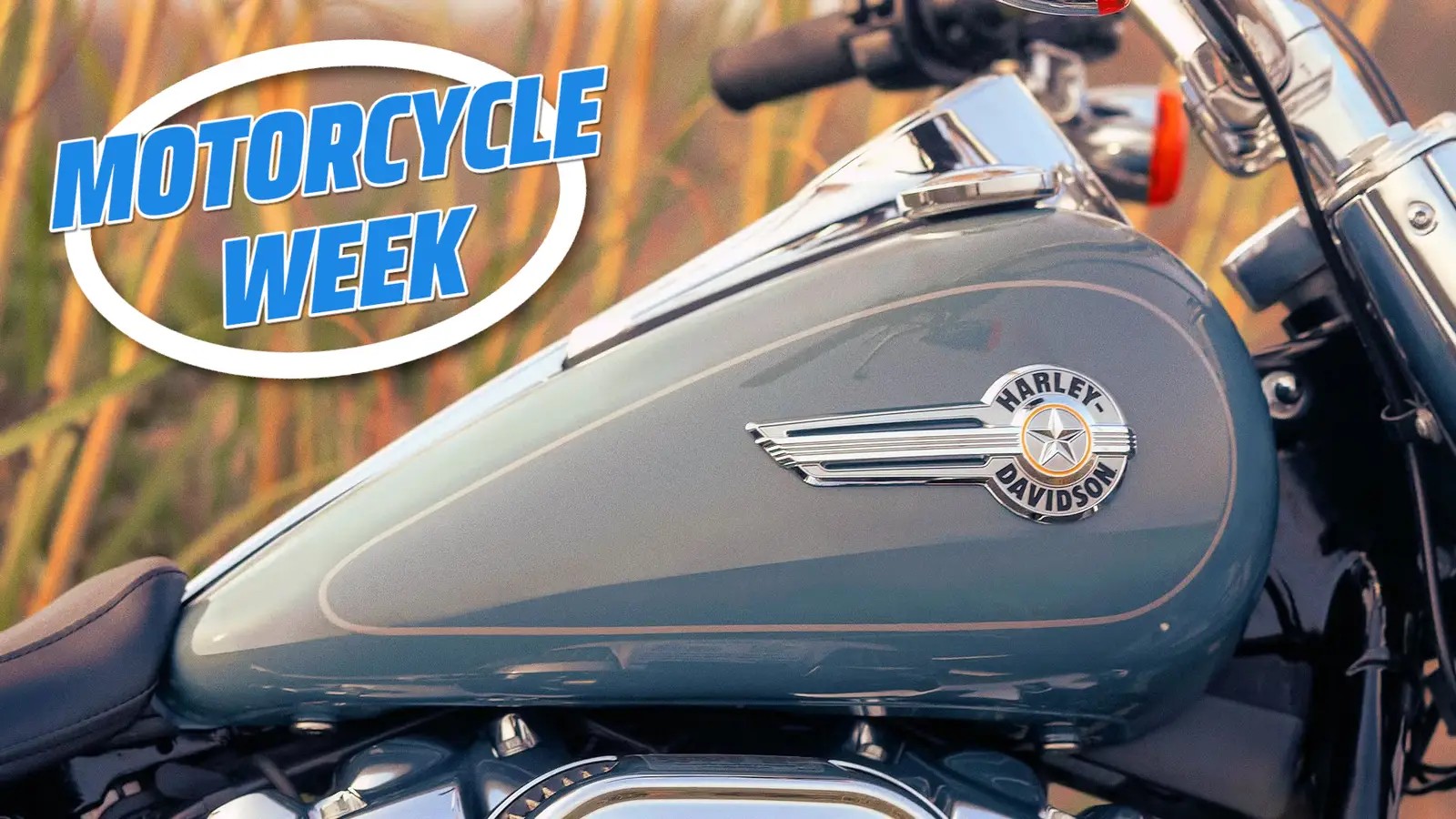
The Harley-Davidson Fat Boy. The Suzuki Hayabusa.
They share nothing mechanically. Nothing philosophically. But they both broke the internet before the internet had bikes to break.
The Fat Boy: Chrome. Torque. Arnold.
Meet the Fat Boy. It debuted in 1990.
It didn’t care if you liked it. It cared that you saw it.
Steamroller stance. Thick tires. A presence so heavy it felt like a building on wheels. It changed the cruiser genre overnight. Before, cruisers were leisure. After, they were attitude.
Why do non-bikers know the Fat Boy?
Cinematics.
- Terminator 2: Judgment Day. James Cameron needed a bike for the T-800. Arnold needed a prop that matched his skull-crushing aura. He found the Fat Boy.
It wasn’t just a bike in the film. It was a character. It screamed rebellion. It screamed power. Suddenly, the guy in the leather jacket wasn’t an outlaw. He was a hero. Or an anti-hero. Close enough.
Dealerships couldn’t build them fast enough. Waiting lists. Months of it. Harley went from niche motorcycle manufacturer to household name. The Fat Boy did the heavy lifting. It wasn’t perfect. But it was undeniable.
“It shifted public perception… from outlaw bikers to cool.”
The Hayabusa: Speed. Fear. 194 MPH.
Enter the Japanese response. Or rather, the Japanese statement.
The Hayabusa arrived in 1999. Nine years after the Fat Boy became a star. The Busa wasn’t about presence. It was about violence. Speed violence.
It was the first true hyperbike.
The goal? Beat the Honda Super Blackbird. The result? A top speed of 194 mph.
Everyone panicked.
Governments panicked. Insurance companies panicked. The industry itself panicked. So, the makers signed a gentleman’s agreement. A voluntary speed cap. 186 mph. For decades, that number was the wall.
The Hayabusa built that wall. Then it broke through it anyway, if you looked closely.
Its design? Grotesque. Intentionally so. Bulky. Weird. Aerodynamic wings on the tail? Yeah, really. It looked like a bee that hit the gym too hard. Critics hated it initially. Buyers bought it anyway.
Why? Because it worked. It could tow a small car up a slight incline. Or so the rumors went. It forced every other sports bike to step up their game or get left in the dust.
Design Is Language
You buy for performance. You stay for the look.
Both these bikes used design to speak louder than their engines.
The Fat Boy. It kept the same DNA. Chrome headlight nacelles. Lakester wheels (inspired by a B-29 bomber? Maybe). Thick, muscular, planted. It says stop looking at me because I know you’re watching. It mixed vintage charm with brute force. No apology.
The Hayabusa. It said look at me while I leave you in a sonic boom. The wind-tunnel shaping was functional. It had to be. At those speeds, air resistance is the enemy. But that functional bulk became iconic. You knew it a mile away. The newer 2021 model sharpened the lines, shed the bloat. It’s cleaner. Cooler. But it still carries that ghost. The first gen was wilder. Uglier? Some said it. Undeniably memorable. Definitely it.
Icons Of Different Tribes
Here’s the thing about culture. It’s tribal.
Motorcyclists split into camps. Cruisers vs. Sports bikes. Torque vs. Revs. Leather jackets vs. Spandex.
But these two? They crossed over.
The Fat Boy gave cruisers a personality beyond “slow.” It showed them that you could have attitude and stability. The current Milwaukee-Eight engine produces 126 lb-ft of torque. It’s not the most powerful cruiser, but it feels the most right. It pulls hard. It stands still. It wins.
The Hayabusa changed how we view speed. It made speed safe. The modern Busa is electronically capped, yes. But it can hit triple digits without spooking. It’s accessible insanity. Tuners still take it. Add a turbo. An ECU tweak. Suddenly it’s 500 hp. Easy. Simple. Other bikes fight back. The Hayabusa just accepts more.
Pop culture absorbed both.
Rappers ride them. NBA players buy them. Dhoom made the Hayabusa a superstar in India. 2 Fast 2 Furious featured it prominently. Music videos? Countless. The Busa wasn’t just for track days. It was for the ‘Gram. It was for showing off.
Did the Ninja H2 top its speed record? Yes. Is the Kawasaki the technical apex now? Maybe. Does it carry the same weight in the soul of the market? Not even close. The Hayabusa started the trend of the superfast daily driver.
Generations And Legacy
Both survived updates. Many bikes die when the model year changes.
Harley Fat Boy
1. 1990-1998: Evolution Engine. Raw. Classic.
2. 1999-2017: Twin Cam. More torque. More polish.
3. 2018-Present: Milwaukee-Eight. Modern vibration reduction. 117 cu inches.
It’s still a top-three seller for Harley. Why? Because people still want the idea of it. It transcended its outlaw roots. It’s mainstream cool.
Suzuki Hayabusa
1. 1999-2007: The Original. The Beast. 134 hp. 194 mph (unrestricted).
2. 2008-2020: The Refined. Capped. Euro-spec. Still fast, but civilized.
3. 2021-Present: The Renaissance. Sharp lines. Ride-by-wire. Still the benchmark.
The regulators hated it. Europe wanted a ban. They didn’t get one. They got the speed limiter. The Hayabusa sacrificed nothing in essence, only in legality. It remains relevant. Even in its third life.
Left Open
The Fat Boy commands respect on a cruise.
The Hayabusa demands focus on the track.
They are books you finish differently. One is a biography. The other is a thriller.
We will stop caring about most motorcycles eventually. The V-max will be a footnote. The CBR600 will be a memory of noise.
These two?
They won’t go away. Not yet. Not maybe ever.
You see the chrome flash?
You hear the turbine spool?
The game has changed since then. Newer tech exists. Better engines, yes. But the vibe? That stays.
We keep talking about them. Do you wonder if it’s the bikes, or just us, looking for something permanent in a world of disposables?
Or maybe it’s just really, really loud. 🏁