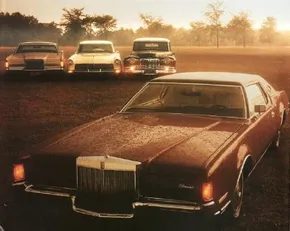
The name Continental Mark IV carried heavy baggage. It had already graced an ocean liner in the 1950s. When Ford slapped it onto a 1970s personal coupe, they weren’t just recycling a badge. They were signaling that Ford’s luxury division finally understands the luxury buyer.
Let’s make one thing clear. This article is not about the boxy Continentals of the Eisenhower era. This is about the Nixon-era Lincoln that emerged from the ashes of corporate history.
Henry Ford II hated the 1958-1960 Mark III, IV and V models. He believed they had insulted the original Continental, which his father Edsel had designed from 1940 to 1948. He also believed they had tainted the legacy of the Mark II in 1956 and 1957. So when Lee Iacocca introduced his new “personal” Lincoln in 1969, Henry insisted on calling it the Mark III. It’s not a Mark VI. It’s not a Mark IV. He wanted to rewrite history. He wanted to salvage pride.
Iacocca had other plans. He had already boosted Thunderbird sales from 1960-1965 by making the Thunderbird bigger and flashier. Lincoln had found its footing with the sleek, small 1961 Continental. But by 1964, the economy boomed. Cars got bigger. The market shifted.
Iacocca saw an opening. A smaller, more exclusive companion model was missing. One that picks up where the Mark II left off.
The Cost-Conscious Luxury Strategy
しかし今回は、there were no unique bodies。 No bespoke chassis。 No slow, expensive handcraftsmanship。 また、absolutely no losing money on every unit sold。
The new Mark had to be a profit-maker。 It would share its frame and inner body structure with the Thunderbird。 It would roll off the same assembly line, much like the Falcon and Mustang did。 It was a smart, cost-wise move。
L. David Ash led the design。 Arthur Querfeld, Damon Woods, and Hermann Brunn assisted。 しかし、Iacocca controlled the final call。
彼は「ネオクラシック」スタイルを要求しました。 彼は、an unabashed copy of the Rolls-Royce \。 彼はthe Mark II-style \。 彼はclose-coupled hardtop proportions。 彼は、bodysides etched to look like flowing, separate fenders。
アイアコッカには、1960 年代後半のあらゆるガジェットや贅沢品も積まれていました。 彼は自分の好みが大衆の好みと一致していることに何の疑いもなかった。
Popular in the market
For Lincoln it was a miracle. Compared to the sharp front-wheel drive 1968 Eldorado, the Mark III looked baroque. But I sold it anyway.
A total of 7,770 “Early 1969” models rolled off the production line. This is about the same price as the Mark I and Mark II combined. Total production in 1969-1971 was 71,611 units. This is almost a third of Lincoln’s book.
Why does it work? The Mark III looks like a luxury car. There is a historical mystery attached to it. It has all the amenities you would expect. Base price in 1969 was $6,741. The price is also reasonable for this level of luxury.
Iacocca has found a new sales direction. He had no choice but to continue working in the mines.
The stage is set. The foundation has been created. Now to continue.
1972 Lincoln Continental Mark IV Exterior
The Mark IV is more than just a repeater. This is evolution. It starts with sheet metal.
Mark III was a stroke of genius. But the Mark IV paid off.
Iacocca’s vision came true. The public wanted this look. They want status. They want comfort.
But the 1972 model had to hold its own. You can’t just drive a 1969 hit. The formula needs to be improved. You have to deal with the growing pains of a brand that is suddenly more popular than ever.
The external changes are subtle but important. The grill is sharper. The lines become clearer. The luxurious voice gets louder.
What decision did Iacocca and Ash make this time? Did they listen to feedback? Or did they double?
The answer is in the details. chrome. glass. ratio.
Let’s take a closer look.
The evolution of design: from imitation to identity
The Mark III borrows heavily from Rolls-Royce’s design philosophy. The Mark IV had to find its own voice. It is no longer just a Rolls-Royce imitation. It had to be Lincoln.
The front gets a facelift. Grille integrates better. The position of the headlights has been changed. The bumper cover has been improved. These are not just aesthetic choices. They are a response to changing tastes.
The side profile loses some of its aggressive “flowing fender” proposition. It gives a more unified feel. To create a more unified feeling. The continental nodule remains. This is a signature. It’s a legacy. But it is handled more subtly.
The tail is where the biggest changes happen. The taillights have been redesigned. The design of the trunk lid has been completely redesigned. ID updated.
These changes are not random. they are strategic. They show maturity. They announced that Lincoln had arrived.
インテリア: フォルクスワーゲンの高級感
その外観は人々の注目を集めます。 内装は買い手を引きつけます。
マーク IV のインテリアは、1970 年代の高級感のマスタークラスです。 席数
Engineering the Mark IV’s Unique Stance
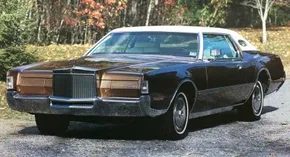
The 1972 Lincoln Continental Mark IV was more than just a facelift. It was a complete redesign by Wes Dahlberg under the direction of Dearborn Director of Design Gene Bordinat. Dahlberg holds a special place in Ford history as perhaps the first designer to master the exterior and interior of a single vehicle. His work was difficult. The idea was to keep the soul of the Mark III while giving the new car a completely different look.
Inside, the Mark IV borrows its body and internal frame structure from the redesigned 1972 Thunderbird. That year the bird had grown to its maximum size, but Lincoln wanted something else. The front suspension uses standard coils and different length A-arms, while the rear suspension has a different design. The installation of the previous model’s three-link track-bar has been discontinued. In its place is a new four-link geometry with coil springs and a stabilizer bar.
The rear lower arms were stamped and mounted, but the forged-steel upper arms angled towards the frame from a mount behind the axle housing. Ford calls this model “STABUL”. The main purpose is to give more space to the rear seats. Another advantage is that the ride is a bit smoother. The steering ratio remains at 21.76:1, but the mechanism has been softened. Most reviewers dislike the lack of road feel.
Dimensions and Exterior Styling Cues
The Mark IV is longer and lower than the Mark III. The wheelbase has been extended by 3.2 inches to 120.4 inches. Overall length increases by 4 inches to 220.1 inches. Height dropped 1.3 inches to 52.9 inches. Despite being nearly eight inches longer, the car is actually 211 pounds lighter, with a curb weight of 4,782 pounds.
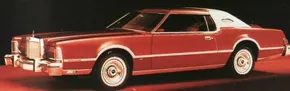
It looks heavier than it actually is. Additional front and rear overhangs, steeper windshield and backlight angle, thinner A-pillars, bulging body sides and larger rear wheel openings add apparent weight. A distinctive pseudo-Rolls grille sits deep in the bumper and separating headlamps, which are hidden behind the electric flip-up doors. Stylists used a wide U-shaped cutout in the center bumper to make the grille appear taller without increasing the height of the hood.
The trunk lid has shrunk and the dummy spare has flattened. The taillights were moved from the rear fender to the bumper. The broad vinyl-clad roof is still the marque’s trademark, but small, double-pane oval “opera windows” in the IV’s C-pillar adds a formal look. These provide important over-the-shoulder visibility. Each window is featured an etched four-pointed Continental star and the interior surface is silver-filled. The windows were originally standard equipment, but became an option midway through this year, sparking a fashion trend in Detroit.
Interior Safety and Engine Detuning
The instrument panel of the Mark IV is completely different from the four-pod layout of the Mark III. Federal crash safety rules forced the change. Tests with dummies require a new three-pod layout. The panels were heavily foamed, hooded, and recessed. It may not look very attractive, but it follows the rules. The Real wood in the dashboard and doors has been replaced with splinter-proof burl-grain plastic. The gear selector has been moved from the column to the instrument cluster.
Power comes from Lincoln’s big 460-cid V-8. In 1972, the engine was detuned. Low compression enables the use of unleaded fuel. Horsepower dropped from 365 to 212. That’s 12 horsepower less than what the full-size Continental offered, but that drop isn’t entirely real. Detroit is moving to a more realistic SAE net ratings. The three-speed automatic transmission received minor internal adjustments.
“Like other Detroit manufacturers, Ford has moved to a more realistic SAE net ratings, so the [horsepower] loss isn’t what it seems.”
Why Mark IV is important
The 1972 Lincoln Continental Mark IV was a turning point. Balances luxury with new safety requirements. STABUL suspension increases space and driving comfort. The opera windows defined the influential look of the decade. Interior changes prioritize safety over traditional aesthetics. The drop in horsepower reflects changes in testing standards across the industry. Although the size of the car has increased, its weight has decreased. Although it is light, it looks sturdy. The design team overcame the strict limitations of innovation while maintaining the brand’s identity. The result is a vehicle that feels familiar yet unique. The windows of the opera house became an icon. The dashboard is safer. The suspension is more comfortable. The engine becomes easier. The Mark IV is a testament to engineering under constraint. It’s not just about following trends. It sets them up. The legacy of this design choice lives on in the balance of form and function in today’s luxury cars. Details matter. Small changes add up. Mark IV proves that creativity can flourish even under strict guidelines.
Mark IV Improvements: Noise, Specifications, Sales
Lincoln didn’t just copy the 1971 Mark III. they improved it. The interior has a shared “twin comfort lounge” bench, but the execution feels more mature. Six power adjustment levels are available for both the driver and passenger seats. Can be controlled from the door panel. Equipped as standard with an ignition lock. But there is a variation here. The two doors can now be locked from both sides with the help of a piston. Comfort is important.
The structure of the cottage is research. The trunk is covered with carpet. Yes, there is also carpet in the glove box. The inside has a mixed nylon fabric and grainy vinyl carpet. This is an option for those who prefer leather. Air conditioning has been significantly improved. The automatic temperature control function remains the same, but with improved functionality.
Other details define the luxury experience. The Cartier watch is prominently displayed on the dashboard. AM radio with power antenna is standard equipment. The ceiling lighting consists of two small fixed additional spotlights. It sounds very special, but it adds to the atmosphere.
Engineering Silence
The Mark III was quiet. The Mark IV was quieter. Lincoln engineers have spent over a decade solving noise, vibration and harshness (NVH) problems. The 1972 model was its pinnacle.
how did they do it? rubber sleeve. All suspension parts are mounted in large rubber bushings. The spring uses double bushings on the top and bottom. It’s not just the frame mounts that have been redesigned. They used a new butyl compound. The shape and position of each rack was tested in a full-scale car driving simulator. This machine recreates everything from cobblestones to railroad tracks.
Tires also help. 225-15 Michelin steel belt radial. Mark Standard since 1970. Runs quietly.
The brakes have also been changed. Sure-Track returns for a third season. This was an early form of anti-lock brakes. It is now standard, not optional.
Selection and value
Buyers have many options. There are 23 standard colors. There are four optional “Moon Dust” metallic colors to choose from. The padded vinyl cover is available in five colors.
Popular add-ons include:
-automatic headlight dimmer
– Electric sunroof
– Cruise control
– Swivel steering wheel
– AM/FM stereo radio
– “Deluxe” wheel cover
– The Traction-Lok differential has a higher axle ratio
Price is a factor. Mark IV prices start at $8,640. This was $173 less than the final model Mark III in 1971. For various reasons, the ’71 model cost over $1,500 more than the ’70 model. That’s why IV offers more vehicles.
市場への影響
売上は価値提案を反映しています。 マークIVは4万8591台を販売した。 これは、昨年の 27,091 件から 56% 近く増加しています。
競合他社にも負けません。 マークはキャデラック エルドラドよりも 8,517 台多く販売されました。 キャデラックはコンバーチブルとハードトップを提供しています。 それでもリンカーンが勝った。
よりコスト効率の高いリンカーン モデルであるマーク IV は、販売が 56% 増加し、エルドラドを上回りました。
この成功により、次のモデルイヤーの基礎が築かれました。 リンカーンは公式を微調整し続けた。 彼らの目標は、その勢いを維持することです。 問題は、マークが売れるかどうかではなく、どれだけ高級感を車内に詰め込めるかだ。
1973 年バージョンはさらに一歩進んだものでした。
The latest information from 1973 and the road to 1974
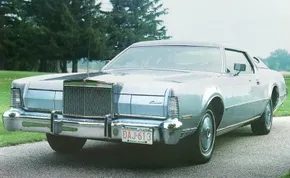
Second year upgrades usually mean paint and a new radio. The 1973 Lincoln Continental Mark IV broke the mold. Of course, opera windows are also back as standard equipment. But the real story was the bumper.
Federal mandates require shock absorption up to 5 miles per hour. Lincoln delivered. The result was a massive, bulky spar that added 130 pounds to the vehicle’s weight. It had no aesthetic purpose. In fact, it blocked the grille and made the front look stunted and heavy. The turn signals have been redesigned to fit the new equipment. Corner lights have become standard, probably because all the steel now affects visibility.
Performance decreases. Net horsepower dropped to 208. Lincoln tightened the rear axle ratio to 2.75:1 to keep the 4,200-pound land yacht moving. It helped. Barely.
Underneath, the changes are quieter, but also more significant. Improves sound insulation. The rear drum has grown. Better front discs. Bigger tires, especially 230-15 Michelin or LR78-15. A side-mounted battery replaces the messy front-post setup. Painting options have been reduced to 15 standard options. Moondust metallics expanded to nine. settled at eight for vinyl roofs.
Lincoln continued to ride the success wave of Continental special trim. They applied this logic to the Mark IV. The Silver Luxury Group will be available mid-year for $400. You got Silver Moondust paint. Matching “Levant grain” vinyl top. The interior is upholstered in a Cranberry Victoria Velour. It has a cohesive look.
Dark red leather later appeared as a free upgrade. The Silver Mark, which takes the luxury group a step further, has also been released. Silver leather seats. sliding glass moonroof. This is a pioneering feature in this segment. Not many competitors were offering glass roofs that opened.
Critics complained. They said there were no improvements on the Mark IV. Sales figures disagreed. The number of orders was 69,437. That’s almost 8,000 units more than the Cadillac Eldorado sold in the same year. Annual production of Lincoln models exceeded 100,000 units for the first time. A gain of 28,073 units. The public wanted size, chrome and a moonroof.
The 1973 version was well received in the market. However, regulatory pressures are increasing. The next few years will test how much more the Mark could endure before weight and emissions regulations completely destroy its spirit.
1974 システムへの衝撃
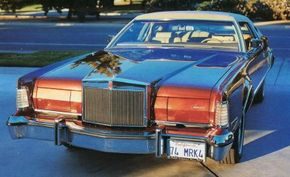
1974 年モデルは購入者に心理的な衝撃を与えました。 リンカーン コンチネンタル マーク IV の基本価格は 1,210 ドル増加して 10,194 ドルとなります。 それは単なるインフレではありません。 これがコンプライアンスのコストです。 時速5マイルでのリアバンパーに関する新しい連邦規制により、車の全長は228.3インチに強制されました。 バンパー自体に衝突保護に必要な構造補強を加えることにより、基本車両重量は 5,362 ポンドまで増加します。 スタイリング効果はすぐに現れました。新しいバンパーの形状に合わせて、テールライトをリアフェンダーに押し戻す必要がありました。
ただし、パフォーマンスには影響しません。 ソリッドステート点火への切り替えのおかげで、馬力は 220 馬力まで上昇しました。 新たにオプションとなったツインエキゾーストパイプ(1972年に計画された後、ついにデビュー)は、この組み合わせにさらに活気を与えた。
リンカーンは安全インターロックも追加しました。 シートベルトを着用しないとエンジンは始動できません。 これはワシントン州のもう一つの義務であり、バンパーを義務付けるのと同じ規制圧力によって動かされている。 当然、消費者からも大きな不満の声が上がった。 この認可はすぐに取り消されたが、コックピットにおける政府の行き過ぎの一例として人々の記憶に残っている。
Options and the Gold Rush
In 1974, the list of options was expanded. “Quick Defrost” was introduced with a heated windshield and rear window. More significantly, Lincoln is offering the Gold Luxury Group the current Silver package for $438. If you choose gold, you get Diamond Fire Metallic paint, a “Gold Flare” vinyl top, and tan interior in nylon and vinyl or optional leather.
Sales did not collapse, but fell during the initial panic over the OPEC oil embargo. The Mark IV sold 57,316 units. Although sales were down, it still easily outpaced the Cadillac Eldorado, which sold 40,412 units.
The 1975 Drop
1975年までに不況はさらに深刻化した。 販売台数は4万7415台に減少した。 なぜ? その理由の一部は、リンカーンが標準装備を追加し続けており、それがステッカー価格を押し上げているためです。 4輪ディスクブレーキ、クルーズコントロール、チルトステアリングホイール、リモートパワートランクリッドリリースが義務化される。 基本価格は11,802ドルに跳ね上がりました。
価格の高騰が買い手を怖がらせた可能性がある。 マーク IV は依然として 44,752 台を販売したエルドラドを上回っていましたが、その差は急速に縮まりつつありました。
技術者たちは重量増加に抵抗した。 これだけの技術と安全装置を追加したにもかかわらず、リンカーンは車両重量を 200 ポンド以上削減することに成功しました。 また、排出ガス基準を満たすために触媒コンバーターも設置しました。 排出ガス規制の強化により、馬力は 194 馬力に低下しました。 ただし、大きな V 8 エンジンはこれまで以上にスムーズに動作します。 エンジンの以前のバージョンを悩ませていた失速の問題は本質的に解消されました。
New Looks and Luxury Groups
The 1975 model also brought new aesthetics. A Landau roof option was introduced, with the front three-quarters vinyl and the rear painted metal, with a stainless steel crown separating the two.
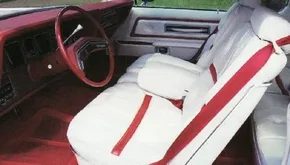
Lincoln has released three new luxury collections: Blue Diamond, Lipstick Red/White and Saddle/White. Later in the season, a spring version of the Versailles option was added. It pushes the luxury angle even further with a “cushion-like” interior made of “crushed majesty fabric.”
The trend is clear. Cars are getting heavier, more expensive and more complex. But for those who can pay the price of admission, the Mark IV is a unique, if increasingly heavy, presence in the personal luxury market.
In the next chapter, we will consider whether the 1976 model can withstand the changing environment.
1974 年と 1975 年のリンカーン コンチネンタル マーク IV は世界の注目を集めませんでした。 もちろん、それらでも十分です。 しかし、それらは本質的には準備運動です。 本格的なショーは 1976 年に始まりました。
今年、フォードは、高級クーペを再定義するデザイナー シリーズ オプション を導入しました。 4 つの異なるテーマがデビューし、それぞれの名前はファッション界のレジェンドにちなんで付けられています。 ビル・ブラス。ユベール・ジバンシイ。エミリオ・プッチ。 そしてカルティエ。
そう、カルティエはジュエリーメーカーであり、ファッションデザイナーではありません。 誰が気にする? これらの名前は高価に聞こえます。 そうします。
Designer series phenomenon
You have to pay extra for these. We’re talking a $1,500 to $2,000 premium over the standard models. This is a steep hike.
But the buyers didn’t blink.
The Designer series was an instant hit. Its share of total sales in 1976 was more than 25%. What is the total production volume? 56,110 units. This is a significant recovery compared to the previous year.
Ford didn’t stop there. They dropped the old Gold and Silver groups. However, they kept the lipstick and blue diamond theme. And they added four new color treatments:
- Gold/cream
- Red/rose
- Light/Dark Jadeite
- Jade/White
Then came the exclusive Spring Editions. These were introduced in March 1976 and are rare.
Production quantities are unknown, but it is estimated that there were only 50-100 of each.
Three options defined this tier:
- Black Diamond
- Lipstick/white
- Desert sand
The standard Continental sedan also has a Black Diamond group. But what about the Mark IV versions? They are special.
Breaking Down the Spring Editions
The Black Diamond option was introduced at the 1976 Detroit Auto Show. It cost $1,064.
The paint is Black Diamond Fire Metallic. If you want a sharper look, you can add a silver pinstripe. Black premium body side moldings came standard.
The roof was the standout feature. Black cushion vinyl with “Cayman Grain” texture. It looked like patent leather. It covered only the rear quarter panel.
If you want complete coverage, you can choose the “Normande” vinyl roof.
Interior choices were stark. You could go all-black. Leather or crushed velvet. The backs of the front seats have additional straps in patent leather. This is dramatic. Maybe it’s too funereal for some.
Dove gray was the alternative. It came with leather-and-vinyl or Versailles velour. It’s safer. Quieter.
Lipstick/white group was a bold mix. You got white or Lipstick Red paint on the body. The rear of the Landau roof is finished in Lipstick Red Cayman vinyl.
The interior is white leather and vinyl. The assist straps were Lipstick Red. This color contrast is the main difference from previous lipstick models.
Desert Sand is more complicated. Tan on the body sides and rear deck. Dark brown metallic color has been applied to the nose, hood and around the rear window.
A subtle pinstripe separates the two shades. The all-vinyl roof was tan. A rear roof with a brown or dark brown metallic color on the front is also available as an option.
Interior options include dark brown embossed velor or saddle leather and vinyl. Like all spring versions, it comes with an additional strap.
剪影包
然后是“剪影”包。 仅建造了 200 辆。
据说它是为了纪念 1976 年总统选举而创建的。 可能只有黑色。 黑色后兰多车顶。 身体呈红色细条纹。 黑色或红色内饰。
歌剧院的窗户被封锁了。 取而代之的是“剪影”脚本。 屋顶前部装饰有拉丝不锈钢。
它是时尚前卫汽车设计的终极表达。
Banner execution ends
With all these options, the 1976 Mark IV became the most stylish car since the Kaiser Dragons of the early 1950s.
It’s noisy. The prices are very expensive. It is very stylish.
The total production of the Mark IV series over four years was 278,599 units. This set a record for a single model in the Mark series at the time.
Its successor, the Mark V, sold even better between 1977 and 1979. But the Mark IV paved the way.
It attracts a new generation of luxury goods buyers. People want status symbols, not just traffic.
This made Lee Iacocca the hero of “Dearborn” again.
Was this success part of the reason Henry Ford II fired him in 1978? Very likely. Iacocca is a genius. But as Ford II reminds us:
“My name is written on the building.”
The legacy of the Mark IV? It changed the way Ford approached luxury. This goes to show that fashion and cars can mix. We sell cars. It laid the foundation for the future 1970s.
The rest is history. At least for the rest of the story.
Mark IV Secret War of Souls
Wes Dahlberg doesn’t just design cars. In 1958, he created the aesthetic DNA for Ford’s European and German operations. He brought this continental feel to the US with his Project Pinto in 1967. But then came his real test.
The Lincoln Continental Mark IV was not assigned to a specific designer. This is a 5 person indoor game. crash program. Lee Iacocca loved the internal competition. Dahlberg leads the senior design team into the field.
Dahlberg, now retired in La Mesa, California, was interviewed by the Continental Review Newsletter in 1986. This conversation reveals the messy and secret facts behind the development of America’s iconic luxury coupe.
崩溃程序
福特设立了五个独立的设计工作室。 绝密。 竞争的。 达尔伯格清楚地记得压力。
“就包装而言,这是设计师的梦想。这辆车的比例太棒了。”
在与小型欧洲紧凑型设备搏斗多年后,突然间,他开始关注一台巨大的机器。 这是一种享受。 他有两名设计师和六名建模师全天候工作。
クヌーセン介入
彼らはモデルたちをショーのために半分準備した状態にしました。 そのうちの1つはほぼ完成しています。 そこへ、フォード社長のサイモン・“バンキー”・クヌッセンとその乗組員が突然入ってきた。
彼はそのモデルを見た。 それから彼は電話をかけました。
「皆さん、これは次のマーク、マーク IV になります。製造とエンジニアリングの実現可能性以外は何も変更しないでください。」
彼はヘンリー・フォードに尋ねなかった。 彼は取締役会に確認しなかった。 大企業では、これはキャリアの自殺行為につながることがよくあります。 しかし、それはうまくいきました。
チームは方向性を変えた。 彼らはゼロから設計するのをやめ、実現可能性の問題を解決し始めました。 それらは可能な限り変化しません。
签名详细信息
很少有细节被改变。 椭圆形窗户是在此过程的后期添加的。 但核心形状呢? 完好无损的。
格栅? 它与劳斯莱斯相呼应,但它不是复制品。 那太容易了。
“如果许多伟大的经典作品要建于 1972 年,我们会尝试打造它们的外观……我们想要干净、简单的外观。”
不是杜森贝格。 不是直接引用特定时代的内容。 一个综合。 干净的石板,给人一种历史感而不怀旧的感觉。
The crease that defines a decade
This is a technical nuance that most people don’t notice.
The sides of the Mark III are flat and vertical. Mark IV? round.
Deep wrinkles ran down his body. A diagonal line is created below. It’s not just decoration. This is very important for the overall efficiency of the car. Its shadow gives the car an overwhelming sense of weight and presence.
The effect is in both directions. In fact, Ford Studios designed the 1972 Thunderbird based on the Mark IV. Luxury coupes define the direction of development in the field of personal luxury goods.
Dahlberg’s team didn’t just win the race. They set the standard. This time my boss was right. It’s not about changing anything.