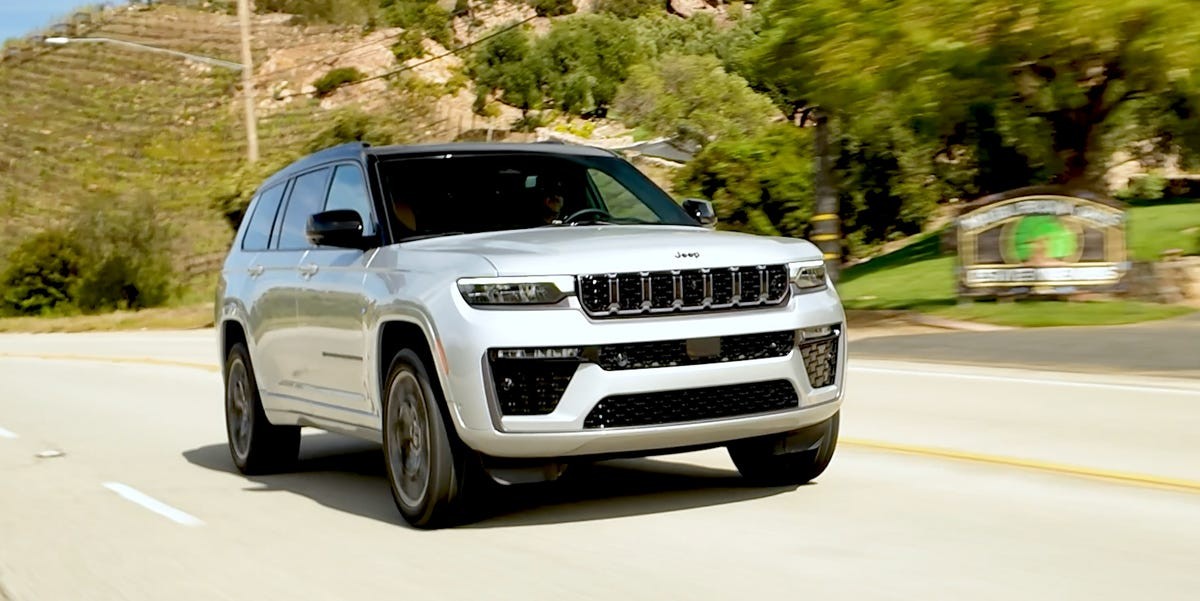
The automotive industry is shifting away from large-displacement engines, and the 2026 Jeep Grand Cherokee L is a prime example of this transition. The era of the 5.7-liter V-8 is officially over for this three-row SUV. In its place, Jeep has introduced a turbocharged 2.0-liter four-cylinder engine, dubbed the “Hurricane.” While the name suggests the potency of Jeep’s new inline-six, this smaller engine aims to deliver comparable performance with significantly better efficiency.
The new engine produces 324 horsepower and 332 pound-feet of torque, figures that surpass the outgoing 3.6-liter Pentastar V-6 (293 hp). On paper, the upgrade looks like a clear win for power and environmental responsibility. However, real-world driving reveals a more complex picture, where raw muscle meets transmission lag and cabin noise.
Power vs. Weight: A Surprisingly Capable Combo
The Grand Cherokee L is a substantial vehicle. The addition of a third row of seats and extended bodywork adds nearly 300 pounds to the curb weight compared to the two-row version. For families regularly transporting six or seven passengers, the primary concern is whether the smaller engine can handle the extra load without feeling strained.
In practice, the answer is a resounding yes. The 2.0-liter Hurricane provides ample acceleration when needed. It performs with authority during highway merges and overtaking maneuvers on two-lane roads. The engine’s torque curve allows it to “get out of its own way” when the driver demands immediate power, proving that displacement is no longer the sole indicator of capability.
The Transmission and Refinement Problem
While the engine itself is potent, the eight-speed automatic transmission holds the powertrain back. The driving experience is marred by several issues that detract from the vehicle’s premium aspirations:
- Jerky Shifts: At low speeds, the transmission occasionally executes abrupt upshifts, disrupting smooth cruising.
- Sluggish Downshifts: The gearbox lacks alacrity when downshifting, which exaggerates the sensation of turbo lag. This can make the SUV feel “flat-footed” during aggressive acceleration.
- Cabin Noise and Vibration: The four-cylinder engine produces coarse, buzzy sounds and uncouth vibrations that bleed into the cabin. This auditory profile clashes with the luxurious interior design, creating a disconnect between the vehicle’s visual appeal and its mechanical character.
Efficiency Gains and Off-Road Versatility
Despite the refinement issues, the switch to a four-cylinder engine delivers tangible benefits in fuel economy. The EPA ratings show an improvement of 1 to 2 mpg over the V-6, even though the new engine produces more power.
When compared to the old V-8, the difference is stark:
* 2.0L Four-Cylinder: 22–23 mpg combined
* 5.7L V-8 Hemi: 17 mpg combined
These efficiency numbers are particularly impressive given the Grand Cherokee L’s robust off-road capabilities. It offers features like a height-adjustable air suspension, a rarity among mainstream three-row SUVs. This combination of efficiency and utility positions the Grand Cherokee L as a versatile option for buyers who need space but refuse to sacrifice off-road readiness.
Positioning in a Crowded Market
The 2026 Grand Cherokee L occupies an interesting middle ground in the SUV market. Lower trims start in the $40,000–$50,000 range, competing directly with mass-market rivals like the Honda Pilot, Toyota Highlander, and Chevrolet Traverse. However, higher trims push into the luxury segment.
Our test vehicle, the top-tier Summit trim, started at just under $65,000 and ended with a sticker price of $73,175 after adding options like a rear-seat entertainment system and hands-free driver assistance. The interior is undeniably handsome, featuring high-quality leather and a feature-rich cabin that justifies the premium price tag. The exterior design, often compared to the British Range Rover, remains a strong selling point.
Yet, the four-cylinder engine’s character feels more at home in a Chevy Traverse than a BMW X5. This mechanical mismatch limits the Jeep’s ability to fully compete in the luxury SUV space it clearly targets. While it offers American ruggedness and European styling cues, the driving experience lacks the polish expected at this price point.
Conclusion: The 2026 Jeep Grand Cherokee L successfully swaps a thirsty V-8 for a more efficient and powerful four-cylinder, but gains in fuel economy come at the cost of transmission smoothness and cabin refinement. It remains a stylish and capable three-row SUV, but its entry into the luxury segment is hampered by an engine that feels out of place in such a premium package.