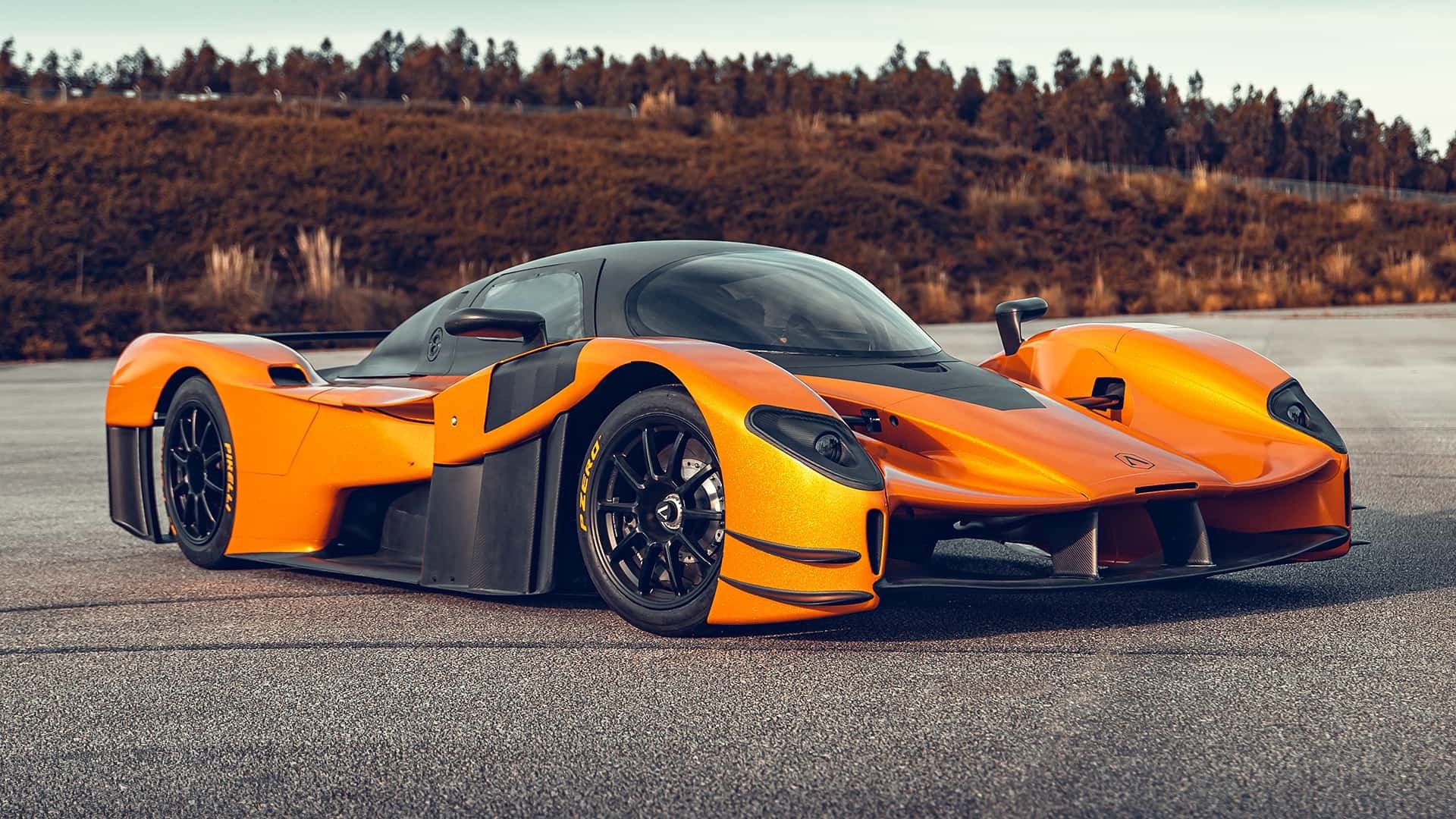
The European supercar landscape is witnessing an unexpected entry from a nation not traditionally associated with high-performance automotive manufacturing. Adamastor, a young company based in Porto, Portugal, has unveiled its inaugural model: the Furia. This is not merely a styling exercise or a limited-run exotic car for collectors; it is a strategic platform designed to bridge the gap between street-legal hypercars and professional endurance racing.
The Furia serves as the technical foundation for Adamastor’s long-term ambition: to compete in the 24 Hours of Le Mans. By developing a road car first, the company aims to homologate technology that will eventually be refined for the track, challenging established giants in the hypercar segment.
Aerodynamics First, Style Second
The Furia was engineered from a clean sheet with aerodynamic efficiency as its primary directive. Rather than relying on visually aggressive but functionally questionable appendages, the car’s design is driven by airflow management.
- Carbon Fiber Construction : The entire bodywork is crafted from carbon fiber, contributing to both strength and weight reduction.
- Underbody Aerodynamics : The chassis features two Venturi channels in the underbody. These generate significant downforce without disrupting the car’s clean exterior lines.
- Proportions : Measuring approximately 15.0 feet long, 7.2 feet wide, and just over 3.3 feet tall, the Furia possesses the low, wide stance typical of extreme supercars. This geometry maximizes high-speed stability.
The cockpit is integrated into a monocoque structure with a built-in roll bar, a safety feature borrowed directly from race car engineering. This approach underscores the vehicle’s dual nature: a road car built with racing safety standards at its core.
Lightweight Engineering and Track-Focused Hardware
One of the Furia’s most compelling attributes is its remarkably low dry weight of approximately 2,315 pounds (1,050 kg). This figure is achieved through extensive use of carbon fiber and a design philosophy focused on mass reduction.
The mechanical layout prioritizes balance and handling:
* Engine Placement : Longitudinal mid-engine configuration.
* Drive System : Rear-wheel drive.
* Suspension : Fully adjustable double-wishbone suspension, allowing for precise tuning across different driving conditions.
* Braking : AP Racing system with six-piston aluminum calipers at the front and four-piston units at the rear.
* Transmission : A race-derived Hewland sequential gearbox, operated via steering-wheel paddle shifters.
This hardware selection signals that the Furia is designed for drivers who value mechanical feedback and precision over luxury amenities.
Ford Powertrain: Proven Performance
At the heart of the Furia lies a proven powertrain: the 3.5-liter twin-turbocharged V6 developed by Ford Performance for the Ford GT. This engine is chosen for its reliability, power density, and familiarity in motorsport contexts.
- Horsepower : Over 650 hp.
- Torque : 421 lb-ft, available from low engine speeds.
- Performance : The street-legal version claims a 0–62 mph time of roughly 3.5 seconds and a top speed exceeding 186 mph.
For the track-focused variant, Adamastor aims to generate up to 3,968 lbs of downforce at 155 mph. Such figures place the Furia in direct competition with established hypercars, suggesting that the car is capable of handling the rigorous demands of endurance racing.
Production and Ambition
Adamastor plans to produce a limited run of approximately 60 units. Each car will be hand-built in Portugal by a dedicated team, ensuring a high degree of personalization and strict quality control. The starting price for the street-legal version is €1.6 million ($1.9 million), rising to €1.95 million ($2.3 million) with VAT.
The Furia represents more than just a new supercar; it is a statement of intent. By combining race-bred technology, lightweight construction, and a powerful Ford engine, Adamastor aims to establish itself as a credible contender in both the hypercar market and the world of endurance racing.
The Bottom Line : The Adamastor Furia is a bold entry into the hypercar arena, leveraging proven Ford technology and serious aerodynamic engineering to lay the groundwork for a future Le Mans campaign. It challenges the notion that only traditional automotive powers can compete at the highest levels of performance and racing.