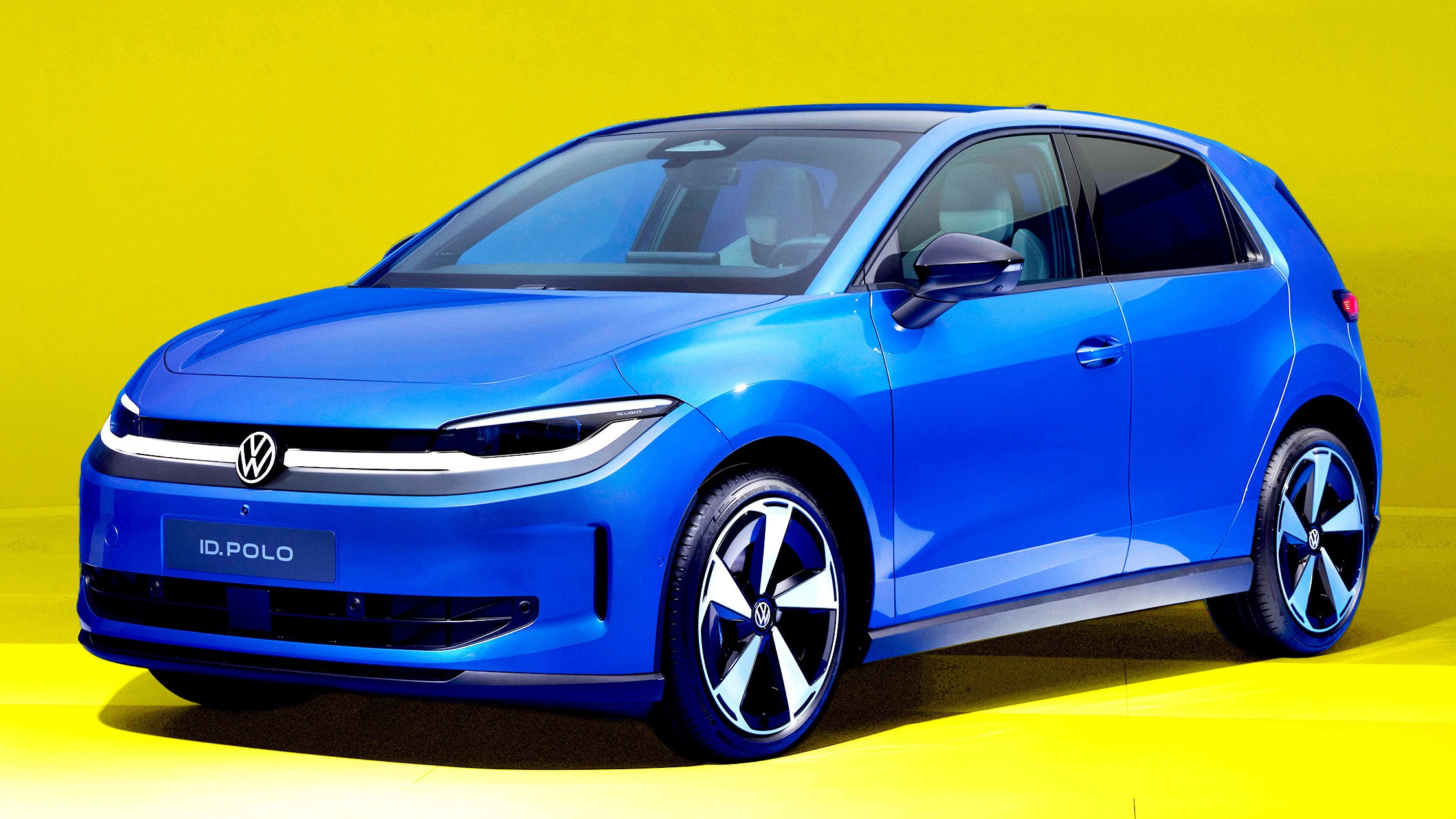
Volkswagen is breathing new life into one of its most enduring nameplates. After more than 50 years and 20 million units sold, the legendary Polo is undergoing a radical transformation. The new ID. Polo is a fully electric, seventh-generation hatchback built on the advanced MEB+ platform, designed to bridge the gap between compact city driving and accessible electric mobility.
Pricing and Availability
Volkswagen is positioning the ID. Polo as a competitive entry into the EV market by focusing on affordability.
- Entry Price: The base “Trend” trim starts at €24,995 ($29,300) in Germany.
- Current Availability: While the entry-level price is the headline, current pre-orders are limited to the mid-spec “Life” trim, starting at €33,795 ($39,600). A wider range of variants is expected to roll out by summer.
Performance and Battery Options
The ID. Polo offers a tiered approach to range and power, catering to different driving needs and budgets:
- Standard Range: Featuring 114 hp or 133 hp outputs, these models use a 37 kWh lithium iron phosphate (LFP) battery. They provide up to 204 miles (329 km) of range and support 90 kW DC fast charging (10% to 80% in approximately 27 minutes).
- Long Range: A more powerful 208 hp variant utilizes a larger 52 kWh nickel-manganese-cobalt pack. This version offers up to 283 miles (455 km) of range and faster 105 kW charging, reaching an 80% charge in about 24 minutes.
- Performance (Coming 2027): A high-performance GTI variant boasting 223 hp is currently in development.
Maximizing Small-Car Utility
By utilizing the new front-wheel-drive MEB+ platform, Volkswagen has solved a common issue in electric hatchbacks: cramped cargo space. Because the motor is not located under the floor, the ID. Polo gains significant utility:
* Increased Luggage Capacity: Cargo volume has grown by 25% compared to the previous combustion model, rising from 351 to 441 liters (expandable to 1,243 liters with rear seats folded).
* Passenger Comfort: The interior offers 19 mm of additional legroom, a crucial improvement for rear-seat passengers in a compact footprint.
Design: Where Retro Meets Digital
Visually, the ID. Polo stays true to the “ID.2all” concept, featuring sharp lines and hidden rear door handles for a cleaner aesthetic. The lighting setup is particularly modern, featuring a wide transverse light bar at the rear and an illuminated VW logo.
Inside, the “Pure Positive” design philosophy attempts to correct a recent industry trend of over-simplification. While the cabin features a 10-inch digital cockpit and a 13-inch infotainment screen, VW has brought back physical controls, including a rotary audio dial and climate buttons.
A standout feature is the “retro display” mode, which reimagines the digital instruments to mimic the classic gauges of a first-generation Golf, blending nostalgia with modern tech.
Premium Features in a Compact Package
Despite its “affordable” branding, the ID. Polo offers several high-end options rarely seen in this segment:
* Luxury Comfort: Optional 12-way electrically adjustable seats with pneumatic massage functions.
* Advanced Tech: A 425-watt Harman Kardon sound system and a panoramic glass roof.
* Versatility: The car supports Vehicle-to-Load (V2L), allowing users to power external devices like e-bikes via a Schuko adapter, and can tow up to 1,200 kg.
The Ecosystem: Making Charging Affordable
Volkswagen is not just launching a car; they are addressing the “range anxiety” and cost concerns of EV owners through their subsidiary, Elli. They are introducing new charging tariffs in Europe, including a city tariff of €0.39 per kWh for public AC charging and a dynamic home tariff designed to reduce costs by up to 30% by charging during off-peak hours.
Conclusion
The ID. Polo represents Volkswagen’s attempt to democratize electric driving by combining practical utility, nostalgic design, and competitive pricing. By focusing on interior space and charging affordability, VW aims to make the transition to electric more seamless for the mass market.