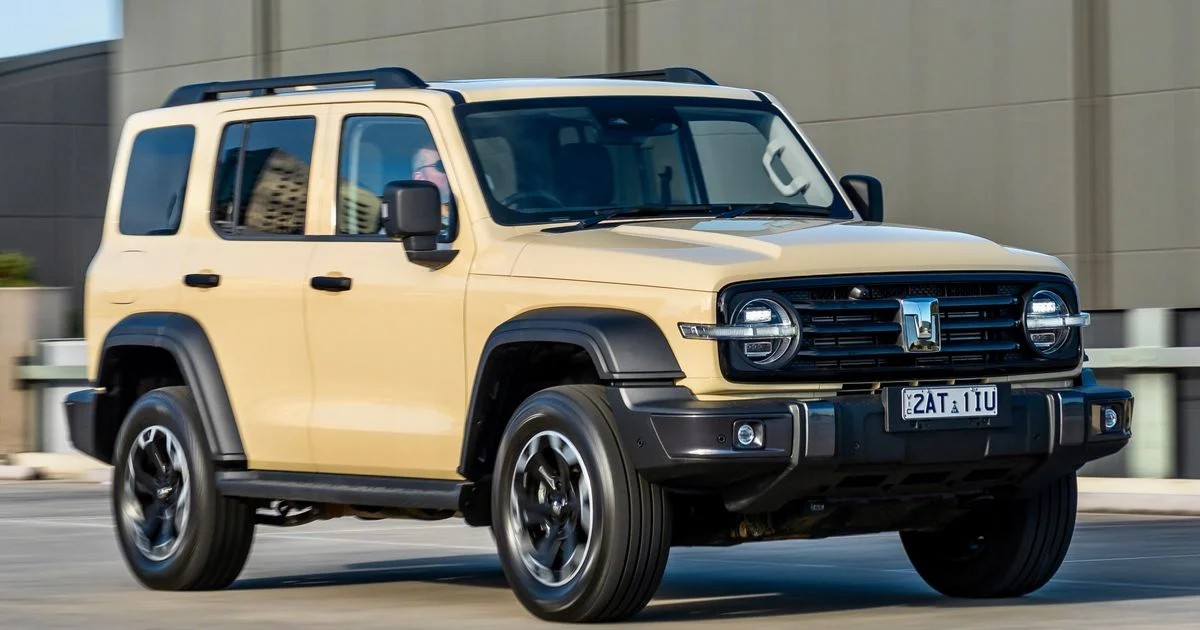
GWM’s Tank 300 is nearly four years old. It’s a rugged box. People buy them.
Now it’s electric-ish. The plug-in hybrid (PHEV) version joins the petrol and diesel lineup. Two new top-end variants arrived, sitting above everything else in price.
No interior update. Not even the new Chinese layout made it to Australia.
They say the new column shifter worries them locally. So we stuck with what we know.
Still five seats. Still a ladder frame. Still aiming at the Toyota Prado and Ford Everest. Those rivals don’t offer PHEVs from their home markets, mostly. Well. Except BYD’s Denza brand is trying with the B5.
But let’s talk about the car we drove. The flagship Ultra. Is it worth $61,999 drive-away?
Money Matters
The Ultra costs $61,990. That sounds high until you compare it to the Prado.
Toyota starts at $73k before taxes and on-road costs.
The Everest is cheaper on paper—starting at $59k pre-ons—yet lacks any plug-in option.
Then there’s the Denza B5 at nearly $75k.
So yeah. On price, the Tank looks aggressive. Maybe even smart.
Inside the Box
It feels sturdy. Like it should.
There’s a weird Mercedes G-Wagen vibe to the vents and dashboard slabs. Metallic trim helps sell the “premium” angle, if only superficially.
The aviation-style gear shifter?
Too much.
Everything else is standard non-PHEV stuff. Which brings us to the headache: the 12.3-inch touchscreen.
It’s ugly. Not really. The graphics are fine. But the placement is terrible.
I had to lean forward just to hit it.
Navigating the menus feels like archaeology. Layers upon layers. Why is climate control hidden so deep?
Here’s the real crime: switching between electric and gas power.
No button. None.
You dive into the infotainment. Dig through two sub-menus. All while driving.
Why would anyone do that?
Even the Cannon Alpha ute—another GWM product—got a dedicated EV/HEV toggle. They know it matters here. They just chose to make it hard.
Regenerative braking? Same story. Touchscreen only.
The paddle shifters exist, sure. But they change gears. They don’t adjust regen. Annoying.
That last five percent of refinement is missing.
Wireless Apple CarPlay worked flawlessly, though. That was a relief. The 12.3-inch driver cluster is simple, if vague with its steering wheel controls. Big, dull plastic buttons. Tough, but poorly labeled.
Storage is scarce for such a large vehicle. Deep cupholders. Tiny door bottles. No trays.
Seats? Good. Front ones offer massage functions—vague pushes, but okay. Back seats are cushy, roomy, but awkward to enter without those B-pillar grab handles. The driver gets none, likely due to the eye-tracking camera.
Boot space is… tight. 360 liters. Compare that to the Prado’s nearly 900L+. You’ll hate loading luggage here. But the floor is low, flat, and easy to pack. And yes, it gets a spare tire outside. A proper one.
Power & Pain
Under the hood? A 2.0L turbo petrol paired with an electric motor.
Numbers look scary.
300kW. 750Nm.
Combined, it pushes the part-time four-wheel drive through a nine-speed gearbox.
It’s the most powerful Tank ever sold.
We drove it mostly on highways, mostly with low charge.
The battery tech was glitchy. We had to unplug and replug several times to start charging. Unsettling.
Fuel consumption wasn’t great. Close to the official low-charge claims, but not impressive for a “hybrid.”
How It Moves
Driving the PHEV Tank feels… strange.
It works. Mostly.
Three modes: HEV, EV, and Intelligent.
Intelligent is the sweet spot. It keeps the battery above 25% by using the engine. It cuts the engine when coasting. Smart.
But acceleration lags.
Plant your foot, and the car thinks. Engine start. Gear select. Okay, now go.
There’s a pause. A noticeable, irritating second where nothing happens before torque floods in. Dangerous when merging? Maybe. Fine if you’re already rolling.
Rear wheels snap up if you’re greedy. Wet roads? Be careful.
The nine-speed box is otherwise invisible. Smooth. The brake feel is surprisingly normal, mimicking engine braking rather than that jerky EV regen sensation. Most drivers will prefer that.
And here is the twist nobody expected:
The ride quality is incredible.
Better than a Prado? Likely. The suspension absorbs Australian rough roads without spilling coffee. Body-on-frame comfort? Actually possible.
Noise? Gone. Vibration? Non-existent.
It’s quiet. Calm. Refined.
Steering? Heavy, vague, acceptable for its size.
Then the software fights you.
Lane keeping used to yank the wheel if you looked at white paint. It’s better now. Barely noticeable. Good.
But then, after parking overnight?
“You have exceeded the posted speed limit.”
I wasn’t driving fast. I wasn’t driving anywhere interesting.
Then every corner, every slight bend? “Please drive carefully.”
Every 15 seconds. In regional Victoria.
We turned down volume. Off traffic signs. Muted alerts.
Nothing.
It wouldn’t shut up.
Only muting the sat-nav itself silenced it. But we weren’t using navigation. We were using Apple CarPlay.
The system yelled at ghosts.
Is that fixable with a software update? Probably. But it ruins the experience. The car drives beautifully. The tech drives poorly.
We left it on the driveway, unsure if the silence would come back.