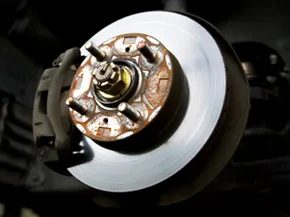
Most drivers know routine maintenance is non-negotiable. Change the oil. Check the tires. Top off the fluids. If you swap out your brake pads and monitor the fluid levels, you’re set, right?
Wrong. You are ignoring half the equation.
Brake rotors—also known as brake discs—are the steel plates your brake pads clamp down on to kill momentum. They are just as critical to stopping power as the pads themselves. Ignore them, and you’re driving on borrowed time.
There are several types of rotors out there. Each has a specific purpose. Some are for the street. Some are for the track. Some are just marketing gimmicks.
We are going to break down the different styles. We will look at the pros. We will look at the cons. You’ll figure out which one fits your build and how to keep them from warping under heat stress.
Let’s start with the most popular upgrade: drilled rotors.
The Look and Function of Drilled Rotors
Drilled brake rotors are the standard for aftermarket performance. They are easy to identify. The surface is peppered with holes. Usually, these holes go all the way through the rotor.
The design isn’t just for show. Those holes serve two main purposes.
First, they help with heat dissipation. Braking creates massive amounts of friction. Friction creates heat. Heat is the enemy of braking performance. By adding holes, you increase the surface area exposed to the air. The air flows through the holes, cooling the rotor faster.
Second, the holes help with gas evacuation. When brake pads get hot, they can outgas. This creates a layer of gas between the pad and the rotor. It acts like a cushion. Your brake pedal goes soft. You lose stopping power. The holes provide an escape route for that gas. The pads stay in contact with the metal.
The Drawback: Stress Cracks
Here is the catch. Drilling weakens the rotor.
Those holes are stress concentrators. Every time you apply the brakes, the rotor expands and contracts. The holes create points where cracks can start. Over time, especially under heavy use, you will see hairline cracks radiating from the drilled holes.
If a crack gets too deep, the rotor can fail. Catastrophic failure.
This is why drilled rotors are generally not recommended for high-heat environments. Think track days. Think mountain driving with a heavy load. The repeated heating and cooling cycles will shorten the life of drilled rotors significantly.
Drilled vs. Solid Rotors
Solid rotors are the baseline. No holes. No slots. Just a flat, machined surface.
They are cheap. They are strong. They last a long time. But they don’t vent heat or gas as well as upgraded options. They are fine for stock cars driven gently. They are not fine for performance driving.
Drilled rotors offer better cooling and gas evacuation. But they sacrifice structural integrity. They are more prone to cracking.
Which One Should You Choose?
If you drive a daily driver and want a slight upgrade in braking feel and a look that says “I care about my car,” drilled rotors are a good choice. Just be aware that they will need replacing sooner than solid
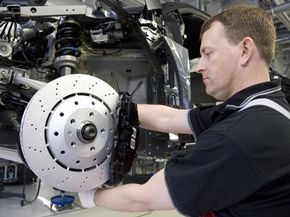
It sounds backwards. You drill holes into the metal discs that stop your car. Less material to grab, right? Intuitive? No. Effective? Sometimes.
Drilled rotors exist for three specific reasons. Heat management. Gas evacuation. Water displacement.
When you clamp the pads down, friction spikes. Temperature rises. If that heat stays trapped in the rotor, you get brake fade. The pads lose their bite. The car doesn’t stop as hard. Holes let that thermal energy escape into the airflow. Faster cooling means consistent performance under stress.
Then there is the issue of outgassing. Older brake pad compounds released volatile gases when they heated up. That gas layer acted like a lubricant between the pad and rotor. Stopping power vanished. Today, better materials have mostly solved this, but the holes still help sweep any residual gases away from the friction surface.
And water. Drive through a deep puddle. Hit a car wash. Get caught in a sudden downpour. Your rotors get soaked. Water is slippery. Pads can’t bite wet metal effectively. Drilled patterns allow water to eject rapidly as the wheel spins. Dry surfaces. Reliable clamping force.
But here is the catch. Those holes compromise structural integrity.
Think of it like punching holes in a drywall. The wall might still stand, but it’s weaker. In a high-stress environment, that weakness matters. Repeated hard braking cycles put immense tension on the rotor face. Stress concentrates around the edges of the drilled holes. Over time, that leads to cracking.
Cracked rotors are dangerous. They warp. They vibrate. They fail.
So, are drilled rotors the right choice for your track days or spirited canyon runs? They offer cooling benefits that solid rotors struggle to match. But if you’re pushing limits, that structural compromise might be too high a price.
Let’s look at the alternative. The slotted rotor.
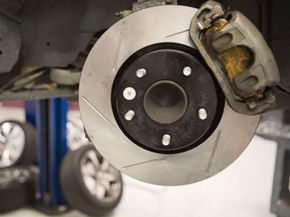
Slotted rotors feature grooves carved directly into the flat metal surface. Think of these slots as irrigation ditches. They channel gas, heat, and water away from the friction zone. This keeps the braking surface clean.
Performance drivers favor this design. Track driving stresses rotors heavily. Drilled rotors, by contrast, have structural weaknesses. The holes create stress points. Repeated hard driving can cause cracks to form around them. Slotted rotors lack these holes. They are generally more durable. For track-bound machines, they are often the safer bet.
But slotted rotors have a major flaw. They eat brake pads. The edges of the slots scrape against the pad surface. Wear rates increase significantly. Because of this rapid pad degradation, drilled rotors remain the standard for most production performance cars.
Choosing the Right Rotor for Your Use Case
Drilled rotors are considered too fragile for dedicated racing. Yet, for street use, they are perfectly adequate. Most daily drivers won’t encounter the thermal loads that cause cracking. You can save the slotted rotors for the racetrack. Keep drilled rotors for the street. It is a cost-effective compromise.
So how much different are car and truck brake parts — particularly car and truck brake rotors — from motorcycle brake rotors? Read the next page to find out.
Motorcycle Brake Rotors
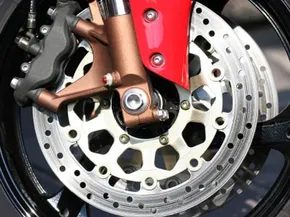
Motorcycle brake rotors function on the same basic physics as their automotive counterparts. The disc spins with the wheel. You squeeze a lever. Pads clamp down. Friction stops the rotation. But the mechanics diverge sharply from cars.
Cars apply braking force to all four wheels simultaneously. Motorcycles? Not so much.
Most street bikes use independent controls. Your right hand operates the front brake. Your right foot operates the rear. These systems work separately. The front brake does the heavy lifting. It provides the majority of the stopping power. The rear brake assists. It stabilizes the bike and helps bring it to a complete halt.
This distribution of force makes motorcycle brake rotors a critical safety component. One fails, you’re in trouble. Both work together to manage the physics of two-wheeled momentum.
Drilled vs. Slotted: Choosing the Right Rotor
Not all rotors are created equal. You will find two main types on the market, each serving a different purpose.
Drilled brake rotors are the standard for most street-driven motorcycles. You’ve seen them. Tiny holes drilled through the friction surface. They look aggressive. They shed water and brake dust. But on the street, they are often chosen for aesthetics. Custom builders love them. The drilling creates a unique visual pattern. It makes the bike stand out in a parking lot. For daily commuting, they work fine. They help with heat dissipation. But they aren’t built for extreme conditions.
Slotted brake rotors are the choice for high-performance or track-focused machines. Instead of holes, you see grooves cut into the metal. These slots evacuate gas and debris from between the pad and rotor. This prevents fade during hard, repeated braking. If you plan to push a bike on a track, drilled rotors might crack under thermal stress. Slots hold up better. They maintain consistent friction when things get hot.
Visibility and Style
Motorcycle rotors are on display. Unlike a car, where the rotors are hidden behind spokes or alloy wheels, bike rotors are often exposed. Especially on the front wheel. This visibility drives the aftermarket trend.
Many riders upgrade rotors purely for style. The “custom look” is a major selling point. Manufacturers offer rotors with elaborate drilling patterns. Some even use shaped edges. It’s about personalization. A bike isn’t just transportation. It’s a statement. For many enthusiasts, the aesthetic appeal of drilled rotors outweighs any marginal performance gain.
Effort and Scale
Stopping a motorcycle requires significantly less physical effort than stopping a heavy-duty truck. A car needs robust hydraulic systems to move tons of steel. A motorcycle is lighter. The leverage is different. The pads don’t need to press with the same force.
This difference in scale matters. It influences how riders modulate their braking. Too much front brake on a slippery surface? The front wheel locks up. You drop the bike. The rear brake helps keep the line straight. It’s a delicate balance of weight transfer and friction.
“The front brake tends to be more effective; delivering the lion’s share of the stopping power, with the rear brake assisting to slow or stop the bike.”
Why It Matters
You might think rotors are just metal discs. They’re not.

Trucks are massive. They are heavy. And that weight makes the brakes do double duty.
Stopping a loaded truck isn’t like stopping a sedan. You need serious friction. The brake pads clamp down on the rotors. Friction creates heat. A lot of it.
Think about the physics. Heavy mass equals high momentum. Dissipating that energy generates thermal stress. The rotors in a large truck take a beating that a smaller vehicle simply doesn’t experience.
The Material Reality
Despite the stress, the fundamental design hasn’t changed much. Truck brake rotors are usually cast iron or steel. They are larger than car rotors, obviously. But don’t assume they are indestructible.
They require more frequent service. Not because the metal itself is flawed. But because the pads wear out faster under heavy loads.
Here is the chain reaction:
1. Heavy braking wears down pads quickly.
2. Worn pads lose their friction material.
3. Metal-on-metal contact occurs.
4. Rotors get scratched or warped.
Once a rotor is warped or deeply scored, you have two choices. Machine it smooth. Or replace it entirely. This happens on cars too. But on heavy trucks, it happens more often. The wear cycle is just shorter.
When Standard Rotors Aren’t Enough
For drivers who push their vehicles, standard cast iron rotors often aren’t enough. Heat dissipation becomes the limiting factor.
Performance Brake Rotors
If you are taking your truck onto the track or just towing heavy loads regularly, you need to look at high-performance options. Standard rotors struggle with consistent heat buildup. Performance rotors are designed to manage that thermal load better.
Types of Performance Rotors
There are a few ways manufacturers tackle the heat issue.
Drilled Rotors
These have holes drilled through the face. The holes help vent gas and brake dust. They also provide a cooling effect.
Slotted Rotors
These have grooves cut into the surface. The slots help clear debris from between the pad and rotor. They also help seat new pads quickly.
Cross-Drilled and Slotted
Some high-end rotors combine both. Holes for gas venting and slots for debris clearance. This is common in racing applications.
Materials Matter
Cast iron is standard. But performance rotors often use different materials or treatments.
- Two-piece rotors: The hat is bolted to the rotor ring. This allows for different materials in each section.
- Chrome-silicon steel: More expensive, but handles heat better than cast iron.
- Coated rotors: Some brands coat the rotor to prevent rust and reduce noise.
Which One Should You Choose?
It depends on your use case.
If you are a daily driver who tows occasionally, standard cast iron rotors are fine. Just replace pads before they are completely worn out.
If you are hitting the track regularly, you need drilled or slotted rotors. Or even better, a two-piece design. The heat management is significantly better.
Installation Tips
When replacing performance rotors, be precise.
- Clean the hub surface thoroughly. Any dirt causes warping.
- Use thread locker

Brake pads steal the spotlight. Rotors get ignored. It’s an unfair dynamic, but true. When you talk about high-performance rotors, the consensus among racers is clear: choose slotted over drilled.
Why Racers Prefer Slotted Over Drilled Rotors
The logic is simple physics. Slots on the rotor face act as escape routes. Hot gas, water, and debris don’t get trapped under the pad. They get ejected. This keeps the friction surface clean.
There is a trade-off. Slotted rotors eat brake pads faster. The sharp edges of the slots abrade the pad material. For a street driver, this is annoying. For a racer, it’s irrelevant. Most performance drivers use ceramic or carbon fiber pads. Those compounds are hard. They last a long time. Wearing down the pads slightly faster doesn’t matter when you’re pushing limits.
Vented Rotors: Managing Heat for Brake Fade
Slots handle debris. Vents handle heat. This is where the design gets clever.
Look at the edge of the rotor. You’ll see vents. They run around the perimeter, not across the face. As the rotor spins, centrifugal force pulls air through these channels. Heat escapes. The rotor stays cooler.
Why does this matter? Brake fade.
When rotors overheat, braking efficiency drops. The pads lose friction. The car stops going where you point it. Vented rotors dissipate heat before it builds up to critical levels. Less heat means consistent stopping power. That’s what you need on the track.
Signs You Need New Rotors
How do you know if your rotors are done? Don’t guess. Look.
- Grooves: Visible ridges on the rotor surface mean the material is uneven.
- Vibration: If the steering wheel pulses when you brake, the rotors are warped or worn.
- Noise: Squealing or grinding is a red flag.
These aren’t just annoyances. They’re symptoms of failing hardware.
The Cost of Replacement
Money talks. Replacing brake rotors isn’t cheap, but it’s not a mortgage payment either. Expect to pay between $30 and $75 per rotor. That’s for the part only.
Labor adds significant cost. Your vehicle model matters here. Some cars are easy to access. Others require more labor hours. The total bill will vary. But for the performance gain, most enthusiasts pay up.
Related Articles
- How Brakes Work
- How Disc Brakes Work
- How Drum Brakes Work
- How Anti-Lock Brakes Work
- How Air Brakes Work
- How Power Brakes Work
- How Brake Pads Work
More Great Links
- Auto Parts Warehouse
- edmunds.com – How To Change Your Brake Pads
- Brakes R Us
Sources:
- Auto Parts Warehouse. “Brake Rotors.” (Nov. 6, 2008)
- Brakes R Us. “Performance Brake Rotors.” (Nov. 6, 2008)
- Toboldt, William K. Johnson, Larry and Gauthier, W. Scott. “The Goodheart-Wilcox Automotive Encyclopedia.” The Goodheart-Wilcox Company. 2006.