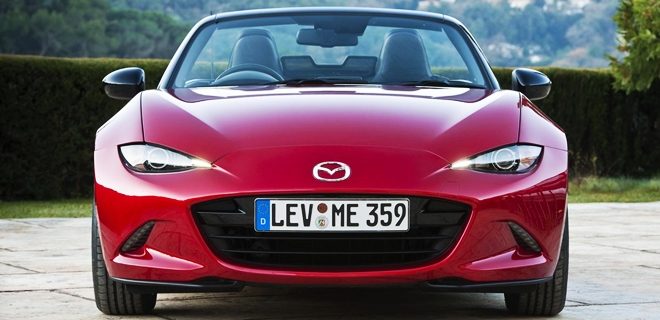
The roadster game changed forever in 1989. Mazda dropped the original MX-5 and never looked back. It wasn’t just a car. It became a cultural touchstone. One million units sold. That’s not a small number in the niche roadster market. The formula worked. Simplicity won.
Now, the fourth-generation model has arrived. It’s on sale in Turkey and globally. This isn’t just a facelift. It’s a complete reimagining of the lightweight driving experience.
Design Details of the New MX-5
“Every small touch was designed to give the driver more joy.”
The new MX-5 packs fresh technology. It focuses on pure driving enjoyment. Mazda didn’t just tweak the engine. They refined the soul of the car.
The exterior sheds unnecessary weight. The lines are sharper. The stance is lower. It looks meaner without trying too hard. This is a car for the road, not the track. Yet it handles like it belongs there.
Awards are already rolling in. Prestigious automotive magazines are giving it high marks. The success is cemented before most people even take the keys.
The interior is driver-centric. As it should be. Dials are visible. Buttons are tactile. You don’t need a touchscreen to adjust the climate. That’s a victory for analog enthusiasts.
Why the New MX-5 Matters
People ask why we still need a soft-top two-seater in an age of crossovers. The answer is simple. Fun.
The fourth generation improves on a winning formula. Better aerodynamics. Improved chassis rigidity. A lighter body. These aren’t just specs. They translate to sharper steering. More feedback through the wheel.
It’s about connection. You feel the road. You hear the engine. You see the scenery. It’s an analog experience in a digital world.
Mazda proved that you don’t need 500 horsepower to be exciting. You need precision. Balance. And a willingness to keep it simple.
The new MX-5 doesn’t shout. It whispers. And if you listen closely, it tells you exactly what matters. Driving. Just driving.
The question is whether you’ll buy into that simplicity. Or if you’ll need more screens and more buttons to feel satisfied. The MX-5 doesn’t care. It just drives.
The Soul of Motion: Mazda’s KODO Design Evolution
Mazda didn’t just tweak its aesthetic in 2015. They ripped it out and started over.
The company poured serious capital into a complete redesign of its visual language. It wasn’t about minor facelifts. It was about reinvention. The result? A design philosophy they named KODO.
Think of it as the “Soul of Motion.”
They rolled it out starting with the Mazda3. But that wasn’t the end of the story. Within that same year, they applied this new aggressive, sporty language to their entire lineup.
It’s not static. Look at the lines.
They shift from sharp angles to sweeping curves. It feels alive. Like the car is already moving before you turn the key. The design doesn’t just sit there; it suggests speed.
The KODO design language captures the spirit of motion through a dynamic interplay of sharp and rounded forms.
This isn’t just styling for style’s sake. It’s about visual velocity. The intent is clear: make a stationary object look like it’s breaking the sound barrier.
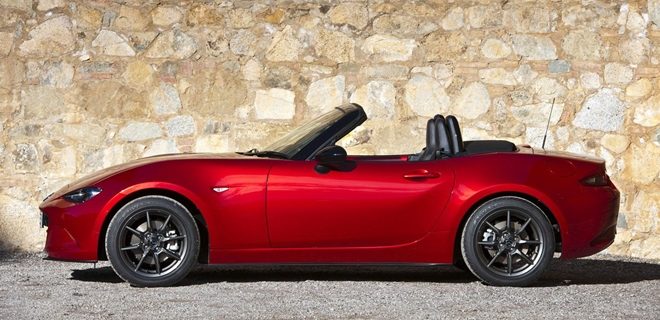
The Side Profile: A Study in Aerodynamic Flow
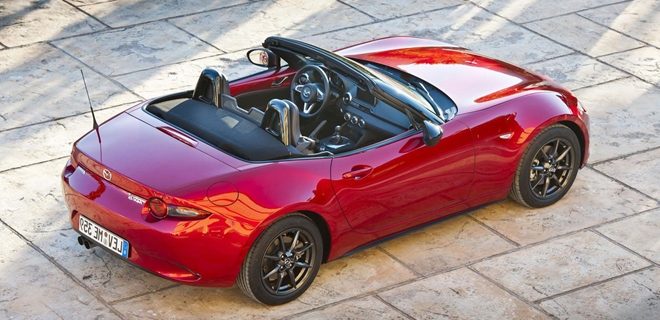
Look at the car from the side. The balance is immediate. The design isn’t just pretty; it’s functional. This perspective reveals a chassis that sits significantly lower than the previous generation. It’s not subtle. You can see the drop in ride height, which changes how the car hugs the road.
“The soft lines define its soul as a true roadster.”
But here’s the thing. It’s not just about looking cool. Engineers have wrestled with aerodynamic contours. The curves aren’t random. They’re calculated to slice through the air. The result is a profile that screams roadster. Every inch of sheet metal has a purpose. The soft edges? They reduce drag. The low stance? It lowers the center of gravity.
This isn’t a static sculpture. It’s a machine designed to move efficiently. The side view tells you everything about its intent. Low, wide, and ready to launch.
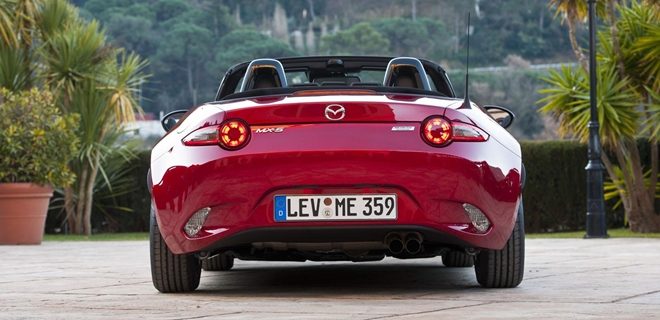
Design cues and interior space
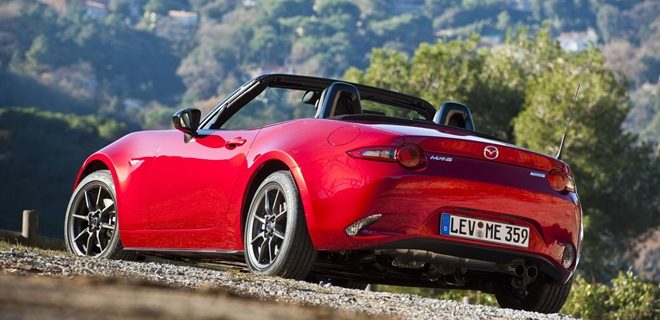
That rear profile tells the whole story.
It’s not just about aesthetics. The way the bodywork tapers from the rear wheels toward the back is intentional. It’s wide. It’s high. The bumper is substantial.
This isn’t random styling. It’s engineering. The design lowers the center of gravity. It increases downforce at speed. It helps the car stick to the asphalt when you’re pushing hard through a corner.
And if that shape looks familiar? You’re not imagining it.
The rear end shares a distinct visual lineage with the BMW Z4. Same proportions. Same aggressive stance. It’s a nod to sportscar heritage wrapped in a roadster package.
Mazda MX-5 Interior and Motor Specs
Step inside, and the priorities shift instantly.
This isn’t a lounge. It’s a cockpit. Everything is angled toward the driver. The steering wheel sits just right. The pedals are where your feet naturally fall.
The materials are hard but durable. Leather-wrapped steering wheel. Stitched bolsters on the seats. It’s tactile. It feels expensive in a way that doesn’t scream luxury, but whispers capability.
Space? It’s tight.
Two seats. No back row. The footwell is narrow. You tuck your legs in. It’s part of the experience. If you need cargo space, look elsewhere. The MX-5 is about the drive, not the trip.
Under the hood, the story depends on which era you’re looking at.
Early models ran the robust MZR inline-four. Reliable. Tunable. The 2.0-liter version pushed around 167 horsepower. Enough for smiles. Not enough for drag races.
Then came the Skyactiv technology.
The Skyactiv-G engine changed the game. Higher compression. Lighter internals. Better fuel economy without sacrificing much punch. The 2.0-liter Skyactiv put out roughly 155 horsepower in the ND1 generation. Tighter emissions. Sharper throttle response.
In the newer ND2, Mazda introduced the 2.0-liter engine with more power. Closer to 181 horsepower. The torque curve flattened out. It pulls harder at low RPMs.
Which engine is better?
Depends on what you want.
Older MZR engines are heavier. More inertia. Some drivers prefer that weight for a sense of stability.
Skyactiv engines are lighter. More efficient. Less maintenance over time.
The manual transmission remains the gold standard.
Six speeds. Short throws. Precise shifts. It’s mechanical. You feel every gear change through the shifter. There’s no lag. No hesitation.
If you opt for the automatic? It’s a conventional torque converter. Smooth. Easy for city driving. But it dulls the connection.
Why drive a car like this if you can just sit in it?
The manual forces you to engage. You match revs. You heel-toe downshift. You’re part of the machine.
That’s the point.
The interior layout stays simple. No massive infotainment screens cluttering the dash. No distracting buttons. Just climate controls. Audio knobs. And the gear stick.
It’s analog in a digital world.
Does it feel dated?
Sometimes.
But it also feels honest
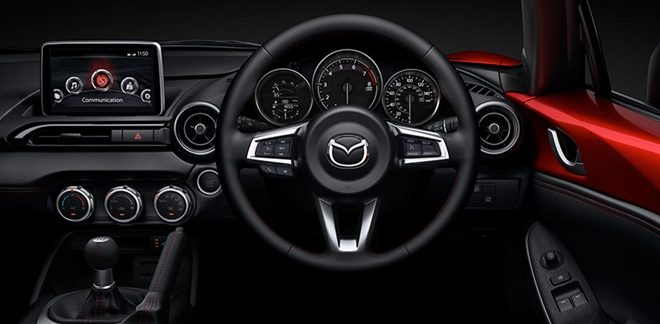
The Mazda MX-5 wasn’t designed to be comfortable. It was designed to be immersive. Anyone who has driven one knows this instinctively. You don’t buy a roadster for plush leather or ambient cabin lighting. You buy it because you want to feel the road, hear the engine, and experience the pure act of driving. Mazda engineers understand this. They didn’t try to hide the car’s mechanical nature behind layers of soft-touch plastic or sound deadening. Instead, they leaned into it.
The Philosophy of Minimalism
Mazda’s approach to the interior is deliberate. It’s stripped back by design. The goal isn’t to lower expectations, but to raise engagement. When you sit in an MX-5, you’re not just a passenger. You’re part of the machine. The seats hug you tightly. The steering wheel sits close. The pedals are positioned for precision, not relaxation. This isn’t a flaw. It’s a feature.
Think about the materials. Hard plastics. Firm upholstery. Minimal storage. Every element serves a purpose. Weight reduction matters. Every gram saved improves handling. Every unnecessary component removed sharpens the response. Mazda doesn’t apologize for this. They celebrate it.
Driving Feel Over Digital Fluff
Modern cars are becoming increasingly complicated. Touchscreens. Complex menus. Driver-assist systems that constantly monitor you. The MX-5 resists this trend. It keeps things simple. The infotainment system is functional. Not flashy. Just enough to play music and navigate. No distractions. No unnecessary buttons. The focus remains on the road ahead.
“The MX-5 interior is a cockpit. You are the pilot. Everything else is noise.”
This mindset extends to the controls. Physical knobs. Tactile switches. You don’t have to look down to adjust the volume or change the fan speed. Your hands stay on the wheel. Your eyes stay on the road. This isn’t nostalgia. It’s engineering focused on driver involvement.
The Sound of the Road
Part of the driving experience comes from what you hear. The MX-5 lets you hear the engine. Not through speakers. Through the chassis. The exhaust note travels through the floor. The tires communicate with the pavement. The suspension reacts to imperfections. You feel every bump. You hear every gear change. This sensory feedback loop is intentional. It connects you to the mechanics of the car.
Compare this to modern SUVs. Heavily insulated cabins. Engine noise muffled by layers of foam. Steering wheels that feel disconnected from the front wheels. The MX-5 offers the opposite. It’s raw. It’s direct. It demands attention.
Why Mazda Doesn’t Compromise
Some critics argue that the interior feels sparse. Cheap even. They want more comfort. More features. More luxury. But that misses the point. The MX-5 isn’t competing with luxury sedans. It’s competing with the feeling of freedom. It’s about the joy of driving. Mazda knows its audience. They know why people buy these cars. And they refuse to dilute the experience with unnecessary comforts.
Is it practical? No. Is it luxurious? No. Is it fun? Absolutely. The interior design supports that fun. It doesn’t distract from it. It enhances it. Every surface, every
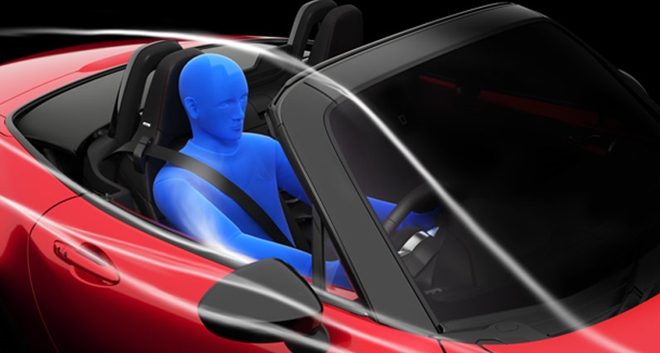
Araçtaki iki kişilik kokpit, sürücüye net bir alçak oturma pozisyonu sağlıyor. Bu konum, ağırlık merkezini yere daha yakın tutarak aracın dinamiklerini artırırken, tavanın açılır-kapanır yapısı da kafa alanını korumaya yardımcı oluyor. Açık hava sürüşünde başınızı koruyan rüzgarı ön cam ve kokpit tasarımı sayesinde neredeyse hiç hissetmiyorsunuz. Sürüş konforu, rüzgar gürültüsü olmadan öne plana çıkıyor.
Ön konsoldaki malzeme kalitesi yüksek. Dokunmatik ekran, Mazda’nın yeni tasarım dilindeki diğer modellerde olduğu gibi oldukça kullanışlı. Ancak iç mekandaki saklama alanları maalesef yetersiz. Cüzdan, sırt çantası ve telefon gibi eşyalarınızı saklamak için koltukların arkasında ve arasında küçük boşluklar var. Bunlar pratik ama az.
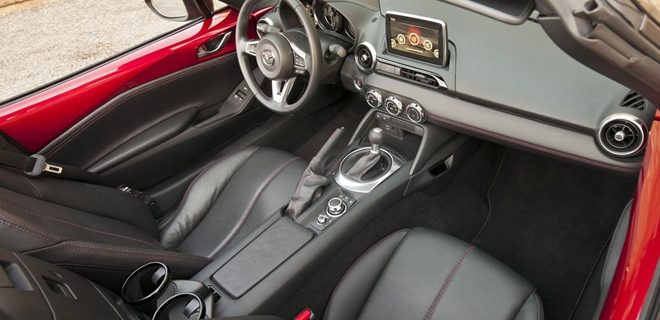
Dışarıdan bakıldığında MX-5’nin kapı üstü şeritleri gövde renginde. Bu detay sadece estetik bir tercih değil. Açık tavanlı bir araçta bu karar, iç mekâna sınırlı bir hava katıyor. Sanki tasarım dışarıdan içe doğru yayılıyor. İçeride ise alışık olduğunuz standartlara az rastlarsınız. Torpido gözü yok. Yanındaki diğer bölmeler de yok. Ön ve arkada küçük saklama alanları var. Bu minimalist yaklaşım, sürüş odaklı bir felsefeyi işaret ediyor.
Motor Performansları ve Teknik Detaylar
Mazda MX-5 Türkiye pazarında iki farklı benzinli motor seçeneğiyle bulunuyor. SkyActiv-G teknolojisini kullanan bu üniteler, manuel şanzımanla geliyor. Seçenekler net ve basit.
Birinci seçenek SkyActiv-G 1.5. 1.5 litrelik bu motor 131 beygir güç üretiyor. Tork değeri 150 newton-metre. Bu sayılar, günlük kullanım için yeterli. Ağırlığın hafif tutulduğu bir araçta bu performans hissediliyor.
İkinci seçenek SkyActiv-G 2.0. 2.0 litrelik bu ünite 160 beygir güç üretiyor. Tork değeri 200 newton-metre. Daha büyük silindir hacmi, daha fazla itiş gücü anlamına geliyor. Hangi motorun daha iyi olduğu sürüş tarzınıza bağlı.
Hız ve Ağırlık Dengesi
Düşük beygir gücü sanılan bu araçların gerçek hayat performansı aslında şaşırtıcı. 1.5 litrelik motorla maksimum hız 204 km/sa ‘ya çıkarken, daha güçlü 2.0 litrelik versiyon 214 km/sa sınırına ulaşıyor.
Sadece rakamlara bakıp “az” deyin. Hız tutkunları için bu sayılar düşük kalabilir. Ama Mazda MX-5 farklı bir hesapla oynuyor. Aracın 1.050 kg ağırlığı ile inanılmaz çevik olduğunu unutmayın. Kütle düşükse, dönüşler daha keskin, frenler daha etkili ve genel sürüş dinamikleri çok daha canlı. Bu nedenle bu hızlar, sürüş zevki odaklı bir coupé için fazlasıyla yeterli.
Verimlilik ve Yakıt Tüketimi
Mazda’nın yeni SkyActive motor teknolojisi, sadece performans değil, verimlilik konusunda da iddialı. Fabrika verilerine göre yakıt tüketimi oldukça cömert:
- 1.5 litrelik motor: Ortalama 6.0 lt/100km
- 2.0 litrelik motor: Ortalama 6.6 lt/100km
Performanslı sürüşlerde bile bu tüketimin 10 litre altında kalacağını tahmin etmek zor değil. Hem keyifli hem de ekonomik bir deneyim sunduğunu söyleyebiliriz.
MAZDA MX-5 FİYAT ve DONANIM PAKETLERİ
How Much Does the Mazda MX-5 Cost in Turkey?
The numbers are out and they aren’t lying. You’re looking at a starting price of 102,000 TL for the Mazda MX-5 in Turkey. That is the entry ticket. If you are willing to compromise on engine size and tech, this is where you land.
But let’s be clear about what you get. And what you don’t.
The Transmission Rule
Before we talk money, let’s talk gears. The MX-5 in this market is strictly a manual transmission car. You don’t get an automatic. You don’t get a clutchless option. It is a pure driver’s car.
If you can’t shift, you’re not buying the MX-5.
This isn’t a bug. It’s a feature. The joy of the roadster is in the mechanical connection. So, when we look at prices, we are only looking at manual gearbox variants. And yes, it’s only available with petrol engines. No diesels. No hybrids. Just combustion.
The 1.5L Trims: Entry Level and Beyond
Most buyers will likely look at the 1.5-liter Skyactiv-G engine. It’s lighter. It revs higher. It fits the ethos of a small roadster better than the bigger block.
There are three distinct levels of trim here.
1. The Motion (102,000 TL)
This is the base. It gets you the car. It gets you the 1.5-liter engine. It gets you a stick shift. It doesn’t get you much else in terms of bells and whistles. It is stripped back. Intentionally.
2. The Power (112,250 TL)
Step up by about 10,000 TL and you hit the Power trim. You aren’t buying a faster engine here. The power comes from equipment. Better seats. More tech. Convenience features that make daily driving slightly less of a chore.
3. The Power Sense (119,000 TL)
Another jump. About 7,000 TL more. The “Sense” label usually implies sensor packs. Parking sensors. Maybe blind-spot monitoring. Things that help you not scratch the wheels on curbs in Istanbul traffic.
The 2.0L Option: For Those Who Want Torque
If 119,000 TL is still too low on the scale, or if you simply don’t trust the small displacement, there is one other option.
2.0L Power Sense (150,450 TL)
This is the top tier. You get the bigger engine. You get the full suite of safety and comfort tech found in the 1.5L Power Sense. But you pay a premium. Roughly 30,000 TL over the base 1.5L.
Is the extra 30,000 TL worth it for the extra torque? That depends on how you drive. The 2.0L is stronger off the line. But the 1.5L is lighter. It’s sharper. It’s more agile.
Why This Pricing Structure Matters
You aren’t paying for a luxury badge. You are