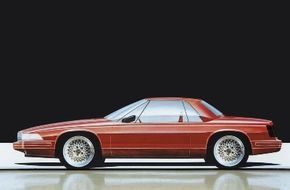
The mid-80s were messy for General Motors. Corporate restructuring, shrinking product lines, and a reputation for “look-alike” styling were eating away at the brand’s core. Meanwhile, European marques were stealing the best American buyers. Cadillac needed a halo. They needed something high-tech, high-style, and absurdly expensive to prove they still belonged in the same conversation as the Germans.
Enter the Allante.
Introduced for the 1987 model year, this luxury two-seater was a desperate bid to save the brand’s image. It was low-volume by design. Roger Smith, then chairman and CEO, had been pushing for this kind of prestige project since taking over in 1981. The goal was simple: use a flashy, high-margin car to drag the rest of the Cadillac lineup out of the doldrums.
It wasn’t just a Detroit design exercise, though. That would have been too easy. The Allante’s body was crafted in Italy by Pininfarina. This partnership defined the car’s entire existence.
The Italian Connection
The seeds were planted in early 1982. Cadillac sent a team to Italy to ask a simple question: Could Pininfarina build a luxury roadster to GM’s exacting standards?
Ed Anderson, an engineer on that trip, thought he was there to observe. He wasn’t. He was there to vet capability.
“We went to find out if they had the capability to execute a car to the degree we were looking for,” Anderson recalled.
The verdict was yes. Two weeks after the trip, Anderson was named program manager. The relationship moved fast. By 1982, GM had signed three distinct contracts with Pininfarina. First, for design. Second, for body engineering. Third, in August 1983, for production execution.
It sounds straightforward until you remember this was pre-1984 GM reorganization. Fisher Body, GM’s internal coachbuilding division, still held significant power. They did not want to cede responsibility for a high-profile vehicle to an outside firm.
It took months of internal wrangling. Legal ramifications and crash testing protocols had to be ironed out. Fisher Body had to agree to step aside, knowing the liability stakes involved. Anderson’s team had to navigate this internal cold war while building a car from scratch.
Competing with the Germans
Bob Burger, Cadillac’s general manager from 1982 to 1984, admits the exact origin of the Allante idea is fuzzy. Market research pointed to a gap. Lower-level meetings confirmed feasibility. The decision to proceed was likely a consensus born of necessity.
“It was a type of car that would compete with the Mercedes, and BMWs, and others that were coming into the U.S. at that time,” Burger said.
Mercedes-Benz was thriving. BMW was gaining serious traction with its driving-focused sedans and coupes. Japanese luxury brands like Lexus were beginning to whisper their names in the upper echelons of the market. Cadillac had never built a car like this before. They had never needed to.
“We had never done a car like that because we had not needed one, so we would be dealing with something entirely new,” Burger noted.
But the conclusion was undeniable. They had to get serious. The Allante was the answer. It was a statement. A declaration that Cadillac could still innovate, even if the rest of the showroom was stagnating.
The project was ambitious. It relied on a foreign partner for the core design and manufacturing of the body panels, a rarity for Detroit at the time. It required internal political warfare to secure internal buy-in. And it demanded a level of quality control that GM’s system wasn’t originally designed to support.
The Allante would eventually sail across the Atlantic in pieces, assembled by hand in Italy, then shipped back to the US for final trim. It was overkill. It was expensive. It was exactly what Cadillac thought it needed in 1987.
Whether it worked remains a separate question. The car itself, however, is a fascinating artifact of a company trying to reinvent its soul one two-seater at a time.
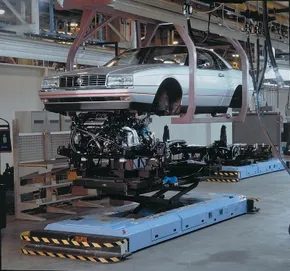
The Cadillac Allante, internally known as the Callisto project, carried a burden that would have crushed lesser engineering teams. It was destined to be the most electronically saturated General Motors vehicle ever produced. That sheer volume of circuitry and sensors was a source of genuine anxiety from day one. Every feature, every assist, was electronic. Standard equipment wasn’t just a list of extras; it was the entire operating system of the car.
The production logistics were a nightmare. GM didn’t trust Pininfarina to handle the integration. How would the Italian firm mount the body? Install the dense web of wiring? Test the systems without frying the control modules? The solution was blunt. Pininfarina had to buy the specific diagnostic equipment GM used. Their staff flew to America for training. They learned to run the tests. It was a humbling lesson in supply chain control.
Dave Hill, the Allante’s chief engineer, spent five years shuttling between Detroit and Italy. He made the trip at least once a month. Hill knows the hardware better than anyone. He later led development for the C5 and C6 Corvettes and the Cadillac XLR. His assessment of that early electronic chaos? It didn’t break the car. The Allante debuted as GM’s first vehicle using electronic multiplexing. Instead of a spaghetti junction of individual wires for every switch, signals traveled serially along a single data bus. Multiple commands over one line. It was efficient. It was advanced.
The Top That Never Worked
If the electronics were a headache, the convertible top was a migraine. The Pininfarina-designed manual roof was a disaster. It was fiddly. It was difficult to operate. And initially, it leaked.
Hill didn’t mince words about the error. It was a misjudgment of the buyer demographic. People buying a $40,000 luxury roadster in the late 80s weren’t going to wrestle with a mechanical roof every time they wanted to open it. The complexity of the manual mechanism held the car back. It damaged the allure.
The irony? GM had a solution ready. A one-button power top was developed and waiting for the 1994 model year. It would have saved the vehicle’s reputation. It never happened. The 1994 Allante was cancelled. The program ended before the fix could be installed.
Dynamics and the Mercedes Shadow
Settle down the chassis, and the Allante shone. Hill praised the dynamic development as outstanding. For a front-wheel-drive grand tourer, the handling was sharp. It didn’t wallow. It didn’t understeer excessively. The setup was competitive with the best German rivals.
Fred Wood, the car development lead, was Hill’s hero on the program. The teamwork was tight. The result was a car that handled itself with confidence.
Then there was the engine. The initial 4.1-liter Northstar V-8 was potent. Hill believed it could have held its own against the Mercedes 380SL’s 3.8-liter V-8. The numbers were close. The driving feel was comparable. But Mercedes moved first. They bumped their V-8 to 4.5 liters. Suddenly, Cadillac was playing catch-up. The gap widened. The Allante’s power
Designing the Allante: Italy vs. Detroit
The idea was simple enough in concept but explosive in execution. Bill Burger wanted European flair for the two-seater. Specifically, he looked to Pininfarina. The Italian firm had a long history with Cadillac and the capacity to build low-volume vehicles. It wasn’t just about aesthetics. It was about getting a perspective that Detroit couldn’t provide internally.
“We figured we would get a different flair from designers in Italy than we would at home.”
Burger’s logic held water. The home studio was stretched thin. Pininfarina had the talent and the interest. Approvals were granted. It seemed like the right move.
It wasn’t.
Wayne Kady, then chief designer at Cadillac Studio, took it personally. He felt the slight deeply. His team didn’t just watch; they worked. They built a full-size clay model. Interior and exterior. They did it to prove a point. Studio pride.
Stan Wilen and Chuck Jordan, their respective bosses, were caught in the middle. They’d compare the Pininfarina renderings with Kady’s clay. They’d wonder why the Detroit team was still working while the Italian project moved forward.
Kady gave a straight answer. It was pride. They wanted to show they could design as well as anyone.
Pininfarina didn’t waste time on clay. They skipped straight to full-size renderings. Then fiberglass. Burger and his staff faced five pinned designs. The most futuristic was on the left. The most conservative on the right.
They discussed each one. Carefully. The choice landed in the middle. It echoed existing Cadillac attributes. It fit the future needs. It wasn’t a unilateral call. But Kady still took heat for his parallel effort. Pininfarina had already made up their minds.
The 1987-1993 Cadillac Allante Styling Evolution
The final selection balanced heritage with innovation. It wasn’t a radical departure. It was a refinement. A careful step that respected the brand’s identity while pushing into new territory.
Kady’s clay model sat unused. A monument to internal rivalry. A testament to what could have been. The Allante moved forward with Pininfarina’s vision.
Did it matter? The car would go on to define a generation of luxury roadsters. The styling debates faded into history. The car remained.
Bridging the Cultural Divide in San Giorgio
The disconnect between Detroit’s engineering rigor and Italian artisanal pride wasn’t just a philosophical difference; it was a logistical nightmare. Pininfarina initially operated under a definition of quality that American inspectors found baffling. If a car drove beautifully and looked stunning, minor fitment issues or specks in the paint were ignored. In San Giorgio, a high-quality car was one that ran like the dickens. For Cadillac, that was unacceptable.
To bridge this gap, the Italians underwent a massive overhaul. They redid their facilities and installed a new paint shop designed to meet American tolerance levels. It was a steep learning curve, but the result was a manufacturing process that blended European flair with German-like precision.
“To [the Italians], if a car ran like the dickens and had great styling, it was a high-quality car. If a few things didn’t work, and the doors didn’t quite fit, and the paint had a little dirt in it, those things were not too important to them.”
The Human Robot: Assembly Line Craftsmanship
Pininfarina didn’t just hire experienced mechanics for the Cadillac Allante production line. They recruited 25 young men, fresh out of high school, and trained them in a new facility in rural San Giorgio. Bill Buschman, the operations director for the plant, described their work ethic as “utterly phenomenal.”
The welding process was largely manual at first. While a multi-head robot was eventually introduced to handle some of the heavier lifting, the bulk of the body assembly remained in human hands. This wasn’t lazy labor; it was meticulous. On the final metal finish line, workers hung major components by hand. One person would hold a door in place while another bolted it on. Every seam, every panel gap was checked and rechecked.
The Razor Blade Standard
Paint quality became the ultimate battleground. When a car emerged from the paint booth, inspectors would mark every single defect. Then came the detail work. Inspectors used razor blades to shave off the heads of any imperfections or dirt particles. They lightly sanded the area, polished it, and buffed the entire car to ensure a flawless finish.
Dust was the enemy. If grit settled on a panel, later handling could scratch the finish. To combat this, Pininfarina wrapped horizontal surfaces—the decklid, hood, and retractable hardtop—in clear plastic film. Even with this protection, cars were immediately cleaned and vacuumed upon entering the trim shop. The goal was to ensure no grit whatsoever entered the final assembly stages.
Unmatched Trim and Finish Quality
The trim shop became a sanctuary of craftsmanship. Buschman, who had seen manufacturing processes worldwide, claimed he had never seen anything to match the skill level displayed there. The amount of work dedicated to repairing paint defects was staggering. These weren’t just assembly workers; they were artisans.
The cultural shift was complete. The initial friction between Detroit’s expectations and San Giorgio’s traditions melted away, replaced by a shared commitment to excellence. The Cadillac Allante became more than a car; it became a testament to what happens when American engineering meets Italian artistry.
The lessons learned in San Giorgio didn’t stay in Italy. They influenced how American manufacturers approached overseas production, forcing a reevaluation of what “quality” really meant in a global market. But for the Allante, it meant one thing: a car that was built with a level of care that few vehicles of its era could claim.
And yet, despite the razor blades and the plastic wrap, the production numbers would tell a different story about market demand than about manufacturing prowess. The craftsmanship was undeniable. The question was whether the world was ready to pay for it.
Quality control on the early Allante bodies was messy. The first iterations left much to be desired. But the trajectory was steep. By 1991, the hybrid product of San Giorgio’s bodies and the Hamtramck, Michigan, plant’s chassis and powertrains had climbed to second place among all GM vehicles.
The next year? It took the top spot.
Buschman recalled a specific moment in 1993 that cemented this reputation. Ron Ports, who led the corporate quality audit, delivered a verdict that still sticks in the air.
“Bill, compared to any other car we measure in the world, GM and non-GM, Allante is in a class by itself.”
This wasn’t just a result of good assembly. It was a miracle of logistics. The production process defied conventional automotive manufacturing. It required an Allante transatlantic supply chain so complex it earned a specific moniker among industry insiders.
The “Air Bridge” Logistics
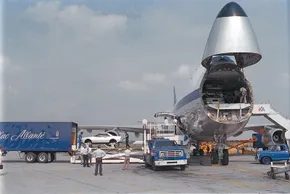
The mechanism behind this feat was the “Air Bridge.” It wasn’t a metaphor. It was a physical link between Italy and Detroit.
After each Allante body cleared final electrical tests in Turin, it was mounted onto custom-built racks. From that point on, human hands were forbidden. The bodies were not touched again until they were unloaded in Hamtramck.
The journey was precise. The racks were rolled onto trucks, heading to Turin Airport. There, they entered a dedicated hangar. From there, they were loaded into specially equipped Alitalia and Lufthansa Boeing 747s. These jets flew the bodies to Detroit.
Once on American soil, the racks were unloaded. They went straight back onto trucks for the short haul to the Hamtramck plant. The bodies remained on the racks the entire time. No handling. No risk of damage from rough treatment.
Buschman noted the scale of the operation. Roughly 80 major components—including the underbody, rear compartment, motor compartment, and all primary electrical systems—were flown from America to Italy. They were assembled there, then flown back.
“You might say the assembly line was 9,000 miles long.”
The Return Flight Efficiency
The system was optimized for weight and space. It wasn’t just a one-way street for bodies.
“We put 56 Allante bodies on every plane. It was a perfect system. The only damage was when an operator dropped a belt buckle on a car. There was never a defect caused by the system itself.”
Crucially, half the volume of the plane returning to Italy was filled with parts San Giorgio needed for the next cycle. This closed-loop efficiency is why critics and managers alike labeled it the longest assembly line in the world.
Hamtramck: Where Bodies Met Muscle
The Allante had a dedicated zone at the Hamtramck plant, separate from the higher-volume Cadillac models built nearby. Precision was baked into the final stage.
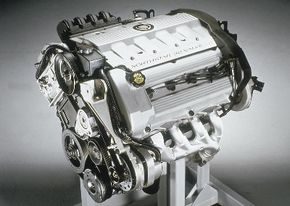
Before installation, the specially tuned 4.1-liter aluminum-block port-injected V-8 was subjected to a 48-minute run on an engine dynamometer. This wasn’t a quick idle check. It was a full stress test to ensure the 170-horsepower engine met exact specifications.
Final assembly in Detroit included a water test to check for leaks and a meticulous paint inspection. But the final validation happened elsewhere.
Each finished Allante was driven for 25 miles on a specially designed evaluation track adjacent to the plant. This track simulated real-world conditions, ensuring the marriage of the Italian body and American drivetrain held up under load.
“I’ve got to give that team credit, too. It was an extremely dedicated workforce, and the quality that came out of Detroit-Hamtramck was excellent.”
The Allante finally hit showrooms in 1987. The logistics were insane. The quality was undeniable. But what did the car actually offer the buyer in that first year? That is a story for the next section.
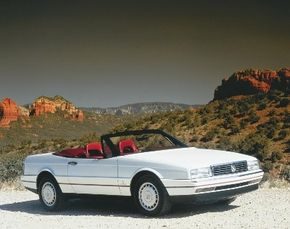
Cadillac’s luxury roadster hit the streets in March 1987. Billed as GM’s “passenger car flagship,” it was distinguished from other ultralux entries by its front-wheel drive and electronic sophistication.
Because the name Callisto translated into unfortunate things in some languages, a name search and an internal contest were held. Allante emerged as the winner in May 1985.
Its Pininfarina-built body was galvanized steel and aluminum with separate subframes to support its Eldorado-derived fully independent strut-type front and rear suspensions, with a stabilizer bar and coil springs in front and a Corvette-type composite transverse leaf spring out back.
Its steering was power rack and pinion, its brakes four-wheel power discs with the Bosch III antilock system, and its transmission a viscous-clutch electronically controlled four-speed automatic.
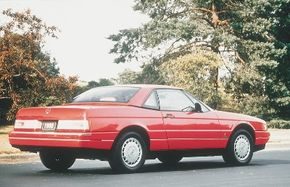
At a time when De Ville prices started at around $21,000 and even a Fleetwood Sixty Special listed near $35,000, the Allante was priced at a breathtaking $54,700, which included the removable aluminum hardtop with a built-in rear-window defroster and a seven-year/100,000-mile warranty.
Still, the Allante was forecast to capture 6,000 to 8,000 annual sales, roughly half the U.S. market for such cars.“When we introduced the Allante, the dealer organization applauded it from every angle,” said John Grettenberger, who replaced Burger as Cadillac general manager in January 1984. “We introduced it to our Master Dealers, the top 100 in Cadillac’s entire dealer body, at a resort location, and Sergio Pininfarina himself came over to unveil it.“We made a conscious effort to position it as something that would have a great deal of appeal to affluent people, because it was a very expensive car. We wanted people driving Allantes who were opinion leaders and had high visibility in whatever their work might be.”
Standard Features
– 1,537-in. forged aluminum wheels
-
P225/60VR15 Goodyear Eagle VR high-performance tires
-
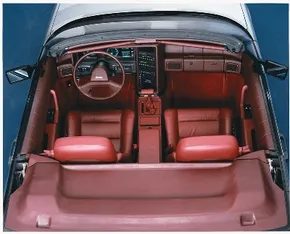
10-way-adjustable Recaro leather seats
-
state-of-the-art digital/graphic instruments
-
Delco-GM/Bose AM/FM stereo with cassette player
The Dallas Effect and the High-Wire Act
Cadillac marked the Allante’s birth with a hefty, four-language coffee-table book titled Allante: The New Spirit of Cadillac. It opened with a bold declaration from the “Standard of the World,” promising a luxury roadster that broke from tradition and leaned into the European spirit. It was an ambitious pivot.
To get eyes on the machine, the marketing team didn’t just send press cars to journalists. They went direct. Grettenberger personally drove a fresh Allante to Larry Hagman around the same time the actor’s Dallas character, J. R. Ewing, began driving one on screen. The exposure was massive. The car was front and center, high-profile and unavoidable.
“It was very prominently used and displayed on the show for a long period of time,” Grettenberger recalled. “We kept replacing them when they needed new ones. I think it did a lot of good for Cadillac to have Allante on the Dallas show and others like it.”
The visibility helped, but it couldn’t shield the car from the harsh reality of its market positioning. Skepticism was high. The price tag mirrored Mercedes-Benz. The volume goals were aggressive in a segment that had barely scratched the surface. The previous year, the market had absorbed fewer than 3,800 Jaguar XJ-S models and just 2,600 Porsche 928s. Asking Cadillac to carve out a similar slice felt risky, bordering on delusional to some critics.
Media reaction was mixed. There was genuine intrigue, yes, but the complaints piled up fast. The performance was modest at best. A 10-second run to 60 mph wasn’t exactly breathtaking for a luxury coupe. The interior features drew fire too. The “video-game” style instrument cluster felt gimmicky. The seats were notoriously hard. And the manual soft top? A nightmare to operate.
Despite the gripes, some saw the bigger picture. Automobile magazine called the debut “a significant event, probably a milestone, in modern American automotive history.” They argued it signaled a refreshed attitude—a willingness to specialize and target a narrow, discerning slice of the buying public that Detroit had largely ignored.
But the honeymoon was short. The start of the end began in 1988.
1988-1993 Cadillac Allante
By 1988, the shine was already fading. The initial excitement had worn off, replaced by the hard numbers of production costs, low sales velocity, and a brand identity in flux. The Allante was a beautiful problem. It was technically impressive, visually striking, and culturally relevant, yet it struggled to find its footing in a world that didn’t quite know how to categorize it. Was it a sports car? A luxury cruiser? A fashion statement?
The model years from 1988 to 1993 saw incremental changes, mostly aimed at refining the flaws that critics had identified early on. Softer seats. Updated electronics. But the core issues remained. The manual top was still a chore. The performance was still adequate, not exceptional. And the price remained a barrier for many who admired the design.
Sales figures told the story. They were never going to match the Escalade or the DeVille. The Allante was a
Engine Swaps and Tech Upgrades
The late eighties were a time of incremental tweaks for the Allante. 1988 saw the addition of an electric decklid release, optional analog gauges, and better headrests. It was subtle stuff. The real shift happened in 1989. Cadillac installed a 200-horsepower 4.5-liter OHV V-8. They also changed the final drive ratio to 3.21:1. The result? Zero to sixty in under 8.5 seconds.
That speed came with a penalty. Buyers had to pay a $650 federal Gas Guzzler tax.
It wasn’t just about speed. That same year brought 16-inch wheels, softer interior materials, and speed-sensitive power steering. The big news was the Speed Dependent Damping (SDD) suspension. It adjusted in three modes based on how fast you were going.
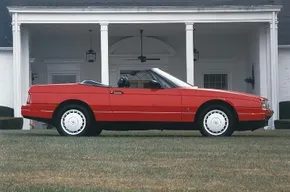
By 1990, prices were climbing toward $58,000. Cadillac wanted to keep buyers in the fold. They introduced a soft-top-only version. It cost about $6,300 less than the fully decked-out model with the lift-off metal roof. But there were catch-alls. Want the LCD instruments? Pay extra. Want Pearl White paint? That’s extra too.
This year marked several industry firsts for the Allante. It was the first front-wheel-drive car with traction control. It also got a driver’s-side airbag and a standard compact-disc player. Suspension refinements made the ride smoother. Later in the year, they added a power mechanism to help latch the folding top headers.
1991 kept the momentum going with more steering tweaks and a better audio system. The Delco-Bose Gold Series Symphony sound system got louder and clearer.
The Northstar Era Begins
1992 was quiet. Very quiet. The car didn’t change much. It should have ended there. But then came 1993.
The 1993 Allante was the first car to feature Cadillac’s all-new 4.6-liter 32-valve DOHC Northstar V-8.
This wasn’t a minor update. It was a new heart for the car. The Northstar V-8 produced 295 horsepower and 290 pound-feet of torque. Power went through a new four-speed automatic transmission. It had an overdrive gear and electronic controls.
The performance jump was significant. This setup launched the Allante from zero to sixty in less than seven seconds. That was fast for a grand tourer.
The chassis got an overhaul too. The old SDD suspension was gone. In its place was the Road-Sensing Suspension. It was more complex. It reacted faster to road conditions. Cadillac also introduced a new short/long-arm rear suspension design. Traction control got an update. Speed-Sensitive Steering became more responsive.
These changes extended the life of a car that many thought was fading. The Northstar made it relevant again. Just for a while.
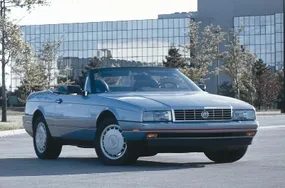
The 1993 Cadillac Allante: A Late Bloomer
The 1993 model year brought tangible improvements that finally aligned the Allante with its original promise. One-piece door glass eliminated the outdated fixed ventpane design, offering a cleaner, modern look. Interior seating was reconfigured for better ergonomics, and while the removable hardtop remained a pricey $4,500 option, the car itself felt more complete. Its early release meant it was still fresh enough to serve as the pace car for the 1992 Indianapolis 500.
For many enthusiasts, this iteration represents the definitive Allante. It was finally the internationally competitive luxury roadster the engineers had envisioned years prior. But there is a catch. This exalted status arrived six years too late.
Why did the timing fail? The market had moved on. By the time the Allante perfected its formula, the window for its specific niche—a hand-built, trans-Atlantic luxury roadster—had largely closed. Competitors had evolved, and buyer preferences had shifted toward more practical luxury or outright performance. The car was ready, but the world wasn’t waiting.
Legacy and End of Production
The discontinuation of the Allante marked the end of an unusual experiment in automotive manufacturing. It remains a curiosity for collectors, a car that was technically brilliant but commercially misplaced.
For more on the evolution of these machines, see:
- Classic Cars
- Muscle Cars
- Sports Cars
Cadillac Allante Discontinued
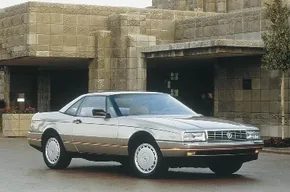
The Economics of Cancellation
The irony was buried deep in corporate files. By the time the significantly upgraded Allante rolled off the line, GM had already signed its death warrant. The decision came down in late 1991, with a strict cutoff date for production: 1993.
“We had to decide in the latter part of 1991 whether to continue it beyond 1993,” said Grettenberger.
The car was begging for life. It needed a major styling overhaul. It required a power roof, a feature enthusiasts had clamored for since the launch. New technology was queued up. But realizing that vision wasn’t just a matter of engineering; it was a financial black hole.
The price tag for these updates? $300 to $500 million.
That number didn’t exist in a vacuum. It was 1991. GM was hemorrhaging cash. The corporation was struggling just to stay afloat. Spending half a billion dollars on a car that moved in such low numbers was nearly impossible to justify. Sure, the Allante burned bright as an image vehicle. It put a spark in the Cadillac brand. But sparks don’t pay stockholder dividends.
The calculus was brutal. Where should that capital go?
Should it feed the low-volume Allante? Or should it fuel the higher-volume pillars of the lineup? The money went to the Cadillac Eldorado, the Seville, and the De Ville. These models offered a far greater payback. They served the broader customer base. They stabilized the stock.
Regrettably, economics killed the Allante, not the machine itself.
By 1993, the car had evolved into something special. It was a leader. In performance, it held its own against exotic supercars. Its handling was sharp. Its presence was undeniable. It stood at the top of its class in almost every metric that mattered to a driver.
In retrospect, the decision was probably the right one for the company’s survival. But it stung. It bothered Grettenberger. It bothered a lot of key people in the Cadillac family. They saw the potential. They saw the finished product. And they had to watch it get shelved while the real money-makers got the upgrades.
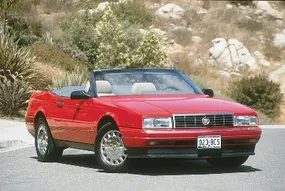
The decision to install a cutting-edge engine in a vehicle that was already slated for discontinuation sounds counterintuitive. It seems like throwing money into a bottomless pit. But according to Grettenberger, the logic was pragmatic rather than sentimental. The Allante served as a low-volume testing ground.
The goal was to introduce the Northstar V8 in a controlled environment. With only a few thousand units on the road, engineers could monitor every single vehicle. They could track every failure mode, every early wear pattern, and every glitch before rolling the platform out to mass-market Cadillac models. It was a risk mitigation strategy. A one-year pilot program to ensure the new powertrain was viable.
Spoiler alert: it worked. The engine turned out to be nearly foolproof. The data collected from those few hundred Allantes gave GM the confidence to trust the Northstar in much larger volumes across the brand.
The Final Assembly and Production Stats
The lifecycle of the Allante was defined by its exclusivity and logistical quirks. The final unit built in the U.S. was flown to Turin, Italy, on July 2, 1993. It didn’t leave the country immediately, though. It arrived at the Pininfarina facility and spent two more weeks there before being shipped back to Detroit. Specifically, it was completed at the Detroit-Hamtramck plant 14 days after its arrival in Italy.
This final car represents the end of a very narrow production run. Total Allante production sat at 21,430 units. If you break that down over the car’s lifespan, you’re looking at an average of just over 3,000 assemblies per year. That is not volume. That is a boutique operation disguised as a Cadillac.
The Human Cost of Cancellation
Numbers tell half the story. The other half is emotional.
Buschman recalls the moment he had to deliver the bad news to the Pininfarina team. These weren’t just factory workers. They were a dedicated crew who had poured their pride into the project. When Buschman arrived at the plant in Turin to confirm the cancellation, the reaction was visceral.
Most of them broke down. Crying. Begging in Italian. “Please tell us this is not true,” they pleaded.
Buschman had to deliver the reality. He had to explain why the economics no longer worked. Why the niche wasn’t large enough to sustain the model. It was a difficult conversation. A moment that sticks with you. It highlights how much meaning people attach to their work. For the Pininfarina crew, this wasn’t just a car. It was a point of professional honor.
“That’s a moment you never forget. It gives you some idea of the tremendous importance that this had for those folks.”
The project ended not with a bang, but with a whimper and a lot of tears. The Allante vanished from dealerships, leaving behind a legacy of engineering curiosity and a small fleet of owners who got to drive a car that was essentially a prototype for the future of Cadillac.
Some of the quoted material in this article comes from “The Story Behind the Cadillac Allante” by Rich Bednar (audio tape) ©2002.