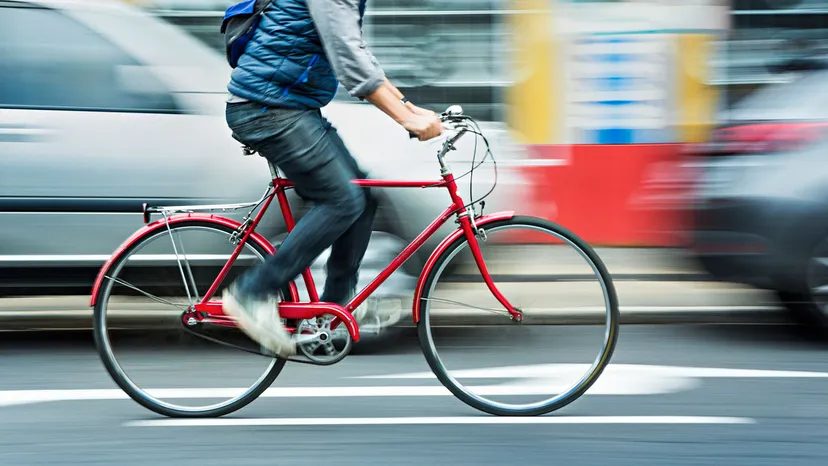
It happens to every driver at some point. You’re rushing downtown, late for a meeting, and trying to claw back lost minutes. Suddenly, you’re boxed in behind a bicyclist. It feels like a double whammy. Everyone knows bikes are slow. They hold up traffic. They cause congestion.
That assumption just hit a serious speed bump.
A study published in June 2020 in the Transportation Research Record: Journal of the Transportation Research Board challenges the idea that cyclists clog city streets. Three researchers from Portland State University looked at low-speed, low-volume urban roads without dedicated bicycle lanes. Their finding? Motor vehicle speeds varied by 1 mph (1.6 kph) or less when bicycles were present.
Doubters can scoff all they want.
The narrative is simple and comforting to motorists: bikes are slow, so cars must slow down, and that slowdown cascades into treacherous, backed-up traffic. But you should pump the brakes on your skepticism.
The team conducted their research in Portland, Oregon. By some estimates, this city has some of the worst traffic in the United States. They asked a specific question: Do bicycles reduce passenger car travel speeds on urban roads without bicycle lanes?
To answer it, they observed six different roadways at various times, including rush hour. They tracked two groups: vehicles following other motor vehicles, and vehicles following cyclists.
The comparative analysis was stark. There was only a 1 mph speed differential. That margin is hardly enough to cause a backup. It is certainly not enough to create the gridlock that makes motorists moan in agony.
On downhill slopes, the gap shrunk even further. Cyclists harnessed gravity to pick up speed. Cars had no real cause for concern there. And then there are e-bikes. With power-assist features that boost speed, these bikes are even less likely to be overtaken by cars, regardless of the incline.
“The hope is that our study dissuades policymakers from tossing out shared roadways as a viable option because of the perception that bicyclists will impede the mobility and speed of drivers.” — Jaclyn Schaefer, study author
Schaefer noted that while separated, protected bike lanes are the preferred solution, they aren’t always possible in every urban setting. Shared roadways remain a viable option, despite the myth of the traffic-jamming cyclist.
The researchers plan to expand their scope. They want to test a greater variety of roadways, traffic volumes, and variables to see how cyclists affect other types of vehicular dynamics.
Now That’s Interesting
The Copenhagenize Index rates the top 20 cities globally for bike-friendly infrastructure. Number one? Copenhagen. More than 60 percent of work or school commutes happen on a bike there. No U.S. cities made the cut, although Minneapolis has appeared on the list in the past. Two Canadian cities did make the top 20: Vancouver and Montreal.