We’ve all been there. You’re at the grocery store, armed with four bags of produce and a gallon of milk. You grab two. Walk to the car. Drop them. Walk back. Repeat. Your arms burn. The milk gets cold. It’s inefficient, frustrating, and physically demanding because your body has a hard limit on how much weight it can lug around.
Cars face the same problem.
Except when a Toyota Tacoma or a Ford F-150 gets overloaded, it’s not just a sore shoulder waiting at home. It’s a stressed suspension. A transmission struggling to shift. Brake rotors that won’t cool down. And yes, a genuine safety hazard for everyone sharing the asphalt with you.
Most drivers think they’re fine. They’re not.
The issue isn’t usually the cargo itself. It’s the math. Or rather, the lack of it. You need to know your vehicle payload capacity. This isn’t just a number on a sticker for fun. It’s the absolute limit of what your chassis, springs, and axles can handle before things start breaking.
Payload is the total weight of passengers, cargo, and accessories. Period.
People forget the passengers. They load up the truck bed with 500 pounds of mulch, pile five adults in the cab, and hit the highway. That’s not a road trip. That’s a stress test.
If you’re towing a trailer, hauling lumber, or just moving to a new apartment, guessing is dangerous. You need the exact numbers.
Why payload capacity matters more than towing capacity
Here’s the trap. You look at the spec sheet. It says your truck can tow 10,000 pounds. Great. You buy a trailer. You load it. You hook it up.
Now you’re wondering why the rear end is sagging toward the pavement.
Towing capacity and payload capacity are not the same thing. Towing is what you pull. Payload is what you carry. And yes, the tongue weight of that trailer counts against your payload.
If you overload the payload, you risk:
– Blown tires from excessive weight.
– Premature suspension failure.
– Brake fade on long descents.
– Legal trouble if you get pulled over.
It’s not just about comfort. It’s about whether the vehicle can actually stop.
Where to find your specific payload rating
You don’t need an engineer to tell you this number. It’s right on your truck.
Look for the Curb Weight Sticker. It’s usually on the driver’s side door jamb. Or check the glovebox manual. The sticker will list the Gross Vehicle Weight Rating (GVWR) and the Curb Weight.
The math is simple, but people skip it.
Payload Capacity = GVWR – Curb Weight
But wait. That’s the theoretical max. Real life adds variables.
Did you install a chrome bumper? That’s 50 pounds.
Added a bedliner? 30 pounds.
Tow hitch receiver? 15 pounds.
These accessories eat into your payload before you even put a single box in the back. You have to subtract the weight of every aftermarket addition from the sticker number to get your true available payload

why truck payload isn’t just about the bed
Trucks complicate things. You can’t just shove everything in the back and hope for the best. The math stays the same, but the variables get aggressive. Manufacturers rate trucks differently than sedans. Why? Because people actually use them.
how to calculate payload for pickups and SUVs
The formula doesn’t change. GVWR minus curb weight. That’s it. But where you find the numbers matters. On a pickup, stick to the door jamb sticker. It’s right there, next to the hinge. Don’t guess. Guessing breaks axles.
Here’s the trap. People assume a big bed means big capacity. It doesn’t. A fully loaded crew-cab Silverado with max options might have less payload than a stripped-down work truck. The seats, the stereo, the heated steering wheel—it all adds weight before you even put a bag of dog food in the rear.
So you subtract. Again.
If your heavy-duty truck has a GVWR of 7,500 pounds and a curb weight of 5,200 pounds, your payload is 2,300 pounds. That’s the hard limit. Passengers plus cargo plus tools. All of it.
“Curb weight includes a full tank of fuel.”
Remember that. If you’re running on empty, you have slightly more room. But you aren’t. You fill up. You drive. You calculate for the worst case.
Does it matter if it’s an SUV? Yes. SUVs have higher centers of gravity. Overloading them doesn’t just stress the springs; it makes them roll. The math is identical, but the consequences are different. A sedan sits low. It’s stable. Put too much in, it sags. Put too much in a lifted Jeep, and you might tip on a turn.
which vehicles hide payload limits
Some brands are stingy. Others are generous. It’s in the engineering. Aluminum bodies help. Steel bodies hurt. Look at the specs. Don’t listen to salesmen. They sell trucks, not physics.
Check the owner’s manual. It lists the GVWR. Check the door jamb. It lists the GVWR. They should match. If they don’t, assume the lower number. Safety margin isn’t optional.
You want to know if your F-150 can haul that hot tub? Do the math. Weigh the tub. Weigh yourself. Weigh the friends helping you move it. Add it up. If it beats the 2,300-pound limit you calculated earlier, don’t do it. Or tow it. Tow it.
It’s that simple. And that brutal.
How truck payload differs from car cargo capacity
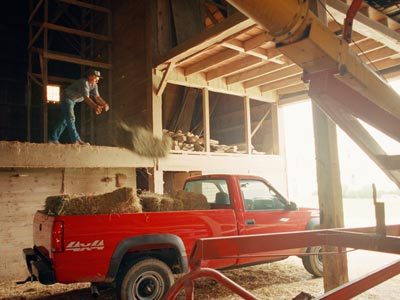
You don’t haul lumber in a hatchback. Nobody does. It doesn’t fit. It’s stupid. But you also don’t need a Class 8 semi to move three bags of flour from the supermarket. The payload definition shifts entirely when you swap sedans for pickups. Cars carry people and maybe a suitcase. Trucks carry weight. Heavy, dense, inconvenient weight.
To understand what your truck can actually handle, you have to look at the GVWR. The Gross Vehicle Weight Rating. It’s the max weight the manufacturer says the truck can legally carry, including the truck itself, fuel, passengers, and cargo. The U.S. government splits this into eight distinct weight classes.
Class 1 caps at 6,000 pounds. Class 2 goes up to 10,000 pounds. These are your light-duty pickups and SUVs. Then it gets heavier. Class 3 hits 14,000 pounds. Class 4 is 16,000 pounds. Class 5 tops out at 19,500 pounds. These three classes make up medium-duty trucks. You see these on job sites, not at soccer practice.
Then you cross the line into heavy-duty. Class 6 starts at 26,000 pounds. Class 7 goes to 33,000 pounds. And Class 8? Anything over that. These are the big rigs. The monsters.
The Department of Transportation groups these for regulatory purposes. Classes 1 and 2 are light-duty. Classes 3 through 5 are medium-duty. Classes 6 and above are heavy-duty. Knowing which bucket your truck falls into tells you exactly how much payload you can afford to carry without blowing a tire or breaking the frame.
The classification isn’t just paperwork. It dictates your payload ceiling.
We’ll break down how much you can actually fit inside a car next.
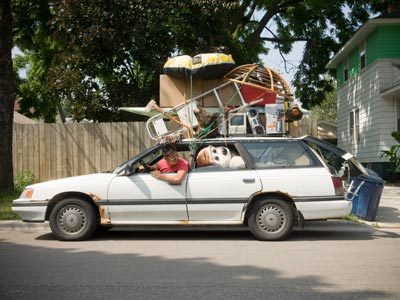
Why SUV Payload Isn’t Just “Car Plus Trunk”
SUVs carry more. Obviously. But the margin isn’t as wide as you think.
Most people treat an SUV like a magic box that swallows weight. It doesn’t. It just has a higher ceiling. The rules are the same. Passengers count. Luggage counts. That cooler full of beer? Yeah, that’s payload too.
Manufacters still use the 150 pounds (68 kg) rule per seat. Don’t forget it. If you pack four adults and a trunk full of camping gear, you’re closer to the limit than you realize.
Here is the trap. An SUV has more seats. That sounds like more capacity. It isn’t.
More seats mean more potential passenger weight. If you fill every seat with a 200-pound adult, you’ve eaten up your payload allowance before you even open the tailgate.
Let’s look at the math.
A compact SUV might have a payload rating of 1,000 to 1,200 pounds.
Five passengers at 200 pounds each? That’s 1,000 pounds.
You have 0 to 200 pounds left for cargo.
Does that sound right?
It’s why packing an SUV for a family vacation feels like Tetris. You aren’t just fitting volume. You’re managing weight distribution and structural limits.
Gross Vehicle Weight Rating (GVWR) is the hard cap. Exceed it? You risk tire blowouts. You risk suspension failure. You risk failing a brake inspection.
It’s not just about what fits. It’s about what the steel can handle.
The rear suspension on many crossovers is soft. Tweak it for ride comfort, not heavy hauling. Load the rear too heavily and the front wheels lose traction. Steering gets vague. Braking distances stretch.
You don’t need a tow hitch to mess this up. Just five heavy friends and a suitcase.
Check your door jamb sticker. It’s small. It’s boring. It tells you the exact limit.
Ignore it and you’re driving a bomb.
Pay attention to axle weights too. Front and rear axles have individual limits. Putting all the weight in the back breaks the rear axle rating even if the total vehicle weight is fine.
Balance matters.
Keep heavy items low and centered. Near the axle, not over it.
Think about your trip. Are you carrying gear or people? If it’s people, your cargo space shrinks. If it’s cargo, your passenger capacity drops.
It’s a zero-sum game.
Most drivers never hit the limit. They pack lightly. They travel with two or three people.
But when you push it? When you load for a move? When you haul equipment?
That’s when the specs matter.
Next time you load up, check the number. Not the volume. The weight.
It’s the only thing that keeps you on the road.
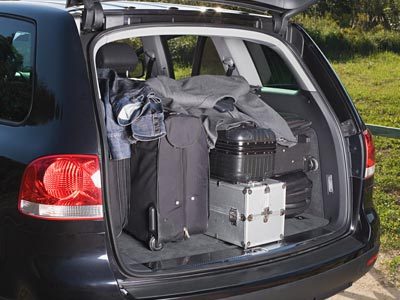
SUV Payload: Truck Utility or Car Compromise?
SUVs sit in that awkward middle ground. You get the cargo volume of a pickup with the enclosed comfort of a sedan. It feels like a win. It’s not always.
Payload capacity here sits between those two extremes. Usually, it beats a standard car. The trick is folding those rear seats flat. Suddenly, you’ve got one long cavern for gear. Heavy-duty stuff. Ski racks. Lumber. The roof keeps it secure, unlike an open bed.
But don’t treat it like a truck.
The center of gravity is higher. Way higher. Load it up and the rollover risk spikes. That’s why people get nervous about SUV safety. It’s a real issue. Manufacturers panicked. They added electronic stability control. The government stepped in too. Since September 2004, the NHTSA forces labels on door jambs for any vehicle under 10,000 pounds GVWR. It tells you the max combined weight. People plus cargo.
You ignore that number? You’re playing with physics.
So what if you actually need to haul more? Can you boost that limit?
Can You Increase Payload Capacity?
The short answer is no. Not really.
You can’t just slap on a badge and call it a day. Payload isn’t a software setting. It’s hard-coded into the suspension, brakes, and frame. Push past the manufacturer’s limit and you’re voiding warranties. You’re also risking catastrophic failure. Springs sag. Brakes fade. Tires blow.
Some owners try aftermarket heavy-duty suspension kits. They work to a point. They might level the ride if you’re towing a light trailer. They don’t magically increase the structural integrity of the chassis. The GVWR stays the same. The law doesn’t care about your new shocks.
If you need more capacity, you need a different vehicle. A 3/4-ton truck. A dedicated work van. An SUV is a compromise. Embrace it or upgrade.
Next, we look at the math. How to actually calculate if your load fits.
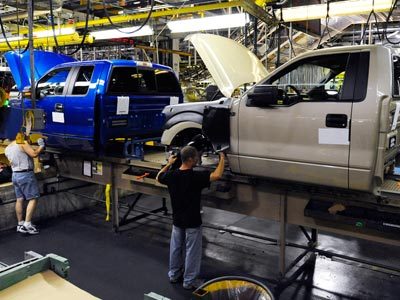
Can You Legally Increase Your Truck’s Payload Capacity?
You know the limit. You read the sticker. But the load is heavier. What then?
Manufacturers anticipate this gap between desire and capacity. They offer optional towing packages. These aren’t just cosmetic upgrades. They fundamentally alter the vehicle’s engineering to handle stress.
A typical towing package includes a trailer wiring harness. A heavy-duty hitch. Safety chains. But the real changes are under the skin. Bigger engines. Stronger brake systems. Enhanced cooling for the transmission and engine. These components work together to manage the thermal and mechanical load of pulling weight.
Overloading a vehicle is not a minor infraction. It is a dangerous situation that compromises braking, steering, and structural integrity.
Police officers can and will pull you over for unsafe loading. The ticket is just the legal consequence. The physical risk is immediate. You endanger yourself, your passengers, and everyone on the road sharing your lane.
If your current truck cannot handle the payload, no amount of aftermarket tweaking changes the Gross Vehicle Weight Rating (GVWR). The frame has a limit. The suspension has a limit. Exceeding them voids warranties and safety margins.
Acura Payload Data (2006–2009)
Acura models from this era show significant variation based on body style and drivetrain.
2007–2009 MDX
The MDX maintains a consistent max payload of 1,158 lbs across these years.
RDX and TSX
The RDX and TSX share similar limits. The 2007 RDX is rated at 870 lbs. The 2007 TSX drops slightly to 850 lbs. The 2008 RSX also sits at 870 lbs. Note that the RSX was discontinued after 2006.
Data Gaps
Many Acura models, including the RL, TL, and earlier MDX/RSX/TSX variants, do not have specific max payload figures listed in this dataset. This often indicates that the figure is tied to specific trim levels or optional equipment not detailed here.
Audi Payload Data (2006–2009)
Audi’s lineup during this period was dominated by sedans and coupes, with the Q7 being the primary SUV.
High-End Sedans
The 2006 A8 carries 1,213 lbs. The 2007 S8 matches this at 1,213 lbs.
Sports Cars
The 2006 TT has a much lower capacity of 728 lbs.
Missing Data
A significant portion of the Audi lineup, including the A3, A4, A6, Q7, R8, and various S-models, shows no data. The Q7, despite being a large SUV, lacks a listed figure here, which is unusual for a vehicle designed for utility.
BMW Payload Data (2006–2009)
BMW offers a wide range of vehicles, from small coupes to large SUVs. The payload capacities reflect this diversity.
SUVs and Crossovers
The 2009 X5 sees a jump to 1,290 lbs, up from 1,113 lbs in 2007 and 2008. The 2008 X6 starts at 1,190 lbs but drops to 937 lbs in 2009. The 2006–2008 X3 hovers around 1,025–1,036 lbs.
Sedans
The 5-Series remains consistent. The 525, 530, 550 (2006–2009) and the 528, 535 (2008–2009) all hold 1,102 lbs. The 750 and 760 vary, with the 760 reaching 1,058 lbs in 2007–2009.
Performance Models
The M3 is rated at 1,014 lbs (2008–2009). The M5 holds 1,058 lbs. The M6 varies between 941 lbs and 838 lbs depending on the year. The Alpina B7 hits 1,213 lbs in 2008.
Smaller Vehicles
The Z4 and Z4M have very low capacities. The Z4 is at 551 lbs, while the Z4M is at 584 lbs. The 1-Series (128/135) sits at 882 lbs.
Buick Payload Data (2006–2009)
Buick’s utility vehicles are sparse in this dataset.
Rainier
The 2006–2007 Rainier is rated at 1,069 lbs.
Missing Data
The Enclave, LaCrosse, Lucerne, Rendezvous, and Terraza all lack specific payload figures in this list.
Cadillac Payload Data (2006–2009)
Cadillac’s Escalade line dominates the payload numbers here.
Escalade Series
The Escalade itself increases from 1,448 lbs (2006) to 1,541 lbs (2007–2009).
The Escalade ESV rises from 1,439 lbs (2006) to 1,547 lbs (2008–2009).
The Escalade EXT goes from 1,186 lbs (2006) to 1,362 lbs (2007–2009).
SRX
The 2006 SRX has an unusually high listed payload of 6,008 lbs. This figure seems anomalous compared to other models and may reflect a specific heavy-duty configuration or data error in the source. Other years show no data.
Sedans and Coupes
The CTS, DTS, STS, XLR, and their V variants have no listed payload figures.
Chevrolet Payload Data (2006–2009)
Chevrolet offers a broad spectrum, from subcompact cars to heavy-duty trucks.
Heavy-Duty Trucks
The Silverado 3500 HD is the strongest. It starts at 5,169 lbs (2006), drops to no data in 2007, then rises to 3,621 lbs (2008) and 3,873 lbs (2009).
The Silverado 2500 HD ranges from 3,458 lbs to 3,606 lbs.
Light-Duty Trucks
The Silverado 1500 varies significantly. The standard 1500 is around 1,652–1,913 lbs. The Silverado 1500 HD hits 3,129 lbs. The Silverado 1500 Hybrid is lower, at 1,162 lbs.
Vans
The Express vans show a hierarchy. The Express 1500 is 2,306 lbs. The Express 2500 jumps to 3,262 lbs (2009). The Express 3500 reaches 4,147 lbs (2009).
SUVs
The Suburban 2500 carries 2,561–2,828 lbs. The Tahoe ranges from 1,522 lbs to 1,835 lbs. The Tahoe Hybrid is 1,830 lbs.
Smaller Vehicles
The Colorado ranges from 1,250 lbs to 1,532 lbs. The HHR and HHR Panel are both 900 lbs. The TrailBlazer is 1,194 lbs, with the EXT version at 1,429 lbs.
Sedans and Coupes
The Avalanche, Aveo, Cobalt, Corvette, Equinox, Impala, Malibu, and Uplander largely lack specific payload data in this list, except for the Avalanche 1500/2500 which range from 1,258 lbs to 2,072 lbs.
Chevrolet and Chrysler payload capacities
The numbers get messy with Chevrolet. A Tahoe Hybrid can haul 1,830 lbs. A TrailBlazer tops out at 1,194 lbs. The Traverse? No data. It’s frustrating. You want to know what your truck can carry, and the manufacturer hides it.
Chrysler is worse. Most entries from 2006 to 2009 are blank. Dashes everywhere. The Pacifica in 2007 holds 889 lbs. It drops to 865 lbs in 2008. The PT Cruiser actually has numbers for 2007 and 2008, sitting at 1,907 lbs and 889 lbs respectively. Wait. Did that drop? Yes. The Aspen stays steady at 1,600 lbs until the hybrid version appears in 2009 with 1,500 lbs. The Town & Country maxes out at 1,200 lbs when data exists.
If the manual doesn’t list it, don’t guess.
Dodge payload ratings by model year
Dodge keeps the books open. Mostly.
The Ram lineup dominates the heavy end. A 2006 Ram 3500 carries 4,660 lbs. By 2008, that jumps to 4,870 lbs. Then it crashes to 3,560 lbs in 2009. Why the drop? Engineering changes. Or just less useful data. The Sprinter Wagon 2500 is a beast in 2006, holding 4,824 lbs. It falls to 3,074 lbs by 2007 and stays there.
Smaller trucks vary. The Dakota goes from 1,750 lbs in 2006 down to 1,630 lbs in 2008. The Durango hovers around 1,750 lbs before hitting 1,780 lbs in 2008. The Durango Hybrid in 2009 drops to 1,500 lbs. Hybrids always cost you capacity.
Passenger cars? The Charger and Magnum both sit at 1,270 lbs. The Nitro holds 1,150 lbs. The Caravan and Grand Caravan range between 1,682 lbs and 1,700 lbs in 2006 and 2007. After that, the data vanishes.
Ford truck and SUV payload limits
Ford’s E-Series vans are consistent. The E-150 starts at 1,930 lbs in 2006, jumps to 3,310 lbs in 2007, and settles around 3,300 lbs. The E-350 Super Duty stays near 4,000 lbs to 4,200 lbs.
The F-Series shows volatility. The F-150 sits at 1,640 lbs in 2006, ticks up to 1,650 lbs in 2007 and 2008, then explodes to 3,030 lbs in 2009. That’s a huge shift. The F-250 drops from 3,100 lbs to 3,030 lbs in 2008. The F-350 loses ground too, going from 4,000 lbs to 3,900 lbs.
SUVs are lighter. The Escape holds 960 lbs. The Escape Hybrid adds 80 lbs to that, reaching 1,040 lbs. The Explorer Sport Trac carries 1,390 lbs. The Expedition EL handles 1,697 lbs.
GMC heavy-duty payload specs
GMC mirrors Chevy but with different numbers. The Sierra 1500 ranges from 1,889 lbs to 1,952 lbs. The Sierra 2500 hovers around 3,900 lbs. The Sierra 3500 hits 4,658 lbs in 2006, disappears in 2007 and 2008, then returns in 2009 at 4,812 lbs.
The Yukon Hybrid matches the standard Yukon at 1,830 lbs in 2008 and 2009. The Canyon drops from 1,547 lbs to 1,422 lbs in 2009. The Envoy stays flat at 1,146 lbs.
Honda, Hummer, Hyundai, and Infiniti figures
Honda is sparse. The Insight carries only 400 lbs. The Civic in 2007 and 2008 holds 385 lbs. The Element manages 675 lbs. The Odyssey and Pilot are more useful, at 1,349 lbs and 1,322 lbs respectively. The Ridgeline sticks at 1,549 lbs.
Hummer brings the weight. The H1 Alpha hauls 3,087 lbs. The H2 jumps from no data to 2,200 lbs in 2008. The H3T pickup carries 1,090 lbs.
Hyundai provides almost nothing. Blank rows for Accent, Sonata, Tucson. Infiniti is slightly better. The FX35 holds 1,183 lbs. The G35 carries 886 lbs. The Q45 manages 979 lbs.
Check the door jamb sticker. Not the brochure.
Infiniti payload limits for 2007–2009
The numbers get messy here. Infiniti’s SUVs held steady, but the sedans and coupes? Mostly blank spaces in the official data. That’s not an oversight. It’s a lack of published max payload figures for those specific trims in those years.
For the Infiniti FX35 in 2007, you’re looking at 1183 lbs. The V8 FX45 sits slightly higher at 1091 lbs. Wait, lower? Yes. The lighter engine and different suspension tuning on the V6 model allowed for a bit more usable weight margin. By 2008, the G37 coupe joined the roster with a tight 1040 lbs limit. The M35 sedan managed 996 lbs, while the M45 edged it out at 1010 lbs.
The QX56 remained the heavyweight champion of the brand’s lineup, consistently rated for 1553 lbs across 2007 through 2009. The 2009 model year saw the FX50 debut with a 1185 lb payload, replacing the FX45. If you’re hauling gear in an older G35, good luck finding a spec sheet. The data just isn’t there.
Isuzu payload ratings for Ascender and i-Series trucks
Isuzu kept it simple. The Ascender SUV didn’t change its payload capacity from 2006 to 2008. It stuck firmly at 1133 lbs. A modest number for a mid-size SUV, but consistent.
The truck side tells a different story. The i-280 (2006) and i-290 (2007–2008) shared a 1532 lb limit in their debut years. By 2008, the i-290 dropped slightly to 1512 lbs. The larger i-350 started at 1190 lbs in 2006, jumped to 1516 lbs for the i-370 in 2007, then settled at 1260 lbs in 2008. Why the dip? Likely changes in standard equipment or safety gear that added curb weight.
Jaguar payload capacity for S-Type, X-Type, and XK models
Jaguar’s data is sparse. The S-Type and XJ8 /XJR have almost no published payload figures for this period. The X-Type is the exception, holding steady at 1058 lbs from 2006 through 2008.
The sports cars are restricted. The XK8 and XKR had no data in 2006–2007. By 2008, the XK convertible was rated for 815 lbs, while the harder-top XKR dropped to 772 lbs. In 2009, the XF sedan appeared, but again, no payload number. The XK Coupe matched the convertible at 815 lbs. If you’re loading luggage into an S-Type, you’re guessing.
Jeep payload specs for Wrangler, Grand Cherokee, and Commander
Jeep offers real utility numbers. The Commander started strong at 1620 lbs in 2006 but dropped to 1310 lbs in 2007, settling at 1300 lbs for 2008–2009. The Grand Cherokee hovered around 1100–1180 lbs, peaking at 1180 lbs in 2008–2009.
The Wrangler improved over time. From 800 lbs in 2006, it jumped to 1000 lbs in 2007, staying there for the standard model. The Wrangler Unlimited (4-door) joined in 2008 with 1000 lbs, then bumped to 1150 lbs in 2009. The Compass and Patriot were light haulers, both capped at 925 lbs. The Liberty remained constant at 1150 lbs throughout the period.
Kia payload data for Sedona, Sorento, and Borrego
Kia’s compact cars like the Rio and Spectra show payload ratings (1273 lbs and 1200 lbs respectively for the Rio variants), but the sedans like the Optima and Amanti have no data. The Sportage SUV fluctuated between 1195 lbs and 1289 lbs.
The Sorento saw a bump in 2007 to 1318 lbs, then dropped back to 1277 lbs in 2008. The minivan Sedona held steady at 1532 lbs in 2007–2008. The new Borrego SUV arrived in 2009 with a robust 1815 lb payload limit.
Land Rover payload limits for LR2, LR3, and Range Rover
Land Rover’s numbers shift significantly. The LR3 started at 1806 lbs in 2006, dropped to 1695 lbs in 2007, then fell further to 1325 lbs in 2008–2009. The Range Rover classic dropped from 1360 lbs to 1136 lbs in 2008, staying there. The Range Rover Sport was consistent at 1301 lbs until 2009, when it dropped to 1067 lbs.
The smaller LR2, introduced in 2008, had a modest 1100 lb limit. If you’re comparing LR3s, the year matters. A 2006 model can carry 481 lbs more than a 2009 model.
Lexus payload ratings for ES, GS, IS, and SUVs
Lexus provides detailed data. The ES 330 (2006) handled 1068 lbs, while the ES 350 (2007–2009) bumped that to 1099 lbs. The GS line took a hit; the GS 350 dropped from 837 lbs in 2007 to 746 lbs in 2008. The high-performance GS 450h and IS-F hovered around 878–1066 lbs.
SUVs carried more. The GX 470 was a steady 1329 lbs. The RX 350 saw a massive drop from 1395 lbs in 2007 to 925 lbs in 2008–2009. The LX 570 (2008–2009) led with 1411 lbs. The SC 430 coupe was restricted to 690 lbs.
Lincoln payload specs for Navigator, Mark LT, and Town Car
Lincoln’s full-size SUVs held up. The Navigator went from 1540 lbs (2006) to 1650 lbs (2007–2009). The Mark LT pickup was impressive, rising from 1620 lbs to 1680 lbs. The Town Car remained a low-capacity hauler at 900 lbs throughout. The MKX crossover was rated at 958 lbs. The new MKS sedan appeared in 2009 with 1123 lbs.
Mazda payload capacity for B-Series trucks and SUVs
Mazda’s B-Series trucks were the workhorses. The B3000 held 1680 lbs in 2006–2007. The B2300 and B4000 sat at 1260 lbs, with the B2300 dropping to 1200 lbs in 2009.
The CX-9 SUV started at 1493 lbs in 2007. The Mazda5 minivan saw a slight decrease from 1239 lbs to 1191 lbs. The MX-5 Miata remains a light carrier, dropping from 637 lbs to 633 lbs. The RX-8 rotary coupe hovered around 765–779 lbs.
Mercedes-Benz payload data for ML, GL, and R-Class
Mercedes offers high payloads for its utility vehicles. The R-Class started at 2000 lbs in 2006, dropped to 1635 lbs in 2007, then fell to 1365 lbs
Mercury’s Quiet Exit and the Mariner’s Steady Haul
Mercury was already fading into the rearview mirror by 2006, but the numbers tell a story of stagnation. The Mercury Mariner held its ground at 1,075 lbs of payload capacity in 2006. It didn’t budge in 2007. Then it dipped slightly to 1,059 lbs in 2008 and stayed there for 2009. The Mariner Hybrid was a constant 920 lbs across all four years. Consistent? Yes. Exciting? No.
The Mercury Monterey minivan carried a respectable 1,320 lbs in 2006 and 2007 before the model vanished from the list. The Mountaineer started strong at 1,549 lbs in 2006 but dropped to 1,443 lbs in 2007, holding that figure through 2009. The Grand Marquis, Milan, and Montego all show dashes. No data. Or maybe they just didn’t matter enough to track. The Sable appeared in 2008 and 2009 but also offered nothing. Mercury was a brand running on fumes, and its payload specs reflect a lack of engineering urgency.
MINI Cooper Payload: Tiny Car, Decent Strength
You’d expect a MINI to be weak. It’s a go-kart with wheels. But the Cooper Hardtop managed 816 lbs from 2006 through 2009. The Cooper Convertible sat at 771 lbs for the same period. In 2008, the Clubman joined the mix with 816 lbs, matching the Hardtop. The John Cooper Works models in 2009 kept that 816 lb figure.
It’s not truck territory. But for a subcompact, 800-plus pounds is surprisingly robust. You can fit a decent amount of gear in the back without worrying about sagging springs. The MINI Clubman payload capacity proves that small doesn’t always mean fragile.
Mitsubishi: The Raider’s Heavy Lift
Mitsubishi had a clear hierarchy. The Mitsubishi Raider pickup was the workhorse, hauling 1,590 lbs in 2006. It dipped slightly to 1,580 lbs in 2007 and held that through 2008. The Eclipse started at 794 lbs, stayed there for two years, then jumped to 827 lbs in 2009. The Galant fluctuated between 937 and 981 lbs.
The Lancer saw a significant jump in 2008, moving from 981 lbs in 2006 to 1,157 lbs in 2008 and 2009. The Outlander was inconsistent, starting at 904 lbs in 2006, spiking to 1,538 lbs in 2007 (likely a different trim or engine spec), then dropping to 1,169 lbs in 2008. The Endeavor remained steady at 1,055 lbs across 2006-2008. The Montero carried 1,165 lbs in 2006. By 2009, the lineup had shed several models, leaving only the Eclipse, Galant, and Lancer with recorded data.
Nissan’s Broad Spectrum: From Z-Car to Titan
Nissan’s range was massive, and so was the variance in Nissan payload capacity. The 350Z was lightweight, with a measly 553 lbs in 2006-2008. The GT-R arrived in 2009 with no data listed. The Altima hovered around 1,100-1,200 lbs, peaking at 1,240 lbs in 2007. The Altima Hybrid stayed near 1,050 lbs.
The real heavy hitters were the trucks and SUVs. The Nissan Titan was a beast, jumping from 1,549 lbs in 2006 to 2,063 lbs in 2008 and 2009. That’s a massive increase, likely tied to chassis stiffening or GVWR adjustments. The Armada started at 1,693 lbs in 2006-2007 but dropped to 1,453 lbs in 2008-2009. The Frontier held steady at 1,464 lbs. The Pathfinder improved from 1,424 lbs to 1,554 lbs in 2008. The Xterra was consistent at 1,138 lbs. The Sentra dropped significantly, from 1,036 lbs in 2006 to 652 lbs in 2008-2009. The Rogue debuted in 2008 with 953 lbs.
Pontiac’s G6 Anomaly and Torrent Consistency
Pontiac’s data is sparse, but one number stands out. The Pontiac G6 is listed with 3,117 lbs of payload in 2006. That seems wrong. No sedan handles three thousand pounds. It’s likely a data entry error or a specific commercial chassis code. Most other Pontiacs show dashes. The Torrent held a steady 1,468 lbs in 2006-2007, then dropped to 1,410 lbs in 2008-2009. The Montana SV6 carried 1,246 lbs in 2006. The GTO, Grand Prix, Solstice, and Vibe all lack data. Pontiac was losing its way, and the specs reflect that confusion.
Porsche: Luxury with Limits
Porsche owners don’t usually worry about payload, but the numbers are interesting. The Porsche Cayenne was the heavy lifter, starting at 1,731 lbs in 2006 and 2008, then jumping to 1,841 lbs in 2009. The 911 Carrera carried 915 lbs in 2009. The Boxter dropped to 694 lbs in 2009. The Cayman managed 705 lbs in 2009. Most 2006-2008 data is missing. When it appears, it’s modest. You’re not hauling furniture in a 911.
Saab’s Declining Curve
Saab’s payload ratings trended downward. The Saab 9-3 started at 1,170 lbs in 2006, dropped to 940 lbs in 2007-2008, and fell to 850 lbs in 2009. The 9-5 was a constant 920 lbs. The 9-7X held steady at 1,230 lbs. The 9-2X had no data. Saab was engineering for weight savings, it seems, sacrificing payload for efficiency.
Saturn’s Hybrid Hurdles
Saturn’s Outlook was a strong performer, starting at 1,678 lbs in 2007 and rising to 1,709 lbs in 2009. The VUE started at 1,331 lbs in 2006-2007 but dropped to 1,000 lbs in 2008-2009. The VUE Hybrid saw a strange shift, going from 1,511 lbs in 2007 to 1,111 lbs in 2008-2009. The Aura held at 1,009 lbs. The Astra debuted with 893 lbs in 2008 but had no data in 2009. The Ion and Sky lacked figures. Saturn’s hybrid models consistently lost payload capacity compared to their gas counterparts.
Scion and smart: Data Black Holes
Scion is a ghost town. Every model from 2006-2009—tC, xA, xB, xD —shows dashes. No payload data available. The smart fortwo debuted in 2008 with a tiny 463 lbs. That’s it. Two people and a bag of groceries. That’s the limit.
Subaru’s All-Wheel Weight
Subaru’s B9 Tribeca started at 1,560 lbs in 2006-2007 but plummeted to 660 lbs in 2008-2009. That’s a drastic drop, likely due to a redesign or engine change. The Forester fluctuated between 1,010 and 1,230 lbs, ending on a high note in 200
Toyota payload limits 2006 to 2009
Toyota’s numbers hold steady for the most part, but watch the hybrids. The Highlander Hybrid drops from 1605 lbs in 2007 to 1427 lbs in 2008. That’s a 178 lb hit. Likely battery weight. The Prius takes a harder nose dive. It sits at 1085 lbs in 2006, then plummets to 863 lbs in 2007. It stays there through 2008. By 2009, the data vanishes.
The truck side is less volatile. The Tundra sheds 365 lbs between 2006 and 2007, going from 1835 down to 1470. It holds that 1470 line in 2008. The Sequoia follows suit, dropping from 1510 to 1280 in 2008. The Tacoma wobbles. 1540 in 2006, same in 2007, then down to 1415 in 2008. Back up to 1540 in 2009. Inconsistent. Check your specific VIN if you’re hauling near the limit.
The Camry Solara dies out. No data after 2006. The Matrix and Prius disappear from the list entirely by 2009. The Venza appears with no data. Classic early launch behavior.
Volkswagen payload capacity charts
VW plays it safe with sedans. The Jetta Sedan holds 1094 lbs across 2006, 2007, and 2008. It holds that same 1094 in 2009. The GTI drops from 1024 in 2006 to 968 in 2007. Stays there. The GLI joins in 2008 at 955 lbs.
The Beetle is a brick. 772 lbs. Always. Coupe or Convertible. Doesn’t matter. Don’t put heavy gear in the back. The Passat Sedan fluctuates. 1140 in 2006 and 2007. Drops to 997 in 2008. Bounces back to 1144 in 2009. Weird. The Wagon version swings harder. 1272 in 2007, down to 1063 in 2008, up to 1228 in 2009.
The Touareg 2 stays robust. 1400 lbs in 2008. Up slightly to 1407 in 2009. The Tiguan enters in 2009 with a healthy 1562 lbs. The Routan minivan sits at 1199. Solid for a people mover. The Rabbit stays flat at 972-994. The Eos holds at 893.
Volvo payload data gaps
Volvo gives us nothing. Literally. Dashes across the board. 2006 through 2009. C70, S40, S60, S80, V50, V70, XC70, XC90. All blank. The C30 shows up in 2008 and 2009. Also blank.
This isn’t a formatting error. It’s a data void. Volvo likely prioritized safety metrics over payload specs in their public sheets during this era. Or they expected you to call a dealer. Not helpful if you’re loading skis.
If you drive a Volvo from this period, check the door jamb sticker. That’s the only truth. The GVWR minus the Curb Weight equals your Max Payload. Do the math yourself. Don’t guess.
What this means for your load
You’re looking for consistency. Toyota trucks shift, but predictably. VW sedans are stable but low. Volvo is a black box.
Check the GVWR. Check the Curb Weight. Subtract. That’s your number. If you’re close to it, weigh the car. Scales don’t lie. Manufacturers do. Or they forget to update the sheets.
Why does payload matter? Rollover risk. Overloading the rear axle kills handling. Front-wheel drive cars squat. Rear-wheel drive ones push. All-wheel drive struggles in the mud. Know your limits.