The hybrid market in 2007 isn’t just about saving a few gallons of gas anymore. It’s a sprawling category that spans from the budget-friendly Toyota Prius, starting around $22,000, all the way up to the blistering 339-horsepower Lexus GS 450h sports sedan at $55,000. In the middle lies a fascinating mix of affordable family haulers and utility vehicles. We are looking at ten specific hybrid models available in the U.S. for the 2007 model year. None of these cars need to be plugged in. They all rely on an onboard electric motor to either boost the gas engine or take over entirely when conditions allow.
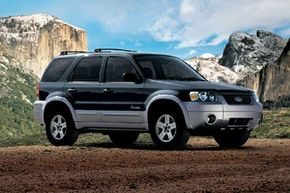
2007 Ford Escape Hybrid
Let’s start with the Ford Escape Hybrid, a compact SUV designed for five passengers. It pairs a four-cylinder gasoline engine with an electric motor to produce a combined 155 horsepower. The pricing and efficiency split depends heavily on your drivetrain choice.
The two-wheel-drive (2WD) version kicks off at $25,655. If you keep it on pavement, you’ll see EPA ratings of 36 mpg in the city and 31 mpg on the highway. Go for the all-wheel-drive (AWD) model, and the base price jumps to $27,260. That extra traction costs you efficiency, with EPA figures dropping to 32 mpg city and 29 mpg highway.
“None requires plug-in charging, and all use an electric motor to either assist their gas engine or to provide substitute power.”
The Escape Hybrid represents the practical side of the hybrid equation. It doesn’t try to be a sports car. It tries to be useful. The drop in MPG with AWD is predictable. Physics doesn’t care about your intentions. But for many buyers, those extra miles of grip are worth the small penalty.
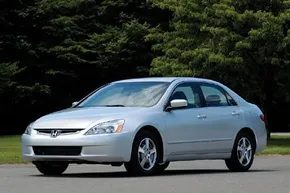
2007 Honda Accord Hybrid
The Honda Accord Hybrid sits in a different tier of expectation. While the Escape is a volume seller in the compact SUV segment, the Accord targets the midsize sedan market. Honda’s approach here was less about raw horsepower and more about smooth, uninterrupted power delivery. The system uses two electric motors. One acts as a starter and generator. The other drives the wheels directly.
This setup allows the car to run on electric power alone at low speeds. It’s a different philosophy than the Toyota Prius, which relies heavily on a power-split device. The Accord Hybrid feels more like a traditional automatic transmission. You don’t feel the belt-and-pulley shudder. You just feel acceleration.
Efficiency numbers for the 2007 Accord Hybrid hovered around 35 mpg city and 34 mpg highway. It wasn’t the king of the hill in pure MPG. The Prius still held that crown. But the Accord offered more space. More comfort. A V6-like smoothness without the V6’s thirst.
Why does this matter? Because not everyone wants a wedge-shaped car. Not everyone wants to drive a vehicle that looks like it was designed by an aerodynamicist with a grudge against aesthetics. The Accord Hybrid proved you could have efficiency and
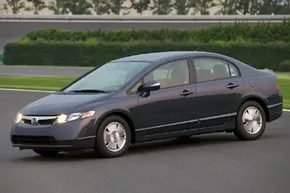
2007 Honda Civic Hybrid
The Civic Hybrid arrives as a two-door coupe, a distinct departure from the sedan norms that dominate the midsize segment. It’s smaller, punchier, and aimed at a different buyer entirely. Under the hood, Honda stuck with its proven hybrid architecture, pairing a 1.3-liter four-cylinder engine with two electric motor/generators. The result? 110 combined horsepower. Not earth-shattering by sports car standards, but enough to keep the lightweight chassis moving with reasonable zip.
Base pricing starts at $22,590. That’s a significant chunk less than the Accord Hybrid’s $31,090 starting tag. For that money, you’re getting a car that the EPA rates at an impressive 40 mpg in the city and 45 mpg on the highway. These numbers are why buyers flocked to it. In an era where fuel prices were climbing steadily, nearly 45 mpg on the highway wasn’t just good; it was exceptional.
“The Civic Hybrid offers near-sedan efficiency in a compact, agile package.”
How the System Compares
Why choose the Civic over the Accord if you need more space? It comes down to use case. The Accord Hybrid, with its 253-horsepower V-6/electric combo, is a serious competitor to the Toyota Camry Hybrid and even some luxury entries. It moves faster. It carries five passengers comfortably. It’s a true midsize contender.
The Civic Hybrid, however, is about efficiency in a smaller footprint. If you’re commuting solo or with one passenger, the coupe’s tight rear seats are a non-issue. If you need to haul a family of five, you look at the Accord. The Civic’s real strength lies in its lower entry price and superior city fuel economy. It’s not just a smaller car; it’s a more focused tool for urban driving.
Real-World Expectations
EPA ratings are estimates, as the agency admits. Real-world tests often show slightly lower numbers, especially if you’re pushing the hybrid system hard. But even with a bit of cushion, the Civic Hybrid easily clears 35-40 mpg in mixed driving. The Accord Hybrid, meanwhile, typically sees 25-30 mpg in the city and 32-35 on the highway in real-world conditions.
The trade-off is clear. You pay more for the Accord’s power, space, and V-6 smoothness. You save money and gain agility with the Civic. Both use Honda’s Hybrid Synergy Drive system, which blends engine and electric power seamlessly. You don’t plug them in. You just drive. The system manages the power split automatically.
Which one makes sense for you? It depends on how many people you’re driving and how much you’re willing to spend at the pump. The Civic is a efficiency play. The Accord is a performance-and-efficiency hybrid. Both work, just for different reasons.
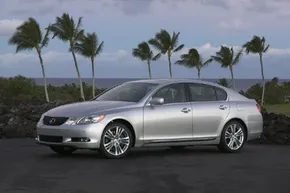
The Civic Hybrid was the volume seller. The Lexus GS 450h was the statement. Where the Honda offered efficiency on a budget, the Lexus offered performance on a luxury budget. It wasn’t just about getting better gas mileage. It was about proving you didn’t have to sacrifice driving dynamics to save fuel.
The Powertrain Difference
Let’s look at the hardware. The 2007 Honda Civic Hybrid used a modest four-cylinder engine paired with an electric motor. Together, they made 110 horsepower. EPA ratings sat at 49 mpg in the city and 51 on the highway. Base price started at $22,600.
The Lexus GS 450h went a different route. It paired a 4.5-liter V8 engine with electric motors. This wasn’t a small displacement engine sipping fuel. It was a big block with an electric boost. The system produced 339 horsepower. That is three times the power of the Civic.
Why does this matter? Because the GS 450h didn’t feel like a economy car. It felt like a sports sedan that happened to be efficient. The electric motor filled in the torque gaps. The V8 provided the high-speed grunt. You could accelerate from 0 to 60 mph in about 5.6 seconds. That is quick for a hybrid. That is quick for a luxury sedan in 2007.
Fuel Economy and Cost
The Civic won on paper. The GS 450h got 22 mpg in the city and 28 on the highway. That is a big gap compared to the Civic’s 50 mpg average. But the Civic cost $22,600. The Lexus started around $75,000.
You are paying for the V8. You are paying for the luxury interior. You are paying for the badge. If your goal is pure efficiency, the Honda is the logical choice. If your goal is a quiet, powerful cruiser that doesn’t look like a delivery vehicle, the Lexus makes sense.
“Most hybrid cars fall into the compact class.”
The GS 450h broke that mold. It showed that hybrid technology could scale up to full-size luxury vehicles. It wasn’t about maximizing every mile per gallon. It was about integrating electricity into a high-performance package without killing the driving experience.
Who is this car for?
The Civic buyer wants to save money. They drive in cities. They commute. They care about the bottom line.
The GS 450h buyer wants status and silence. They want a V8 sound that doesn’t exist because the electric motors smooth it out. They want to arrive at a gala looking like they care about the environment, even if they own three other gas-guzzlers.
The Civic is a tool. The Lexus is an experience.
Real World Testing
EPA numbers are estimates. They are based on ideal conditions. Real world results often differ. The Civic might hit 50 mpg if you drive carefully. The GS 450h might drop below 22 mpg if you press the accelerator hard.
Consumer Guide tests showed that hybrids perform best when driven smoothly. Hard
2007 Lexus RX 400h
The 2007 Lexus RX 400h isn’t just a crossover. It’s a statement about efficiency in a segment obsessed with brute force. This five-passenger premium midsize SUV pairs a V-6 gas engine with an electric motor. The result is 335 horsepower. Not bad for a heavy vehicle that prioritizes fuel economy over track times.
Pricing starts at $51,600. That’s a steep entry fee, but you’re paying for the hybrid badge and the Lexus build quality. EPA ratings? 25 mpg in the city and 27 on the highway. Real-world driving might vary, but the numbers tell a clear story: this is one of the fuel-efficient leaders when it comes to luxury crossovers.
Why choose this over a standard V-6 RX? The answer lies in the powertrain. The hybrid system smooths out acceleration. It reduces emissions. It keeps you at the pump less often. For many buyers, those factors outweigh the need for raw speed.
How to Maximize Hybrid Efficiency
Driving a hybrid correctly matters. Aggressive acceleration wastes the electric motor’s help. Steady speeds keep the engine in its sweet spot. Understanding how a hybrid car works means knowing when to rely on electric power and when to let the gas engine take over.
Consumer Guide tests show that EPA estimates are just that—estimates. Real-world fuel economy can differ. But the RX 400h consistently lands among the leaders. That’s not an accident. It’s engineering.
Expert Reviews and Data
You want more than specs. You want insights. Auto editors at Consumer Guide provide expert reviews of hybrids and hundreds of other vehicles. These reports include photos, prices, and detailed performance data. They help you decide if the RX 400h fits your lifestyle.
“The RX 400h proves luxury and efficiency aren’t mutually exclusive.”
This sentiment echoes through many expert reviews. The 2007 model year marked a shift. Lexus showed that hybrid technology could scale up from sedans to SUVs. The RX 400h paved the way for future models. It didn’t just save fuel. It changed expectations.
Comparison: RX 400h vs. Standard RX 350
Which is better? The standard RX 350 offers more horsepower. It’s cheaper to buy upfront. But the RX 400h saves money over time. Lower fuel costs. Fewer trips to the station. For city dwellers, the hybrid system shines. Stop-and-go traffic becomes less punishing.
The RX 400h isn’t for everyone. If you need towing capacity or track days, stick with the V-6. But if you value efficiency without sacrificing luxury, this crossover delivers. It’s a practical choice wrapped in premium leather.
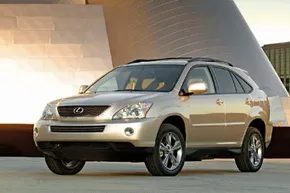
2007 Mercury Mariner Hybrid
The 2007 Mercury Mariner Hybrid shares more than just a badge with its Toyota-badged cousin. Under the hood, it runs the same hybrid powertrain found in the Lexus RX 400h and Ford Escape Hybrid. This setup pairs a 3.3-liter V-6 engine with an electric motor to produce a combined 268 horsepower. It is not just a badge shuffle; it is a genuine attempt by Ford to offer a premium-feeling compact SUV with serious fuel economy credentials without forcing you to choose between luxury and efficiency.
Pricing and Efficiency Breakdown
For those shopping for a used hybrid SUV from this era, the pricing structure is straightforward but reveals the slight premium Ford asked for the Mercury brand over the Ford alternative. The two-wheel-drive Mariner Hybrid starts at $41,180. If you need all-weather capability, the all-wheel-drive model bumps the starting price to $42,580.
The EPA fuel economy ratings reflect that split:
- 2WD Model: 33 mpg city / 28 mpg highway
- AWD Model: 31 mpg city / 27 mpg highway
These numbers were impressive for 2007. They positioned the Mariner Hybrid as a serious contender against the Lexus RX 400h, though with a lower price tag and a more accessible dealership network. The question wasn’t just about getting from A to B cheaper; it was about whether the Mercury’s interior quality and ride comfort could justify the slight cost increase over the base Ford Escape Hybrid.
How the Hybrid System Compares
The Mariner Hybrid uses a power-split device, a complex arrangement of gears and electric motors that allows the gasoline engine and electric motor to work together or independently. This is different from parallel hybrids that rely solely on the engine for propulsion until a certain speed. In the Mariner, the electric motor provides significant torque at low speeds, making the 4,300-pound SUV feel surprisingly spry in stop-and-go traffic.
Why does this matter for a buyer today? Because maintenance on these early power-split hybrids can be specialized. If you are looking at a used 2007 Mariner Hybrid, knowing how the system works helps you spot red flags. Listen for unusual whining from the transmission area, which could indicate issues with the planetary gear set or the electric motor generators. The battery pack is sealed and generally reliable, but it is worth having a dealer scan for any stored diagnostic codes related to the hybrid control system.
Where It Fits in the Market
The 2007 Mariner Hybrid occupies a unique space. It is larger than the Escape Hybrid, offering more rear seat room and cargo capacity, yet it is smaller than the RX 400h. For buyers who wanted the prestige of a luxury brand but not the luxury price, the Mariner hit the sweet spot. It offered a quieter cabin than the Ford equivalent and more tech features than the Toyota-based Lexus, at a price point in between.
Is it the best hybrid SUV from 2007? That depends on your priorities. If you want the ultimate reliability and resale value, the Lexus might still edge it out after 17 years. But if you want a vehicle that feels upscale, drives like a traditional SUV
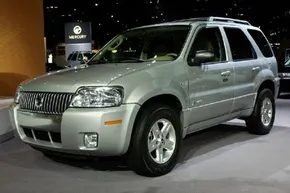
2007 Saturn Vue Green Line
The 2007 Saturn Vue Green Line takes a different approach to hybrid technology, relying on a mild-hybrid system rather than the full-power setup found in competitors like the Mariner. It pairs a 2.4-liter four-cylinder engine with a belt-driven starter generator. This configuration doesn’t offer electric-only driving modes. Instead, it uses regenerative braking to capture energy and provides a small electric boost during acceleration.
The combined output sits at 153 horsepower. That is slightly less than the Mariner Hybrid’s 155 hp, but the trade-off is simplicity. The system is lighter and cheaper to maintain. Fuel economy is rated at 21 mpg in the city and 25 mpg on the highway. You can find one for a base price of around $24,500.
All-wheel drive is available, but it’s not standard on every Green Line model. If you need traction in snow, look for the AWD trim. The two-wheel-drive version is more common and cheaper.
This mild-hybrid setup is less efficient than the full hybrids of its era. It doesn’t achieve the 30+ mpg numbers that the Toyota Highlander Hybrid or Ford Escape Hybrid promise. But it costs less upfront. For some buyers, that lower sticker price matters more than the extra few miles per gallon.
The Vue Green Line also lacks the sophisticated battery management systems of true hybrids. The battery is smaller and charges only through braking and engine operation. You don’t need to plug it in. You don’t need to worry about complex charging cycles. It just works like a normal SUV with a little help from electricity.
Is it the best choice for fuel savings? No. The 2007 Ford Escape Hybrid or the 2007 Honda Civic Hybrid beat it in pure efficiency. But if you want a compact SUV with some electric assistance without the complexity or cost of a full hybrid, the Vue Green Line fills a niche. It’s a pragmatic option for those who want to dip their toes into electrification without committing to a more expensive powertrain.
The interior space is similar to other compact SUVs in the class. It seats five comfortably. Cargo room is decent, though not class-leading. The driving experience is ordinary. No sudden power surges. No weird hybrid sounds. Just a smooth, if unexciting, ride.
Why This Matters Now
Looking back, the 2007 Vue Green Line represents a transitional technology. It bridges the gap between conventional combustion engines and the full-hybrid systems that dominate today. For enthusiasts, it’s a interesting case study in compromise. You get some efficiency gains. You pay less. You lose some range and power.
If you’re hunting for one today, check the battery health. Even though it’s a mild system, old batteries can fail. Look for clean undercarriage. Rust can be an issue on older Saturns. Test the stop-start function. It should engage smoothly every time you come to a halt.
The market for these cars is niche now. Not many people are looking for a mild-hybrid SUV from 2007. That might work in your favor. Prices are low. You can pick one up for a fraction of what it cost new. But finding one in good condition requires patience.
Does it matter if you

2007 Toyota Camry Hybrid
The 2007 Toyota Camry Hybrid isn’t just a sedan with a badge. It is a full-size hybrid that redefines efficiency without sacrificing the comfort expectations of a family hauler. Unlike the Saturn Vue Green Line, which is a compromised mule, the Camry Hybrid runs on both its 2.4-liter four-cylinder engine and a potent electric motor. The combined output sits at 200 horsepower. That is more than enough for highway merging and passing, even if it isn’t track-ready.
You can drive this car on electric power alone at low speeds. This is a key distinction. The Saturn Vue Green Line was a mild hybrid; its electric motor only assisted the gas engine. The Camry Hybrid is a strong hybrid. It can switch between electric-only, gas-only, or combined modes seamlessly. This flexibility means you get significantly better fuel economy. EPA ratings for the 2007 model hover around 33 mpg in the city and 30 mpg on the highway. Real-world tests often show slightly higher figures depending on driving habits.
The transmission is a Continuously Variable Transmission (CVT). Some drivers hate the rubber-band effect. It keeps the engine RPMs high while the car accelerates. But it works. It keeps the hybrid system in its most efficient range. The ride quality remains plush. The suspension handles potholes with grace. Interior space is ample for five passengers. Legroom in the back is generous. Trunk space shrinks slightly due to the battery pack under the rear seats, but it still holds a decent amount of luggage.
Reliability is the Camry’s ace card. Toyota built this system to last. The NiMH battery pack is housed in the trunk area to protect it from heat. This design choice extends battery life. Maintenance costs are predictable. Oil changes are standard. Tire rotations matter. The electric motor reduces brake wear because of regenerative braking. You will go longer between brake pad replacements.
2007 Honda Accord Hybrid
The 2007 Honda Accord Hybrid takes a different approach. It uses a unique hybrid system developed with LG Chem. The battery is a high-density lithium-ion pack. This was rare at the time. Most competitors used Nickel-Metal Hydride (NiMH) batteries. The lithium-ion unit is lighter and more energy-dense. This helps the Accord Hybrid achieve similar efficiency numbers to the Camry. EPA ratings match closely: 30 mpg city and 32 mpg highway.
The powertrain combines a 2.3-liter four-cylinder engine with two electric motors. One motor drives the wheels. The other assists and charges the battery. Total system output is approximately 195 horsepower. The steering feel is heavier than in the Camry. This gives it a more European handling character. The ride is firmer. It absorbs bumps less gracefully than the Toyota. But it feels more planted in corners.
Interior space is competitive. Rear legroom is tight compared to the Camry. Front passengers have plenty of room. The dashboard layout is intuitive. Physical buttons are plentiful. No complex infotainment screens here. The audio system is decent. The leather seats are supportive.
Reliability is good, but the lithium-ion battery has a different failure mode than NiMH. Over time, individual cells can degrade unevenly. This requires
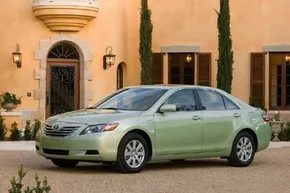
2007 Toyota Highlander Hybrid
The Camry gets the attention for its $26,200 price tag and 40 mpg city rating, but the 2007 Toyota Highlander Hybrid is where the real family hauling happens. This isn’t just a crossover with a badge change. It’s a genuine three-row vehicle built for people who need to move six passengers and a lot of gear without visiting the gas station every other day.
Under the hood, Toyota stuck to its playbook. You get a 3.3-liter V6 paired with an electric motor system. The combined output sits at 270 horsepower. That’s enough to move a heavy SUV without feeling like you’re dragging an anchor.
Fuel economy? Not quite the Camry’s 40 mpg. The Highlander Hybrid returns 25 mpg in the city and 26 on the highway. Is that great? No. Is it exceptional for a three-row V6 hybrid in 2007? Absolutely. Most competitors in that space were averaging 18 to 20 mpg. The difference is stark. You’re saving thousands in fuel costs over the life of the vehicle compared to a standard V6 SUV.
The transmission is an electronic continuously variable automatic (eCVT). It keeps the engine in its power band while the electric motor fills in the torque gaps. Acceleration feels smooth. No jerky shifts. Just linear power delivery.
Inside, the hybrid system doesn’t eat into cargo space as much as you might fear. The battery pack is tucked under the floor. Third-row access is still possible, though cramped for adults. Better suited for kids or short trips.
Base price for the 2007 model starts around $39,980. A premium. But consider the EPA fuel savings. And the fact that it’s one of the few hybrids capable of towing up to 3,500 pounds. That’s a capability most compact hybrids simply don’t offer.
Why settle for a smaller car when you can have a hybrid that actually functions as a family hauler? The Camry is efficient. The Highlander Hybrid is practical and efficient. A rare combination.
How It Compares
Other brands tried to catch up. Ford had the Escape Hybrid. Chevy had the Malibu Hybrid. Neither offered three rows. Neither offered a V6. The Highlander Hybrid stood alone in its class during its first year on the market.
Real-world testing often shows EPA numbers as optimistic. Expect slightly lower figures in heavy traffic. But the advantage remains clear. You’re driving a large SUV with the footprint of a compact car at the pump.
Does it handle like a Camry? No. Body roll is present. The suspension is tuned for comfort, not corners. But for daily commutes and school runs, it absorbs bumps without punishing the occupants.
The interior materials are typical Toyota of that era. Durable. Functional. Not luxurious. But built to last. The hybrid system adds reliability concerns? Minimal. Toyota’s hybrid battery technology was mature by 2007. Long-term ownership data suggests these batteries often outlast the vehicle itself.
Who is this for? Parents. Tradespeople. Anyone who needs space but hates fuel bills. It’s not for thrill-seekers. It’s for people who want to drive a green SUV without sacrificing utility.
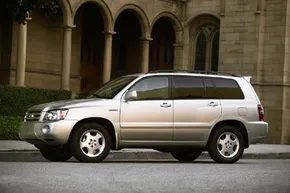
2007 Toyota Highlander Hybrid
You want practicality without guzzling gas. The 2007 Toyota Highlander Hybrid sits in that sweet spot. It’s a five-passenger midsize SUV that doesn’t ask you to choose between carrying your family and filling up at the pump every day.
Under the hood, Toyota paired a standard V-6 with an electric motor. The result is 268 horsepower combined. That’s enough to move a heavy SUV with decent urgency.
Pricing starts at $32,490 for the front-wheel-drive model. If you need traction in snow or mud, the all-wheel-drive version adds about $1,400, starting at $33,890. Note the typo in the source data regarding the AWD price; it is not thirty-three thousand eight hundred and ninety dollars in a way that breaks the bank, but it is definitely higher than the two-wheel-drive base.
Fuel economy is where this thing earns its keep. The front-wheel-drive Highlander Hybrid earns EPA ratings of 32 mpg city and 27 highway. The all-wheel-drive version drops slightly to 31 mpg city and 27 highway. The extra weight and mechanical drag of the AWD system cost you one mile per gallon in the city.
It’s not a sports car. It’s not a tiny commuter hatchback. It’s a family hauler that happens to get thirty-plus miles per gallon in stop-and-go traffic.
The Highlander Hybrid proves you don’t have to sacrifice cargo space or seating for hybrid efficiency.
2007 Toyota Prius
If the Highlander is the practical choice, the Prius is the icon. Released in 2007, it was already well into its second generation. The styling was sharper, more controversial than the first gen, but undeniably distinct.
Inside, it’s minimalist. You get five seats, though the rears are tight for adults. The focus is on efficiency. The powertrain combines a 1.5-liter four-cylinder engine with two electric motor-generators. Total output is 121 horsepower. It’s not fast in a traditional sense, but it’s peppy around town.
The EPA ratings for the 2007 Prius were groundbreaking at the time. You were looking at 95 mpg city and 90 mpg highway under the old testing cycle. Real-world results usually landed around 50 mpg. That’s still half the Highlander Hybrid’s output without the V-6.
The Prius wasn’t just a car. It was a statement. Driving one meant you cared about fuel costs enough to drive a wedge-shaped vehicle that turned heads. For some, that was enough. For others, the styling was too much.
Both vehicles showed Toyota’s commitment to electrification long before it became the industry standard. The Highlander Hybrid proved hybrids could be mainstream. The Prius proved they could be iconic.
Why pick one over the other? It depends on how many people you need to feed, not just how far you need to drive.
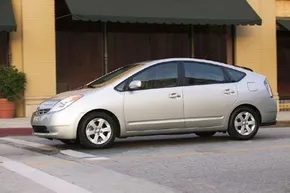
The 2007 Toyota Prius: Specs, Efficiency, and Value
The 2007 Toyota Prius remains a benchmark for fuel economy in the compact segment. It seats five people comfortably. Under the hood, a 1.5-liter four-cylinder gasoline engine pairs with an electric motor. The system produces a combined 110 horsepower. It’s not fast. But it is efficient.
Base pricing starts around $22,175. EPA estimates put city mileage at 60 mpg and highway at 51 mpg. These numbers define the car.
Hybrid Efficiency Explained
How does this car achieve such high mpg? The Prius uses a hybrid synergy drive. This system switches between gas and electric power. It recaptures energy during braking. This reduces fuel waste.
For maximum efficiency, drivers should avoid hard acceleration. Smooth inputs help the battery manage energy better. The car’s computer decides when to use the electric motor. This happens at low speeds.
Plug-in Hybrids: The Next Step
Some drivers ask about plug-in hybrids. These vehicles have larger batteries. They can run on electricity alone for longer distances. This reduces gas use further.
Advantages include lower emissions. You can charge at home. This cuts fuel costs. However, they cost more upfront. The 2007 Prius is not a plug-in. It relies on regenerative braking only.
Buying a Fuel-Efficient Car
What should you look for in a used hybrid? Check the battery health. Look for signs of wear. Test drive the car. Listen for unusual noises.
The goal is simple: lower fuel costs. Whether you choose a hybrid or a conventional car with good mileage, efficiency matters. Compare EPA ratings. Consider maintenance costs.
The 2007 Prius offers a proven path. It saves money on gas. It reduces dependence on oil. For many, this makes sense.
Why This Matters
Why do hybrids still matter? Fuel prices fluctuate. Environmental concerns grow. The Prius addresses both. It’s a practical choice.
You don’t need to be a tech expert. Just drive smoothly. Maintain the car. Enjoy the savings.
The road ahead is electric. But the Prius paved it.