Lee Iacocca gets all the credit for the Mustang. It’s the legend: the visionary executive who pushed a sporty compact that sparked the pony car craze of the mid-1960s. But he wasn’t alone in that arena. During the same tenure, Ford launched another equine-named machine named after a horse. This one, however, didn’t get the same warm press. The Ford Pinto.
Iacocca probably prefers the obscurity.
The Pinto was Ford’s fourth product line to follow the horse theme. Like its big brother, it achieved marketing success in new market segments. But it carried baggage the Mustang avoided. Bad publicity followed it like a shadow.
A No-Nonsense Machine
Forget luxury. Pinto’s goal is simple. comfortable. Sufficient running ability. Purchase and maintenance costs are low. Iacocca followed the development of this car more closely than the Mustang. He set two hard limits:
- Price: No more than $2,000
- Weight: No more than 2,000 pounds
Ford had toyed with a smaller domestic car since the mid-1960s. By 1967, engineers were working on a model with an 85-inch wheelbase and a smaller than a six-cylinder. Mr. Iacocca, then vice president of North American vehicle operations, saw the threat clearly. Volkswagen. Rising Japanese imports. He believes these foreign challengers will soon be able to penetrate the entire US subcompact market. Ford needed a weapon. Fast.
The Battle for the Presidency
The Broncos’ success has led many to believe that Iacocca is the next best choice. Arjay Miller then left the company at the end of 1967 and became Vice President. Henry Ford II surprised everyone. He contacted General Motors and appointed Semon “Bunky” Knudsen as president.
Office politics have cooled down. Dearborn’s “glass house” became a Cold War zone. The Knudson and Iacocca campaigns did not speak.
Knutson doesn’t agree with Iacocca’s push for smaller cars. Ford had already taken the lead with the 1970 Maverick, which was to replace the aging Falcon in early 1969. Knutson didn’t think Ford needed anything else.
Iacocca replied. Maverick is too big. Imports are increasing. Other US automakers are also designing smaller cars. Ford needed a “G car”. Something less than heretical.
Turning point
Iacocca was fearless. His persistence paid off. In January 1969, Henry Ford II approved Ford’s first domestic light vehicle.
This decision had consequences. Combined with other internal pressures, this suggested that Knutson’s efforts were “simply ineffective”. Order Henry Ford II. Knutson was gone. The presidency passed to Iacocca.
According to some reports, Knutson is still leaving his mark on Pinto. Former Ford stylist Bob Thomas recalled in a 1994 interview with Collecting Cars that his design led to the Pinto’s appearance.
“The result of my design was what the Pinto would look like. I was amazed at the packaging of the Pinto… When they presented the model, Banky chose it – and that was it.”
Of course, Knutson never got that credit. He left soon after, not by choice. Pinto moved forward. The conversation has just begun.
The Phoenix Project: 1970 Ford Pinto Design
The green light was given in 1969. What is the goal? This compact car was launched in September 1970. We design and build cars from the ground up and manufacture them within 20 months.
It’s called Project Phoenix. The name seems ironic when you know how the story ends, but at the time it sounded like a rebirth. Frank G. Olson hosted the program. He is not new. He made his mark on Mustangs, Fairlanes, Torinos and more. He knew how to build Ford cars.
Olson explained these rules in a paper for the Society of Automotive Engineers. “Phoenix Green Book” is more than just a timeline. It’s a manifesto. The goal is ambitious, but simple. This new little Ford has to beat the competition in terms of looks, comfort, ride, handling and performance. Just matching them is not enough. Beat them.
To find out what “defeat” really felt like, Ford sent 32 engineers on a three-day trip in February 1969. No restrictions. They destroyed the road test cars that defined the compact segment.
Two Fiat 850s. Fiat 124. Volkswagen Beetles are everywhere. Opel Kadett. Toyota Corolla. Vauxhall Viva. Ford Escort also comes from a British family.
Harold Freers, Ford’s chief engineer, had a special mission. Create an Americanized Compact. Despite the world-class design, it is comfortable for American drivers.
They evaluate each vehicle. Every rattle. Every vibration. The consensus is clear. The target is Volkswagen. Period. Toyota owns the quiet class. The Fiat 850 took comfort. Opel Kadett – unparalleled in terms of ride and handling.
Ford can’t ignore Opel’s toughness. Although we had experience in unit construction, we needed to reduce weight. Stronger. Tighter.
They started with a stamped body base. Weld them all together. Structure member. outer metal plate. Uniformly fused.
Why bother? Fastening to the bonnet, trunk lid and doors has been improved. Fewer rattles. Wind noise has decreased. No leaks. This sounds like a basic technique. In 1970, it was advanced.
The “halo” ring holds the frame sides in place. Cut weight. Added rollover protection.
It’s not all smooth sailing. As soon as the Pintos hit the test track, problems appeared. “Hardly a week goes by when we don’t need a body engineer,” Freers told Motor Trend.
Redesign becomes the norm. The structural integrity of the cockpit is the biggest sticking point. How can I make the box more rigid without adding weight to it?
They solve this problem by making everything work together. front crossbar. rear. Even the dashboard becomes a unified source of stiffness.
Noise is also an enemy. At that time, Lincoln sedans had 140 pounds of sound-absorption material. The Maverick? 28 pounds. The Pinto’s target weight is 250 pounds lighter than the Maverick. They had 12 pounds of budget for noise dampening.
They can’t just spend money to get out of trouble. They had to engineer it.
A new heat-curing vinyl sealing process was developed. Applies to all seams of exterior panels. All joints. Custom-formed plastic bonds. Reduces noise. The weight goes down.
Plastic replaced metal wherever possible. Internal components. front grille. Save costs. Cut weight.
Inside, engineers have stretched the cabin to its limits. People six and a half feet tall can get in and out without having to fold it up like a lawn chair.
Dashboard controls. Gearshift. pedal. Gauges. All layouts are designed for intuitive use. Service is also important. The main instrument cluster, including the speedometer, fuel, oil and electrical gauges, can be pulled out with a simple screwdriver. No need to dig into the engine compartment for a basic inspection.
But what about the transmission? This is the heart of the recipe.
Ford looked north. To Europe.
Two candidates have emerged from Ford’s UK operations.
Kent engine. 4-cylinder in-line engine. Introduced in 1959. It had already proven itself in the Anglia. Then the Consul. Zephyr. By 1962, it was in the Cortina at 1.3 liters. By 1964, it hit 1.5 liters.
Britain’s horsepower race is progressing steadily, if more slowly than America’s V8 wars. By 1967, Kent’s displacement had increased to 1.6 liters. Aimed at the Cortina GT.
It was so durable that Colin Chapman used it as the basis for his Lotus road and racing engines.
Naturally, it became the center of the American Pinto.
Rated at 75 horsepower at 5,000 rpm. 96 pound-feet of torque at 3,000 rpm.
Single throat carburetor with automatic choke. Simple. Reliable.
Crossflow cylinder head. Removes dead zones from the combustion chamber. Even more power. Better efficiency.
This is the base engine known as the Pinto 1600 due to its 1600cc displacement.
But Americans? They love power.
Engineers knew the Kent State site wouldn’t satisfy everyone. They went shopping again. This time Ford from Germany.
Four people from Cologne. 2.0 liter overhead 4-cylinder in-line engine.
He has a European racing pedigree. It produces 100 horsepower at 5600 rpm.
Torque jumps to 120 lb-ft at 3600 rpm. Considerably more efficient than the basic unit.
larger valve. port manifold. Crossflow head again.
This is a choice. But for driving enthusiasts, it’s the difference between a grocery store buyer and a real car.
The focus is taking shape. light. hard. Quiet. strong.
Or so they thought.
Transfer settings
The power is transferred to the road through a unique four-speed manual. This is not a perfect design. Ford in the UK has used the same gearbox for many years and it has proven reliable enough to become standard on both engines. If you want to take your foot off the clutch, you have options. A Cruise-O-Matic three-speed automatic transmission is also available, but only if you choose the 2.0-liter engine. The combination of small displacement and torque converter allows for a smoother, less connected ride. For those who want to experience gear changes, the gear lever remains the default setting.
Pinto body and drivability
Ford engineers didn’t just want a cheap commuter car. They wanted a cheap commuter car. They wanted the Pinto to handle like a proper sports car. It sounds ironic now, given the car’s subsequent reputation, but the original design was truly impressive. To achieve this light operating feel, they went with a rack and pinion steering system. In the early 1970s, most American drivers were used to recirculating ball systems that felt vaguely heavy. rack-and-pinion was are standard equipment overseas, but in the US Ford is introducing them on mainstream models for the first time. The ratio is set at 22:1, which allows the compact 15-inch steering wheel to turn the corners with precision. The Pinto was so light that the power steering was completely omitted. It remains sharp, direct and responsive.
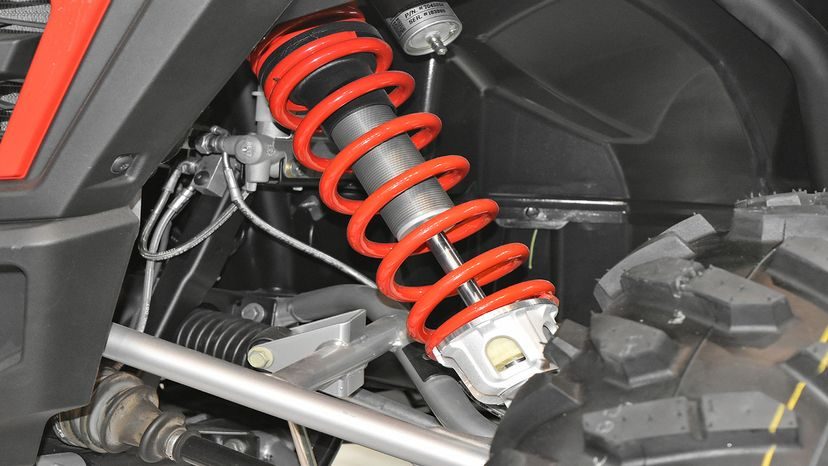
The suspension is an independent setup with short A-arms and long A-arms, essentially a small version of the technology Ford uses on its larger family cars. The coil spring is located between the lower A-arm and the upper crossbar. Inside these coils is a double action shock absorber. Why put it inside the springs? Maintenance is easy. No special tools are needed to make the changes. Easy to use and change.
The rear suspension also follows the trend. It uses a 46.5-inch multi-leaf semi-elliptic spring attached to a rubber-insulated anchors. The rubber dampens vibration and road noise, which is rare in leaf spring installations. Staggered dampers prevent wheel hop during sudden acceleration or braking. All four wheels come standard with 9-inch brake drums and self-adjusters. If you choose a larger engine, front disc brakes are a must.
Body style and appearance
The start date involves compromises. The original plans included a 2-door sedan, a 3-door hatchback, and a 2-door station wagon. However, body stiffness issues plagued the design team. Instead of delaying the launch to tweak each body style, Ford focused on making the base sedan worthy of its debut.
The chassis has a wheelbase of 94.2 inches and an overall length of 163 inches. The silhouette is characterized by a relatively long hood and fastback rear end with a short decklid that starts at the bottom of the rear window. Standard tires are 6.00X13 bias ply with black sidewalls, but can be upgraded to whitewalls or radials. The rear quarter window with tilting glass is an additional feature, but it improves ventilation and comfort for the rear passengers.
The outside has a practical design. The front end has a simple chrome-plastic grille with vertical slats. Only two headlights were used and they were mounted on the front edges of the front fender to save costs. The parking light and turn signal combination is located at the extreme end. A simple chrome blade bumper covers the face. The rear is equally simple, a flat plate with a taillight assembly straight out of the 1970 Ford Maverick catalog.
Painting, decoration and market position
Internally, the Pinto was considered the spiritual successor to the Model T. Henry Ford II and others referenced this tradition, naming one of the available colors “Model T Black.” If black isn’t your thing, there are 14 other options. Ford borrowed the “Grabber” color from the Maverick and Mustang lines, but gave the subcompact a new name. For example, Grabber Blue is now Pinto Blue.
The painting process is divided into six stages. The body of the car is dipped in primer and painted using static electricity. This method improves adhesion, surface quality and durability. Inside, color-coded all-vinyl seat trim covers both the front seats and the back seat.
The very small market is still crowded. AMC released Gremlins in early 1970. Chevrolet announced the Vega a day before the official debut of the Pinto. Chrysler relied on imported cars such as the Mitsubishi-built Dodge Colt and the Hillman Plymouth Cricket. Despite the tough competition, Pinto hit the mark. Lee Iacocca, the creative force behind this project, couldn’t be prouder. Shortly after the company’s launch, Henry Ford II appointed Iacocca as president.
Sales and Year Model 1971
On September 11, 1970, the public saw the Pinto, a week before the rest of the ’71 Ford lineup arrived. The showroom was not full, but sales grew quickly. Even with one model, 86,680 Pintos rolled off the production line by the end of 1970. By comparison, the Chevrolet Vega had sold just 24,295 units as of December 31.
The main reason for this number was the 67-day strike that began on September 15 (just before the new model went on sale) and paralyzed all GM plants. Without GM production, dealers would have nowhere else to look for small cars.
As 1971 progressed, sales continued to grow. On January 18, less than five months after the Pinto was sold, the 100,000th car was delivered to Marco Ojeda of S and C Motors in San Francisco. The handling was sharp. The handling is sharp. The price is reasonable. But the story is not over yet.
Why the Pinto broke California expectations
When the Ford Pinto hit the market in 1971, its performance numbers surprised many. What makes this news really important is its location. California has traditionally brought imported cars such as Volkswagen, Toyota and Datsun. Still, Pinto got customers faster than ever before. By January 1971, Golden State dealers reported that Ford’s new compact car accounted for 17.8% of all import sales. This is not a rounding error. This is a change in the market.
The secret sauce? price. Pinto achieved his financial goals with surgical precision. The base sedan costs $1,919. This reduced Lee Iacocca’s maximum price by $81, leaving the Chevrolet Vega in second place at $171. In 1971, gasoline was cheap and plentiful. There is no obligation to publish official fuel economy figures. Still, Ford literature cites engineering tests in which the base 1,600cc engine and standard transmission averaged 25 miles per gallon in simulated city and suburban driving. It’s not just about being able to buy cheap. Operating costs are low.
Four-Cylinder Shock
Preliminary customer reviews praise Pinto’s economy of use and the ease of boarding and disembarking passengers. Access to the trunk is also a highlight. However, the biggest shocker was its performance. Buyers gave it better reviews than expected, mostly because many had only ever experienced V-8 or six-cylinder engines. This is a shock to the system. This is Ford’s first domestically produced four-cylinder passenger car since 1934. Its driving dynamics are an insight for those without a frame of reference for small-displacement power.
Naturally, there were complaints. If you hit the hood hard, the plastic grille will crack. One of the more serious problems was that interior door handles broke in the hands of passengers. Retailers quickly learned to stock these parts on their shelves. Fleet owners often order door handle boxes just to keep their Pinto running. This is a strange weakness in a powerful package.
Service and technical data: Beating the Vega
Ford encouraged sales representatives to emphasize the Pinto’s superiority over the Vega, Volkswagen, Toyota Corona and Datsun 1600 sedans. The claimed advantages are ease of use, stability and maintainability. Dealer specials state that Volkswagen recommends changing engine oil and lubricants every 3,000 miles. Pinto owners can easily cover double the distance. Reduces the maintenance burden.
To carry out its do-it-yourself spirit, Ford introduces two tool kits. The starter kit costs $28.75. The “Master” kit costs $44.95 and includes a wrench, ratchet, gauge and even a torque wrench. The principle is simple. You don’t need to take your Pinto back to the dealer for repairs. One of the most popular promotions is a small service wrench that doubles as a screwdriver and provided measurements for proper gapping of spark plugs and points. Make every car owner a mechanic.
Trim levels and options
The Pinto is an affordable entry-level car, but it comes with plenty of extras. A luxury interior package, full wheel guards and an exterior trim package with vinyl roof are all on order. Radio available. Add $50 to the total price for the 2.0L engine. The larger engine allows buyers to add air conditioning. They can be equipped with a Cruise-O-Matic automatic transmission for $175.
Ford also introduced a rally participation group. The package includes most upholstery kits, as well as a black hood, taillight bezels and grille. It has Boss Mustang-style fenders, Rallye badging, front disc brakes, and black A78X13 sidewall tires. It’s a way to make an inexpensive car look like a powerful machine.
The Runabout Debut
On February 20, 1971, the long-awaited Pinto Runabout was unveiled to the public at the Chicago Auto Show. It was released 5 days later. Like the sedan, it responds to strong customer demand. Priced at $2,062, it stands out from the sedan with exposed chrome hinges on the rear doors and five decorative chrome strips on the rear doors.
All other silhouettes and dimensions are almost identical to the sedan.
A pneumatic piston helps to lift the hatch.
Fold the rear seats down and you have plenty of space.
This feature is also optional on the sedan and offers up to 38.1 cubic feet of storage space. It is very versatile.
The Pinto is assembled in San Jose, California and Metuchen, New Jersey, as well as Ford of Canada’s new plant in St. Thomas, Ontario. The production schedule is very tight. For most of the model year, two shifts were implemented to keep up with the order flow. The demands are merciless.
Sales Records and Henry Ford II
In the first year, 288,606 sedans and 63,796 Runabouts were produced. This was one of the best first-year launches in history, second only to the Mustang in 1965 and the 1960 Falcon. Even more surprising to Ford’s marketing team was that most buyers opted for the more expensive 2.0 liter engine. In addition, these cars have a choosing the automatic transmission on those cars by a better than 2-to-1 ratio. People want power and comfort even in compact cars.
Henry Ford II also seemed to like this car. He is said to be often seen driving a specially painted Candy Apple Red Runabout around the Detroit and Grosse Pointe areas. Comes with custom wire wheels and black leather interior. The boss drove his own product.
Safety and emission shadow
All is not well for Ford and the entire industry. The federal government became increasingly involved in American automobile manufacturing. The key words are safety and emissions.
In 1971, a special report sent to Ford dealers and sales representatives contained a personal message from Henry Ford II outlining the company’s 10-point commitment to the environment. This document references all of Ford’s pioneering safety innovations, from the first safety package in 1956 to the TotGuard child seat first offered in 1967. It explains how occupants can be protected using safely designed gauges and dashboards and low-profile, impact-absorbing vinyl coat hooks.
However, the publication ignored many claims that car companies could take additional steps in terms of safety. The group believes that cars have a relatively small impact on air pollution. An early driver’s side airbag system was tested on the Pinto but ultimately not produced. The Pinto was a sales and design triumph, but we’re entering an era where governments start dictating the rules of the road. The easy years were ending.
Ford management had a clear strategy for the Pinto. It’s all about simplicity. The chairman clearly told dealers and the media not to expect a facelift every year. The goal was to mirror the longevity of the Model T. The car remains mostly unchanged, only internal improvements, and the external silhouette remains the same year after year. This consistency makes sense given the massive sales success of the model when it debuted in 1971. The 1972 Ford Pinto reflected this philosophy and was virtually identical to its predecessor.
Interior and Exterior Tweaks
The changes are subtle and mostly functional. Ford moved the backrest release lever. Previously in a central location that was difficult to access, it has been moved to the outer edge for easier access. This is a small ergonomic fix for a small car.
Exterior changes are more subtle. Aside from the standard color swaps and new trim package decals, the most obvious updates are seen on the Runabout models. The rear hatchback has a larger backlight. This slightly improves the rear visibility of the hatchback variant and differentiates it from the sedan.
For enthusiasts following the evolution of the compact icon, these small updates underscore Ford’s “if it ain’t broke, don’t fix it” approach in the Pinto’s early years. 1972 Ford Pinto is not about reinvention. It was about refinement and maintaining the momentum made the first year a commercial success.
On February 24, 1972, the final piece of the original Pinto puzzle arrived. Ford already had sedans and compact cars, but they needed a hauler. So they completed the trio for that model year with the 1972 Ford Pinto Wagon.
This is more than just a sedan with rear doors. Engineers extended the common chassis platform specifically for this role. As a result, the length of the vehicle is 172.7 inches.
This is almost 10 inches longer than the regular Pinto model.
Most people remember the Pinto not for its trunk, but for its reputation.
But this station wagon offers something smaller cars can’t. It offers real practicality for families who need more space without buying a bigger and more expensive car.
The extended wheelbase and rear quarter panels change the proportions significantly. It looks more like a practical family hauler than a sporty compact. Today, it is extremely rare for collectors to find pieces in good condition. Most were Drivenn to the ground and used in grocery stores and schools until they rusted or broke.
Controversial car practicality
Why is this body shape important? Because it highlights the real purpose behind the car. Ford just doesn’t want to compete with the VW Bug with the Runabout. They want to offer a complete lineup. For buyers who need space, the wagon was the logical choice.
A split platform means parts are interchangeable in many areas. This reduces production costs and is the focus of this project. The Pinto was designed to be cheap, simple and quick to build. Extending the body required minimal new tooling.
However, the extra length didn’t come without trade-offs. The handling feel is different. The center of gravity shifted slightly due to the longer rear overhang. Drivers noticed a noticeable difference in the car’s response to turns compared to the nimble sedan. Not as nimble. However, it is stable when loaded.
Rarity and condition
These station wagons are now harder to find than coupes. Why? They were used harder. A family car gets more mileage. The suspension parts, the interior and the infamous fuel tank area suffer more wear and tear.
Finding original examples requires patience. Many were converted to project cars but were never completed. Some disappeared into the junkyards decades ago. Survivors often have signs of previous accidents and repairs. The extended rear has very few body panels.
The enthusiasts who restore them focus on authenticity. The interior is similar to other Pinto models, but the rear cargo area is unique. The carpet, side panels and rear hatch mechanism are all unique to this model. Parts suppliers still have some parts in stock, but not all.
The 1972 Ford Pinto Station Wagon was the underutilized utility of the series. The car did not make the headlines. It wasn’t the car that sparked lawsuits. But it serves a purpose that millions of Drivenrs need. Looking back, That practicality is what makes it interesting now.
What remains is a reminder that not all of Pinto was a cautionary tale. Some are just cars. Used. Driven. Finally forgotten. Until someone digs them out of the barn or
The 1972 Ford Pinto wasn’t just a new addition to the Sprint family. It’s built into certain segments of Ford’s lineup, including the Mustang and Maverick. It’s a tradition Ford has maintained since the 1930s, and it’s a strategic move to stimulate spring showroom traffic. In 1972, the Pinto Sprint became the third patriotic trio, finished in white with a blue hood and lower body panels. Red pinstripes run throughout the vehicle, and an American flag shield adorns the front fenders. In keeping with the theme, the interior features white vinyl with blue and red accents.
Change the cart to the sales chart
While the Sprint took all the credit, the real story of 1972 was the Pinto wagon. Production grew steadily, and models from one model year were available, becoming the sales leader among Pinto hatchback buyers. A total of 197,920 hatchbacks and 181,002 sedans were assembled. The station wagons, which were introduced late in the previous cycle, followed with 101,483 units produced.
But the wagon itself was a work of engineering. Ford claims 60.5 cubic feet of storage is accessed via an integrated tailgate designed to resemble a Runabout rear hatch. An additional cost for the Pinto wagon is the flip-up rear window. This is the only source of fresh air for those trapped in the back seat. Under the hood is a standard 2.0-liter engine paired with a 4-speed manual transmission. All Pinto wagons also have front disc brakes as standard.
The base form is an attractive little two-door station wagon, but trim packages with sedan and coupe-like trim groups are also available. Although not considered a stand-alone model, the Squire version is very popular in wagon buyers.
Borrowing its name from the Ford family that’s been around for over 20 years, this option features wood veneers and a fiberglass body that surrounds rich dark walnut appliqués, giving the compact wagon a lofty feel. Interior equipment includes plush padded bucket seats. Embossed door panel. Woodgrain appliqué is used on the instrument panel, gear console and in the center of the steering wheel. And so on.
Horsepower drop: net horsepower and gross horsepower
One of the big changes in the industry this year is how horsepower is measured. The numbers look a lot worse on paper if you use a net figure based on engine power delivered to the rear wheels, rather than total power produced unrestricted on the test bench. The Pinto’s 1.6-liter engine’s 75 horsepower dropped to 54 horsepower in 1972, while the larger 2.0-liter four-cylinder engine dropped from 100 horsepower in 1971 to 86 horsepower in 1972.
Prices for the Pinto rose slightly in 1972. Prices now start at $1,960 for the base sedan and $2,078 for the Runabout. The first Pinto wagon hit showrooms with a base price of $2,265, $20 less than the Chevrolet Vega Kammback wagon.
Just two years later, around 833,000 Pintos were on the road. The entry of US automakers into the subcompact sector began to affect Japanese imports, and market share fell from a peak of 15.2% in 1971 to 14.8% in 1972. However, this proved to be only a temporary decline.
Safety directives and the California dream
The Pinto’s upcoming third production season includes some significant changes, primarily reflecting new safety regulations and changing customer preferences. The most obvious upgrade is an energy-absorbing aluminum front bumper that brings the Pinto up to the 5 mph crashworthiness standard required by the new federal law. The new bumper extends to 164.1 inches on sedans and 173.9 inches on wagons.
There are five new colors in the Pinto exterior palette. Forged alloy wheels and a handling package are new to the options list. Prices continue to rise. The starting price of the two-door sedan eventually exceeded $2,000. Now it’s the turn of station wagons to take advantage of the year-round production possibilities. Although it was the most expensive model in the Pinto family, the wagon proved to be the most popular body style, and wagon followed by the Runabout and then the sedan in demand for many years.
Ford dealers across the country are busy selling the little Pinto. Local facilities produced several special and regional editions, but perhaps none as powerful and expensive as the Pangra made by Huntington Ford in Arcadia, California. It offers plenty of power for a subcompact and can be considered the forefather of today’s sport compact “tuner”.
Pinto welcomed the 1974 model year with great enthusiasm and was on top of the world. But soon after, the market plunged into turmoil.
The Oil Crisis Hits
The 1973 and 1974 Ford Pintos hit the market during a turbulent time. In October 1973, war broke out again in the Middle East. The major Arab oil producers were outraged by the West’s support for Israel, raising prices and eventually organizing the OPEC embargo.
In the US, gas prices have gone from about 30 cents a gallon to over $0.50 a gallon. Shortages at fuel pumps has led to queues stretching for miles, and drivers are starting to panic, fearing they will go to sleep with the fuel gauges of their old cars below the three-quarters-full mark.
**More picture-rich articles about great cars: **
-
a classic car
-
muscle car
-
sports car
-
Consumer guide for the automotive industry
-
Consumer guide Search for used cars
1974 Pinto: Power, Weight and Deadly Secrets
The energy crisis doesn’t just slow down traffic. It killed the American V-8. Overnight, buyers ditched the big Galaxies and 12 mpg LTDs for something lighter, cheaper and more efficient. Ford dealers have found salvation in the subcompact Pinto. Advertised at 20-25 miles per gallon, it was a savior to a public suddenly afraid of pumps.
At the same time, sales of Ford’s full-size sedans have collapsed. The number dropped from more than 854,000 in 1973 to about 461,000 in 1974. A new national speed limit of 55 miles per hour signed by Nixon earlier that year was a further relaxation. The little Pinto drives surprisingly smoothly on slow highways, proving that slower doesn’t mean less comfortable.
Ironically, as the fuel shortage worsens, Ford announces the biggest news of the year: new, bigger engines. This is not an old fashioned piece. This is a 2.3L overhead cam 4 cylinder engine designed and built in Lima, Ohio. It produced 85 horsepower. To make room for this new option, Ford quietly dropped the slow-selling 1.6-liter four-cylinder engine and bumped up the 2.0-liter to standard.
Marketing sales is hard. The new 2.3-liter engine is one horsepower less than the base engine, but Ford claims it offers more torque and better fuel economy. This is a subtle change in design philosophy that prioritizes low-end grunt and efficiency over peak power. By the end of the year, most Pintos will have this 2.3-liter engine, adding $52 to the base price.
The appearance other than the bumper is almost the same. Currently, federal regulations require rear bumpers to withstand 5 mph impacts without damage. The resulting additional amount of steel is enormous. Together with a heavier engine, more sound insulation and a strengthened structure, the weight of the Pinto sedan increases dramatically. Weight went from 1,949 pounds in 1971 to 2,372 pounds in 1974. Mass increased by 21%. Prices have also risen.
Despite the increasing weight and price, the Pinto won. Ford rolled out in 1974 when it introduced 544,209 vehicles, bringing the Pinto’s total production to nearly 2 million units. This is the car America bought when it couldn’t afford her previous lifestyle.
However, a dark story is emerging from behind the sales list. Internal memos and news reports began to reveal a fatal flaw: Rear-end collisions could cause fuel tanks to rupture, leading to fires and death. The company conducted a secret research into its corporate liability. Lawsuits began to increase. The safety of the Pinto design is no longer just a technical issue. This is a legal minefield.
More articles with pictures about great cars:
– a classic car
– muscle car
– sports car
– Consumer guide for the automotive industry
– Consumer guide Search for used cars
1975 Ford Pinto: V-6 introduced and sales collapse
When the 1975 Ford Pinto hit the market on September 27, 1974, Ford tried to sell the small subcompact as a winner. On the surface, it looks pretty much the same as last year. There have been a few small improvements, such as extending the wheelbase to 94.7 inches on station wagons and 94.4 inches on others, but for the most part it’s “if it ain’t broke, don’t fix it.” But internally, the Pinto strives to become a full-fledged American car.
The 2.0 liter engine was eventually discontinued. In its place is a 2.3-liter four-cylinder engine with an output of 83 horsepower. But the real headline news is the new V-6. Ford’s version was based on the Lancia model and had a displacement of 2.8 liters. It produced 97 net horsepower, used an 8.0:1 compression ratio, and was fed air and fuel through a two-barrel Holley carburetor.
The design is surprisingly simple. The valvetrain stays light thanks to a 60-degree rake angle, alternating firing sequence, and high block-mounted camshafts. The result is an engine that runs smoother than anyone would expect from an affordable, compact engine. This basic design has remained in Ford products for over 25 years.
V-6 engines are only available in the Runabout and the wagon. Requires redesigned SelectShift Cruise-O-Matic transmission. Power steering and power braking are also available the first time you order the V-6.
By the summer of 1974, the oil crisis had subsided. The gas flows freely again. Prices fell. Americans stopped panicking and started shopping again. But fuel economy is still a big selling point. So Ford developed the Pinto MPG.
These versions are equipped with a four-cylinder engine and manual transmission. The new catalytic converter allows the engine to be re-tuned for increased efficiency. The axle ratio has been changed from the standard 3.40 to a higher 3.18:1. The state-specified highway mileage is 34 mpg. It gets 23 miles per gallon in city driving. Switching to automatic reduces the number to 30 on the highway and 21 in the city.
Advertisements for these later models advertised highway mileage and base price in large font. They want direct comparisons with foreign imports and domestic competitors. All three body styles get the MPG treatment.
However, prices have risen. The price of the Pinto gradually approaches and sometimes even exceeds the price of the slightly larger Maverick. Prices for the sedan start at $2,769. The base Runabout costs $2,984. Car prices start at $3,094. The V-6 engine adds $253. An automatic transmission is available for an additional $202.
All price increases do not apply to standard equipment or emissions equipment. Raw material costs are rising. In early 1975, Ford officials told reporters that steel prices had risen 35 percent in less than a year. Rubber rose 43%. Aluminum prices rose by 61%. Plastics grew by an average of 21%.
The fuel crisis of 1973-1974 left a scar on the economy. Domestic car manufacturers have suffered a lot. Pinto is no exception. Only 223,763 of the 1975 model were produced. It was 59% less than the previous year. In fact, Ford produced more 1974 Pinto wagons in one model year than the total production of 1975 Pinto wagons.
There are also by-products. In 1975, the United States launched the Mercury Bobcat. This is a high-end Pinto using the same Runabout and wagon designs. Initially, the intention was to fill the shortage of Canadian dealers, but sales were limited. But Lincoln-Mercury dealers loved it. It’s a welcome alternative to slow-selling, gas-guzzling luxury cars.
1976 Ford Pinto: A new face and a new strategy
The 1976 Ford Pinto made the first major changes to the car’s appearance and marketing. The front end has remained tenaciously consistent since its debut. Now, it changed for good.
The slats have a fine grid pattern that replaces the old vertical slats. The rectangular parking lights and turn signals float near the outer edge of the new grille. It’s a subtle change, but it’s enough to show that the focus is evolving.
Model year 1976 marks 1976 Ford Pinto ‘s first departure from the static design language established in 1971. Ford didn’t just tweak the grille. Add volume to your chrome work. The headlight bezels have been treated with a new chrome treatment, and a polished aluminum strip has been cut into the front edge of the hood to connect the lights. The big letters on the hood finally spell out the word “Ford” in bold relief.
The marketing team also changed direction and started marketing the minicar as an “import fighter”. But the real story is in the trim levels.
Budget and stallions
If you want to drive cheap, the new Pony MPG Sedan is the answer. Ford has slashed the price of the standard four-cylinder sedan by $130 from its base price of $3,025. You get what could be described as a bare-bones car that the government has allowed to be sold.
Standard equipment is minimal:
– Cheap fabric seats
– Black rubber floor mat
– More economical 3.00:1 rear axle
Previously reserved for higher trims, the 3.18:1 axle is now standard on all other four-cylinder Pintos, also known as MPGs.
One is the Pinto Stallion Edition. This series borrows heavily from the Mustang and Maverick aesthetics. It has a silver paint job that stands out nicely around the black grille, window frames and headlights. The hood and cowl are finished in matte black.
Stallions are more than just looks. Accessories:
– black sports mirrors
– Special logo sticker on the fender
– Forged aluminum wheels wrapped with A73313 raised white lettering, wide oval tires
– special handling suspension
This package adds $283 to the base hatchback’s $3,200 price.
Fine tuning and interior selection
The V-6 engine eventually found its way into the two-door sedan, a natural move for buyers who wanted more power in a smaller package. Ford also introduced the Squire Runabout, an estate version with wide faux wood trim on the sides and bright accents around the side windows and drip rails.
The interior has become even more interesting. Ford offers a unique vinyl weave in four colors or multiple nylon-based plaid patterns. An interesting innovation is the vinyl half-top, which covers only the area in front of the rear roof pillars and adds a soft-top style to the hardtop body.
Mechanically, the year has been quiet. The power of the basic four-cylinder engine has increased slightly to 92 horsepower at 5000 rpm. The optional V-6 engine produces 103 horsepower at 4,400 rpm.
Sales responded positively. With the general improvement in the car market, Pinto production increased by almost 30%, bringing the model’s annual production to 290,132 units.
1977 Ford Pinto
Henry Ford II promised that it would no annual changes for the sake of change, but the 1977 Pinto ignored that promise by undergoing a cosmetic facelift. The front has been redesigned. The narrow chrome-plated plastic grille consists of six rectangular rows placed vertically between the parking lights and turn-signal lamps.
The entire front assembly canted back toward the top. The body-colored headlight buckets are similar, giving it a “frenched” look reminiscent of 1950s custom cars.
The rear design has also been significantly updated for the first time in several years. The rear lights of sedans and Runabout are getting bigger. This model uses a segmented red plastic lens and a white inset lens for the backup light.
- Classic Cars
- Muscle Cars
- Sports Cars
- Consumer Guide Automotive
- Consumer Guide Used Car Search
For 1977, the Pinto received a facelift that gave it a sharper look, but also significantly increased its price. Under the hood, Ford installed a DuraSpark electronic ignition system designed to make the Pinto engine easier to use. However, the output power decreased instead of increasing. The power of the four-cylinder engine drops to 89 horsepower at 4800 rpm. The output of the six-cylinder engine drops to 93 horsepower at 4,200 rpm.
Power figures may vary, but the value of only one indicator increases. That’s the price. Lee Iacocca originally wanted to sell the Pinto for less than $2,000. By 1977, even a stripped-down version of the Pony sedan cost $3,099. The base four-cylinder wagon costs at least $3,548. If you want Squire wood-grain trim add $343.
Wagon buyers also have another option: the Cruising Wagon package. Priced at $416, it aims to transform the practical Pinto hauler into a small custom car that emulates a popular trend of the decade. This package includes filler panels for the rear side windows and porthole-style “bubble” window on both sides near the rear.
Exterior features include colored side body tape stripes, colored dual mirrors, front spoiler and polished aluminum wheels. the cargo area is carpeted and extends to the rear side walls.
Even as prices rise, buyers are still looking for creature comforts. Ford offers an AM/FM radio with an 8-track player and air conditioning. The list of accessories is extensive.
Sedans and Runabouts are available with a new pop-up glass sunroof. Can be removed completely. Runabouts get a solid-glass rear hatch for just $13. This makes the room brighter. However, the Squire trim disappeared from the Runabout range this year.
The interior design is bold. Checkered patterns, eye-catching vinyl combinations and luxurious Ruffino leather-like patterns are common. Accent-stripe decor groups adds style. One of the options looks exactly like the red and white Ford Torino from Starsky and Hutch.
Television plays a big role in selling Pintos. Kate Jackson drives an orange and white Runabout in Charlie’s Angels. Few viewers have forgotten this image.
Good looks or publicity will not save your sales. There are more and more reports of exploding fuel tanks as a result of rear-end collisions. Ford is touting improved gas tank shock absorption and a major recall. This doesn’t help. Consumer confidence has weakened.
The value of Pinto’s used car is below the average for its class. Production fell to 202,549 units. This is the lowest seasonal output ever.
1978 Ford Pinto
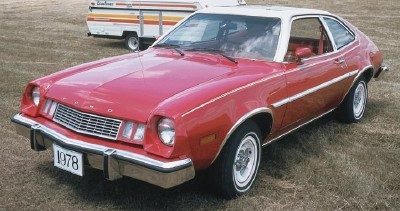
The 1978 model looks almost identical to the 1977 car. In fact, photos from previous years have been reused in sales materials. The only real changes are the exterior color changes and some changes to the exterior package.
The 1978 Ford Pinto was essentially a facelift of the 1977 model. Not much changed under the skin, but the exterior has been updated to be interesting to buyers. The headline news is the new Rallye edition, which is available as a sedan and a Runabout. Features black window trim, gold stripes, front spoiler, sport mirrors and four-spoke steel wheels wrapped in trim rings. Ford also launched a sedan delivery version of the Pinto wagon. It has a full length flat cargo floor between the metal side panels. Buyers can also add a safety screen to the rear window.
Under the hood, things remain largely unchanged. Ford changed the horsepower ratings only slightly. The power of the 4-cylinder in-line engine was reduced to 88 horsepower, 1 horsepower less than the previous year. The drop for the V-6 engine was even steeper, dropping 3 horsepower to 90 horsepower.
The real drama happens in the pricing. The entry-level Pony sedan is only $40 more than last year. What about other models? The price has also increased by more than $400.
Negative publicity and competition from imports eat away at Pinto’s customer base. The production volume fell below 190,000 units. In fact, while demand for sedans increased, wagon orders fell 34%. As a result, the Runabout became the most popular Pinto for the first time since 1972.
1979 Ford Pinto
By 1979, the Pinto’s days were numbered. The design was eight years old. In order to give it a little more market appeal, Ford asked for a facelift.
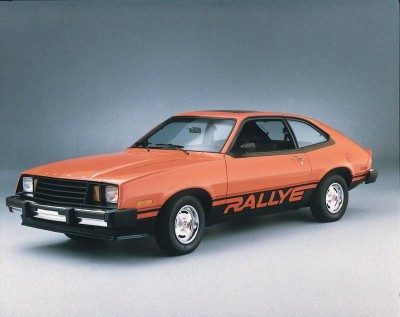
In 1979, the rookie couldn’t save the Ford Pinto. The death knell began to ring.
Rectangular headlights have been a popular trend in the US steel industry since the mid-1970s and have finally found their way into Runabouts. The grille has been replaced by a wide chrome plastic with four rows of beautiful squares. The bumper has been permanently updated with black plastic friction strips and vinyl bumper covers on both ends. The hood and front fenders have also been redesigned accordingly. Sedan and Runabout models are equipped with large frameless red plastic taillight lenses on the rear panel.
The interior instrument panel eventually abandoned the two round instrument panels that had housed all the instruments since 1971 and were replaced by square instruments. The speedometer is on the right. The fuel gauge and engine warning light are on the left side.
Ford is updating its collection with new equipment levels. Entry-level buyers bought the pony version of the station wagon. For those with deep pockets, there are other options.
The “European-style” ESS package is available for sedans and Runabouts. Silver paint and black accents surround the window frames, two racing mirrors, rear panel and body side moldings. The grill and headlight buckets are carbon. Stylish steel wheels and a front stabilizer complete the look. The body has a all-glass hatch.
The performance theme of the interior remains the same. Genuine leather-covered steering wheel. gear knob. A tachometer, ammeter and coolant temperature gauge have been added to the instrument cluster.
The Cruiser Wagon is still available in several stripe kits. Runabout also offers a similar kit. The hatchback is priced at $330 and includes black trim, multi-colored body side stripes, white-painted steel wheels, a sport steering wheel, and a gauge package.
The ads are aimed at young people. Most of the print ads feature Pinto models that are less than 30 years old. Even Squire, a family hauler showed a young couple with a small child next to their car.
Marketing cannot fix a product’s reputation. The civil jury awarded a huge reward. The leaked memo shows that financial decisions come before human lives. Prices continue to rise.
Production increased slightly in 1979 and was 199,018 units. This is the first time the base two-door sedan has been a popular leader since the Runabout in 1971.
In the late 1970s, America was in turmoil. Inflation is rampant. The fuel crisis of late 1979 caused the price of gasoline to exceed $1 per gallon in most areas. Gold rises to $800 an ounce as doomsday investors panic. Militants of Iran’s Islamic Revolution stormed the U.S. Embassy in Tehran and held Americans hostage for more than a year.
Cold War tensions continue. President Jimmy Carter announced a boycott of the 1980 Summer Olympics in Moscow to protest the Soviet invasion of Afghanistan.
Detroit is not very happy about this landscape. Henry Ford II captured the sentiment of the industry when he said, “American industry faces an economic Pearl Harbor.”
Free trade agreements allow Japanese manufacturers to gobble up market share. In the 1970s, imports grew to 26.7 percent of the total market. American car manufacturers suffered a total of 40 billion dollars in losses.
At the end of 1978, Lee Iacocca was fired from Ford Motor Company. A memo about Pinto’s gas-tank debacle landed on his desk. Henry Ford II was unhappy with the fines and punitive damages. Negative press threatens the entire family business. Henry and Lee did not see eye to eye. In the end, the man who last name was on the building won out.
More articles with pictures about great cars:
– Classic Cars
– Muscle Cars
– Sports Cars
– Consumer Guide Automotive
– Consumer Guide Used Car Search
The last year of the Ford Pinto
By the time Ford introduced the 1980 model in the fall of 1979, the Pinto had reached the end of its useful life. The front-wheel-drive Escort lurked behind the curtain, ready to take over the subcompact market niche. It was getting old, so Ford didn’t spend a lot of money to update it. The most significant mechanical change? The V-6 engine was removed from the options list. Last year, the only powertrain offered was a 2.3-liter four-cylinder.
The marketing team is still looking for ways to improve the aging platform. Runabout models can be equipped with the striped Rally Package, Cruising Package or ESS option package with spoiler. Station wagons haven’t disappeared either. it returned with its own Rallye variant. If you’re on a budget, pony versions of the sedan and wagon are still available.
But inflation is a harsher reality than styling. A look at the window sticker reveals that this car’s price has more than doubled since its debut ten years ago. Prices for the base Pony sedan start at $4,117. The Squire Wagon has a list price of $5,320 without extras, but almost everyone seems to opt for the extras.
Sales figures reflect the reality of consumers. While sedans made up the majority of orders, wagon production was at an all-time low. Only 39,159 wagons were produced. In 1980, total production was 185,054 units, bringing Pinto’s cumulative production to over 3.1 million units.
The Pinto Fire Controversy Explained
One of the car scandals of the late 1970s was the Ford Pinto explosion. A civil jury awarded huge damages to the victims, sparking a national debate. Is this media hype or is Ford purposely sacrificing people’s safety to save a few cents per vehicle?
The problems started early. As early as 1972, the National Highway Traffic Safety and Transportation Administration began receiving numerous reports. Drivers were rear-ended at low speeds. The impact does not necessarily break the frame or break the bones. Instead, the fuel tanks ruptured, and the cars burst into flames. Many of the victims were slightly injured in the accident itself, but eventually died from burns. In some cases, the body of the car buckled and the doors got stuck, trapping occupants inside the inferno.
By 1973, Ford may have known that the Pinto was a ticking time bomb.
Fire safety is not a new concern for Dearborn. The company’s CEO at the time, Arjay Miller, became a personal problem when the 1965 Lincoln Continental he was driving was rear-ended in traffic. As a result of the collision, the fuel tank exploded. Sparks flew and the back of the car turned into a torch. Miller escaped through the door unscathed, but the incident changed him. He called for safer fuel systems, tested suppliers and testified to Congress about Ford’s commitment to driver safety.
So why did the Pinto fail so miserably?
According to insiders, Ford began testing the rear end of the Pinto in December 1970, several months after production began. The results were grim. The tanks exploded in 11 coordinated incidents, eight of which caused fires. Only three tests did not result in a fire, and that was only because engineers consulting with suppliers to install prototype safety devices on specific vehicles.
The most effective solutions are simple. rubber bladder liner made by Goodyear. The outer tank can still rupture, but the bladder held the fuel. No leaks or fires. The cost? $5.08 per car.
There are cheaper but less durable fixes available. The extra steel plate behind the bumper insulates the tank from direct impacts. It can withstand impacts up to 30 mph, keeping your tank intact. Experts predict that installation costs will be $11 per vehicle.
Engineers identified two main reasons for the rupture. First, the fuel filler can break and spill gasoline onto hot parts. Second, the differential mounting bolts or the right shock absorber can puncture the fuel tank itself in the event of a crash.
The third fix solves both problems. The differential’s plastic spacer kept the bolts away from the tank. It costs less than $1.
However, company memos revealed during the civil trial show that these changes were discussed and rejected. The consensus is that shutting down and restructuring assembly lines would be too expensive. The damage to Ford’s reputation was caused by the documents published by Mark Dowie in Mother Jones magazine. They did a ruthless cost-benefit analysis of companies on human lives.
The calculations are cruel. A human life is worth $200,000. A serious burn injury came in at $67,000. With an estimated 180 deaths and 180 serious burns, the total liability to potential victims would be approximately $49 million. Redesigning and reworking the Pinto’s gas tank? The cost would be around $137 million.
Ford chose to pay the $49 million risk instead of the $137 million fix.
Pinto’s competitors have no such ambiguity. The Ford Capri, sold through Lincoln-Mercury dealers, had similar dimensions and construction, but the fuel tank was located higher and further from the rear bumper. This greatly improves safety in the event of a rear-end collision. Ford engineers believed that moving the Pinto’s gas tank higher would destroy the already small trunk. There’s no room to store golf clubs, let alone a relocated gas tank.
The human cost mounted. It was confirmed that 27 people died in the Pinto rear-end crash explosions. A landmark trial in California ended with a jury awarding $126 million to a boy who was severely burned and disfigured in such an accident. The driver died from her injuries several days later.
The case ends when the memorandum of responsibility is placed on the evidence table. An appellate judge reduced the award to $3.5 million. Still, it dwarfed Ford’s projected costs. Legal teams are scrambling to resolve pending cases outside the courthouse before the pattern became undeniable.
The trouble wasn’t over. In 1978, Elkhart County Prosecutor Michael Cosentino convened a grand jury to investigate the deaths of three girls in the Pinto fire. A grand jury agreed to charges of negligent homicide Ford executives for manslaughter.
Ford’s legal machine went into overdrive again. They noted that the accident happened on a notoriously dangerous road. They emphasized that the driver of the van that rear-ended the Pinto was under the influence of alcohol and drugs. They believe that these factors are more likely to cause accidents than the design of the car.
The trial judge ultimately dismissed the criminal charges. But the message is clear. This was a stark warning to Ford and the entire US industry about the limits of product safety calculations.
In September 1978, Ford finally recalled all 1.5 million 1971-76 Pinto sedans and Runabouts and 1975-76 Mercury Bobcats. This fix is a standard that engineers came up with many years ago. A deeper fuel tank filler neck to prevent cracking, a plastic shield between the differential and the tank, and a another deflector for the right rear shock.
It was too late for the 27 people who died. For families who had to fight in court that their loved ones died as a result of spreadsheet decisions, it is already too late. Pinto is still a textbook example of how not to balance safety against cost.
It turns out that station wagons have a distinct survival advantage. Additionally, 10 inches of rear fender and a repositioned fuel filler port make it less prone to rear-end collision damage than the sedan. These products are exempt from recall notices because they do not fall within the hazard areas that Ford strives to control.
However, the brand’s reputation was damaged. Lee Iacocca, who chaired the board during the crisis, doesn’t explain it clearly in his book “Speaking Out.” This strategy is very straightforward. They fell silent.
“We are being inundated with lawsuits from the Pinto case,” Iacocca wrote, recalling the legal onslaught of the late 1970s. “The gas tank fire was becoming a public concern.
Calculus is ruthless and purely economic. A negative jury can bankrupt the company. So they are all silent. They worry that any bullying can be seen as an admission of guilt. Victory in court was the only metric that mattered. Everything else is abandoned: transparency, public trust, moral responsibility.
result? Their silence did little to quell the rumours. It nourishes them.
Every time you refused to comment, it was interpreted as evidence that you had something to hide. The public’s suspicions are not only growing, but getting worse. They are calcified. The Pinto is no longer just a defective car. This is proof of corporate evil.
**More picture-rich articles about great cars: **
-
a classic car
-
muscle car
-
sports car
-
Consumer guide for the automotive industry
-
Consumer guide Search for used cars
Ultimate Ford Pinto: Pangra Anatomy
It’s a strange phenomenon in car culture that enthusiasts rarely leave basic models behind. This was also seen in Shelby’s Mustangs or Stroppe’s Broncos. So, naturally, there was an effort to add some serious performance to the Ford Pinto, a clunky little compact that Ford built to combat the wave of Japanese imports.
The stock Pinto is equipped with a 4-cylinder engine. It is very cheap. The repair is very easy. But there is no tension. Changing it requires a different kind of genius.
Step into Huntington Ford in Arcadia, California. This is not just a dealer. Huntington Ford was the top seller of Pintos in the United States during its first two years of existence, 1971-1972, with over 950 units. Sales manager Jack Stratton had a vision. He wanted Huntington Ford to become the center of the Pinto performance world. To achieve this, he brought along Ak Miller, a well-known figure in the Ford racing world.
After months of secret development, the result is revealed: Ford Pinto Pangra.
The name is very strange. The look was not. The Pangra features an aerodynamic front clip that extends the length of your vehicle by 10 inches. Looks very aggressive. Looks fast.
Huntington Ford sells the Pangra as a conversion kit in four trim levels.
Kit 1 is the visual basics. Includes fiberglass front, hood, fenders, cowl and working pop-up headlights. The silhouette changes completely.
Kit 2 adds drama to the interior. It is equipped with Recaro high back seats, Stewart Warner gauges and custom console trim. The vehicle has also been upgraded with machined mag-shot wheels wrapped in 175HR13 front and 185HR13 rear tires.
Kit 3 focuses on pavement. Spearco’s “Can-Am” suspension kit lowers the front end, adds a heavy-duty stabilizer bars and installs Koni shocks. This turned Pinto from a grocer to a corner carver.
Kit 4 is the nuclear option. It includes all of the above, plus a Spearco turbocharger bolted to the 2.0-liter four-cylinder engine.
Why bother building a Ford Pinto Pangra if you can’t make it faster than the competition? Motor Trend tested the concept with its own super-Pinto builds and two Porsche 914s (1.7-liter base model and 2.0-liter S version).
The results were one-sided. The turbocharged Pinto Pangra accelerates from zero to 60 mph in 7.5 seconds. The fastest Porsche 914-S managed 10.5 seconds.
The difference is not only in aerodynamics and tires. It’s all about raw power. The stock Pinto engine produces a roughly 86 gross horsepower. The Spearco turbocharger bumped that estimate to 285 horsepower. Despite its reputation, the Porsche 914-S’s gross SAE horsepower was only 91 horsepower.
Handling is another story. Pangra suspension upgrades and wider rubber provide incredible grip. A writer for Motor Trend noted that the car “clung like Saranwrap.”
The cost-benefit analysis also favors Ford. Delivered in Arcadia in 1974, the Pangra cost about $4,600. The base price of the Porsche 914 starts at $5,300. The S version adds another $288. You get almost three times the horsepower for less money.
Pangra didn’t last long. By the end of 1974, tighter emissions regulations and mandatory catalytic converters made it nearly impossible to legally certify a small, unrefined engines like the Pinto’s like the Pinto. The project has disappeared.
How many were actually built? Nobody knows. No records were ever kept. These faded into the shadows of early Turbo culture, leaving behind rumors, photos and memories that the Pinto could outrun a Porsche.
Pinto is more than just a car. It’s a cultural lightning rod. You can’t talk about the gas tank controversy without hearing whispers or seeing smoke. Still, it sold. There are millions of them. People bought them because they were cheap, small, and suited their fast-paced lifestyles. Despite the onslaught of critics, the buyer’s boxes continue to fill up.
Here are the raw numbers for the first 10 years. No spin. Just the numbers that defined its lifespan.
Early years (1971-1973)
Launched in 1971, the Pinto was the epitome of affordability. Ford stripped it down to its essentials. The goal was simple: beat imported products on price while keeping the footprint small.
Sedan is a mass marketer. It weighs just 1,949 pounds and starts at $1,919. That price tag got 288,606 units off the lot. Runabout The hatchback costs $2,062 and weighs 14 pounds. Still, 63,796 units were sold. What was total production in 1971? 352,402.
By 1972, the method was working better than anyone expected. A trolley option has also been introduced, which increases volume and offers practicality at the same time.
- Sedan: 2,061 lbs. / $1,960 / 181,002 built
- Runabout: 2,099 lbs. / $2,078 / 197,920 built
- Wagon: 2,283 lbs. / $2,265 / 101,483 built
Total production rose to 480,405 units. The wagon was a hit. It gave families a reason to look past the bigger sedans.
In 1973, a change took place. Basic prices have risen slightly, but demand continues to be strong. In terms of volume, station wagons became the dominant body model.
- Sedan: 2,115 lbs. / $2,021 / 116,146 built
- Runabout: 2,145 lbs. / $2,144 / 150,603 built
- Wagon: 2,386 lbs. / $2,343 / 217,763 built
Total production was 484,512 units. This van accounted for almost half of Pintos sales that year.
The Weight Creep (1974-1975)
The rules don’t care about sales numbers. They care about safety. By 1974, Ford had to add structural reinforcements to address growing concerns about rear-end crashes. The weight jumped.
The sedan weighs over 250 pounds and tops out at 2,372 pounds. Prices followed suit, rising to $2,527. Despite the high prices, 132,061 sedans found a buyer.
Runabout also got heavier. 2,406 lbs. Price: $2,676. Sales volume: 174,754.
Wagons are still our bread and butter. It weighed 2,386 lbs. The price is $2,343. A total of 237,394 units were sold. Total production in 1974 was 544,209 units. It was the peak of the Pinto’s pure volume.
Then came the oil crisis. 1975. Gas prices spiked. Buyers are looking for efficiency. Ford responded with the MPG package.
- Sedan: 2,495 lbs. / $2,769 / 64,081 units built
- Runabout: 2,528 lbs. / $2,984 / 68,919 units built
- Wagon: 2,692 lbs. / $3,153 / 90,763 built
Total production dropped significantly to 223,763 units. Why the decline? The market was shrinking. The crisis had hit hard. People stopped buying cars. Or they switched to smaller imports. Pinto felt pressured.
V-6 era and The Squire (1976-1978)
Ford tried to elevate the Pinto. They added a V-6 engine. Added deluxe finish called Squire with wood grain decals. This is an attempt to expand the brand upwards.
In 1976, the lineup exploded. You can get the Pony MPG Sedan (£2,450, $2,895) or the Runabout Squire V-6 (£2,656, $3,952). The data is confusing, as Ford may not have broken down sales in early reports by specific trims, but the totals are clear.
- Total number of vehicles: 92,264
- Total number of acknowledgments: 68,919
- Total number of trucks: 105,328
Total production in 1976: 266,511 units. The V-6 option is more expensive, but appeals to different types of buyers. Someone wants a surface, but that’s not all*