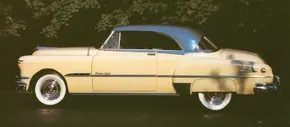
For anyone born after 1960, the idea that a hardtop could be considered exotic might seem silly. Today, they have become the norm. But things were different in the early 1950s. General Motors pioneered the pillarless concept in 1949 by introducing three small-volume “hardtop convertibles”. It’s rare to see a roofline that suddenly flows seamlessly from the windshield to the rear deck. This is very innovative. It’s very exciting.
GM’s product designers prefer exotic-sounding names. Buick looked at the Riviera from the coast of France and Italy. Cadillac borrowed the Coupe de Ville from a French nobleman. Oldsmobile kept it simple with the Holiday, but still conquered the postwar trek.
The 1949 model year was GM’s first post-war redesign. The A and B bodies received this treatment to mimic the sleek lines of the new 1948 C body Cadillac and Oldsmobile 98. Chevrolet and Pontiac performed best in terms of style. Our sales figures also reflect this. Production records were broken in 1949 and even higher in 1950, thanks in large part to the introduction of the hardtop.
Chevrolet offers only one pillarless coupé: the Styleline Deluxe Bel Air. Pontiac tried its best. There are at least four variations of the 1950-1952 Pontiac Catalina Hardtop. The name comes from Catalina Island, a romantic spot just 26 miles off the coast of Southern California. The name Bel Air refers to an area located just inland from Beverly Hills.
The changes concern the choice of interior and engine. The Luxury and Premium trim levels offer a combination of six-cylinder and eight-cylinder engines. All belong to the master’s family. These are strictly notched styles. Pontiac also had the Streamliner Six and Eight series. These included fast sedans and, surprisingly, a wagon.
Only one of the 1949 Catalinas was built. This is a show car. But it previews the production ceiling line. The simply wrapped three-element rear window provides a spectacular look for years to come.
Much of the design behind the 1949 series is pre-war. This is essentially a design effort, much like Chevrolet’s efforts. But it was enough to last until 1952. Everything that has happened in the last three years is an evolutionary change.
Evolution of the Pontiac Hardtop
The basic technology has not changed much. The chassis and transmission were kept. What has changed is that the body lines are subtle. The pillarless design is still the star. Provides unobstructed visibility to both sides of the vehicle. It’s easier to get in and out. Eliminating the B-pillar has a practical benefit by widening the door opening.
For buyers in the early 1950s, it wasn’t just a matter of style. It was about status. A car that looks like a convertible but has a solid roof makes a statement. It signifies prosperity and modernity. The Pontiac Catalina took advantage of this. This is not the only hardtop available, but it is one of the most famous.
The 6-cylinder engine offers enough power for daily driving. The eight-cylinder option offers more power. Both have the same basic transmission and suspension. Reliability is pretty good. Maintenance is very easy. By today’s standards this is not a high performance machine. It was everyday transport with a flair.
The market also reacted. Sales remained strong throughout the first quarter
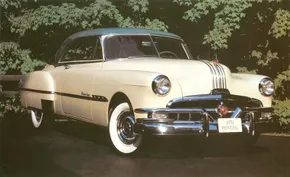
Design and cost development of luxury
The styling changes to the Pontiac Catalina between 1950 through 1952 were subtle but unique. The front end has a more aggressive grille pattern. The traditional horizontal bars and deep V-shaped center badge remain unchanged, giving the car a sharp overall impression. The “Silver Streak” stripes on the hood and trunk remain standard. They had been a staple since the 1930s.
The hood ornament haven’t changed much either. The Pontiac Chief sat tall and serious. When you turn on the headlights, the bronze figure lights up. It was a neat trick back in the day.
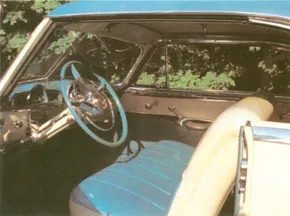
Pontiac also used fancy marketing names for its features. The interior features “Vision-Aire”. This comes from the larger windshield. It’s curved slightly but still divided. They call it “Safe-T-View”. The trunk is “Carry-More”. Doors were “Easy-Access”.
There’s also a dashboard-mounted “fingertip” starter. The steering system is “Tru-Arc Safety Steering”. It’s slower than before. But the name seems safe.
Under the metal: chassis and horsepower
Pontiac’s major mechanical upgrade took place in 1949. All models now have a standardized wheelbase of 120 inches. Previously, it was available in 119-inch and 122-inch sizes. The X-member frame uses slimmer channel-section side rails of the channel section. The telescopic shock absorber is went all-around. Pontiac named it the “Travelux Ride”.
The engines stayed old-school. L-head sixes and eights ran smooth. They were reliable.
1950 Power Figures
6: 90 horsepower
8: 108 horsepower
1951 Power Figures
*6: 96 hp (+6)
* 8: 116 horsepower (+8)
1952 Power Figures
6: 100 horsepower
8: 118 horsepower
The optional high compression head adds 4 horsepower. It requires premium fuel. When this option was selected in 1952, the eights was rated at 122 horsepower.
Transmission selection and body style changes
The Hydra-Matic Drive is a game changer. Pontiac offered it in 1948 for $185. In 1949, the price dropped to $159. By the early 1950s, 78% of total production was equipped. It boosted sales significantly.
Other body styles faded. Fastbacks are falling out of favor. Pontiac discontinued the Streamliner series in 1952 and added wagons to the Chieftain series.
The Catalina tells a different story. Hardtop sales were strong from the start. Numbers only went up. They cost less than $100 less than a real convertible. Buyers don’t care.
While production numbers aren’t broken down by body style, we do know that two-thirds of Catalinas were Eights. Buyers wanted power. They want luxury. They got both.
Interior design tips and market position
Early GM hardtops were well equipped. Vinyl and leather upholstery is standard. A horizontal strip headliners the seam of the headliner. It creates a “convertible feeling”. This idea was promoted by Harley Earl, GM’s chief designer. He wanted an open-air feel without a roof.
The first Catalina marked a shift. Pontiac was no longer a “super Chevy.” They have established their own luxury identity. This strategy proved to be profitable. Hardtops and automatics paid off.
1950-1952 Pontiac Catalina Specifications
Check the next page for the full spec sheet.
For more information on cars, see.
-
a classic car
-
muscle car
-
sports car
-
Consumer guide Search for a new car
-
Consumer guide Search for used cars
1950-1952 Pontiac Catalina Specifications
Pontiac didn’t reinvent the wheel with the 1950 1951 1952 Pontiac Catalina. They built it for luxury. The name itself sounds exotic, almost European, but it fits perfectly. But what about under the hood? This is pure Pontiac standard issue. They use existing engines. There are no custom mill here. The proven and reliable in-line engine is tuned for comfort, not the track dominance.
The basic power comes from an L-head six-cylinder in-line engine. It displaced 239.2 cubic inches and the bore and stroke are 3.56 x 4.00 inches. Horsepower starts to be moderate.
- 1950: 90 horsepower
- 1951: 96-100 hp
- 1952: 100-102 horsepower
For more grunt, you can opt for the L-head V8. The displacement jumps to 268.4 cubic inches. Bore and stroke changed slightly to 3.38 x 3.75. Again, the numbers are growing rapidly.
- 1950: 108 horsepower
- 1951: 116-120 hp
- 1952: 118-122 hp
Power is transferred to the road via a 3-speed manual transmission. This is standard. But if you have the money, you can order a 4-speed Hydra-Matic. This is optional. A fancy touch for a luxury cruiser.
Chassis and Dynamics
Driving comfort is more important than lap time. Pontiac knows it. The front suspension uses upper and lower arms with built-in coil springs. This was advanced at the time. Holds the wheels in place without making the ride jarring.
The rear suspension has also been simplified. A live axle using a semi-elliptical leaf spring. Traditional. Solid. Holds the weight of the car well.
The four corner brakes are drum type. No discs yet. Not in this class. Stop when you need to.
The wheelbase is exactly 120.0 inches. This is not a limousine. But it is long enough to stretch.
Weight ranges from 3,469 to 3,573 pounds. It’s too heavy for a sports car. Light for a sedan. The balance tilts towards comfort.
Speed data reflects this reality. Top speed is 80-95 mph. By today’s standards, that’s not fast. Not even by 1960s standards. But that’s enough.
Acceleration from 0-60 mph takes 13-15.5 seconds. That’s a leisurely pace. You didn’t race the Catalina. You cruise through it.
Why is it important?
The 1950 1951 1952 Pontiac Catalina was not built to win races. It’s all about arriving in style. The choice of engine reflected Pontiac’s strategy. Take what works. Please elaborate on that. It is sold as a luxury product.
The Hydra-Matic transmission is key.