How #So-Cal Speed Shop brought back hot rod legend Pete Chaplin
It was 1997 and Pete Chaplin had already earned a reputation as a serious rod builder. He wants to bring back the So-Cal Speed Shop name. Rights owned by Alex Xydias. Xydias replied. This deal brings one of hot rodding’s most iconic brands back from the grave.
Shapley does more than just keep the lights on. He made it flourish.
The brand is currently headquartered in Pomona, California. It also has six licensed stores. They don’t just sell nostalgia. They move traditional performance parts. T-shirts are available. Posters. Products with such a history.
Flagship sports car
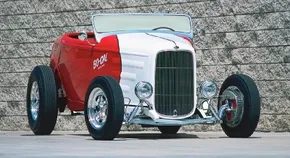
Our store doesn’t just sell parts. we build cars. We specifically built the So-Cal Roadster.
These are not just dealerships. Each licensed location is given a workhorse vehicle. Located in the showroom or at the event. Its mission is simple: to attract customers. Demonstrate your brand’s capabilities. Prove that the parts work.
The cars displayed in the gallery are not unique in their construction, but they are special. It reflects the heritage of California hot rod heritage. This is Chaplin’s first project at Pete’s Hot Rod Shop. The Roadster serves the same purpose. These are proofs of concept.
And they drive well. Really good.
Why is it important?
Most brands sell kits. It’s up to you to put it together. I want it to fit. Southern California builds cars for you. At least they built a model. Roadster shows its technical quality. Show fit and finish.
This is more than just a logo. It’s just a guideline. Chaplin revived the name. The Roadster retains its relevance. They sat there shining in the light. Wait for the next hobbyist to ask, “How do I get one?”
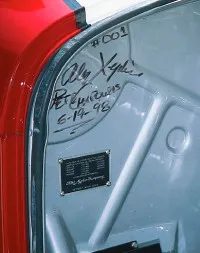
Inside Pomona: Genuine Southern California Roadster #1
Head to Pomona. This is the beginning of a family. Southern California Roadster No. 001 sits like a temple of tradition, even though its build sheet is full of modern flair. A tribute to Clyde Sturdy’s Class B hot rod. In 1951, the car reached 162 mph at Bonneville. This car? Built with state-of-the-art hardware.
The frame is a Southern California step frame. The frame is made by hand from Brookville steel. It’s modeled after a ’32 Ford sports car, but with modern technology. Things get complicated behind the scenes. Quickly.
The original specs listed a powerful 390-horsepower 355-cid Chevrolet compact V-8. For most hobbyists, this is more than enough power. But Southern California hot rodders never slowed down. They want hotter builds.
Redeem to get more power-ups
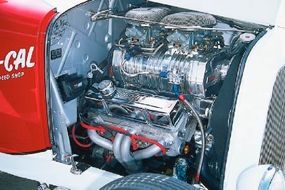
So they removed the stock engine. It was replaced by another Chevrolet 355, but this one had been heavily modified. The highlight is the Holley 420 Mega Blower Supercharger. It’s not a small device. This is a critical induction component.
The setup includes two Holley 600-cfm carburetors. Yes, the blower has two carbs. This is a complex fuel delivery system that requires precise coordination. Breathing is controlled by a Holley aluminum intake manifold. These are not cast iron. Designed to allow air to circulate faster than the original iron.
The hydraulic roller cam is located inside the cylinder block. This increases durability and performance throughout the rev range. As a result, the 355 does more than just run. It roared.
Why this structure matters
You might wonder why you should trade a good engine for a better one. The answer is simple. Performance is a moving target. The original 390 horsepower was impressive. But with the introduction of the Mega Blower and twin carburetors, power delivery changed. Become more aggressive. More directly.
It’s the Southern California way. They respect history. Sturdy’s 162 mph run was legendary. But they didn’t stop there. Uses modern parts. Brookville steel. ladder-frame. Fan. It’s a fusion of old school aesthetics and new design.
Southern California Roadster No. 001 is more than just a tribute. This is a statement. It says that while the style may be retro, the presentation should be up-to-date. If it is not modern, install a bigger blower.
Power transmission and suspension dynamics
The powertrain sends 540 horsepower to the 9-inch Ford rear end through a B&M 4-speed automatic transmission. That’s a lot of power for a car that looks like it was released in 1955.
The handling is based on a combination of I-beam front axle and hairpin radius rods. At the rear, transverse springs with ladder bars are used to hold the platform in place. Vintage hardware. it works. But it’s not perfect.
The weak point is the 31″ tall, 16″ diameter bias-ply Firestone wheels. Provides minimal grip with very high torque. Your car may lose traction before you hit the gas pedal. Their performance was poor. Fits perfectly with Halibrand style wheels.
Pricing and Availability
You paid $125,000 for this piece of nostalgia. This figure assumes a smaller engine. Higher temperatures increase costs.
A specific example is the So-Cal SpeedShop in Southern California. You can see it there. If you have the money, you can also order a custom version.
Click here for more information
- Hot Rod History
- Customized car profile
- hot rod profile