They are already moving.
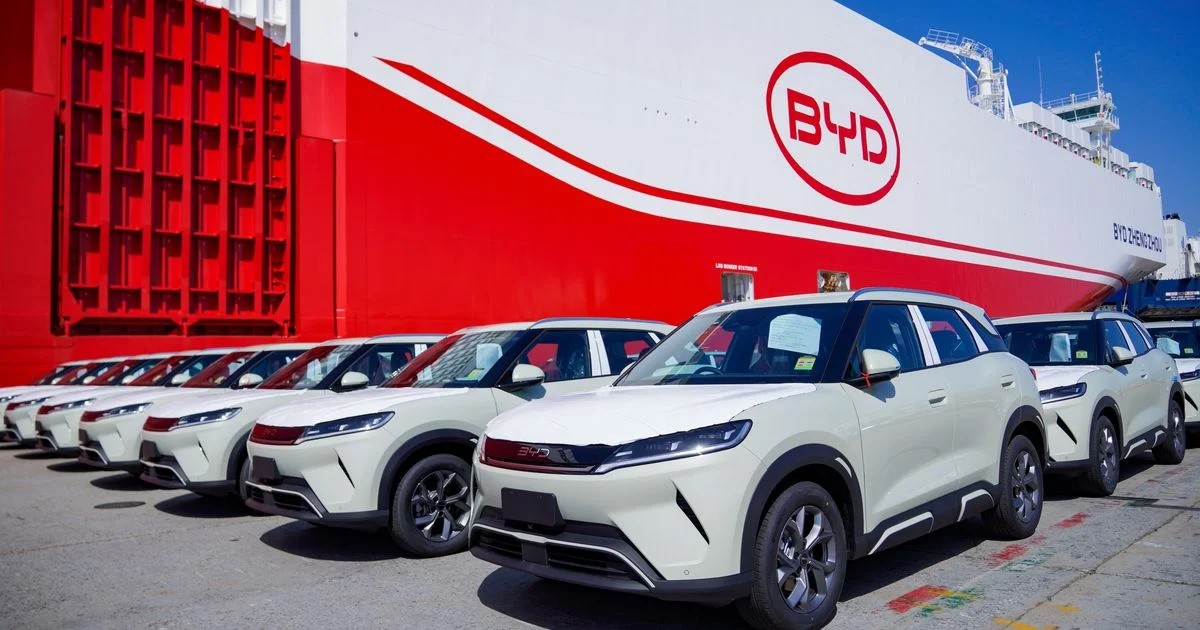
A massive flotilla of new cars, just under 5000 of them, has left Chinese waters for Melbourne. It is a special shipment. The vessel? The BYD Zhengzhou.
One of eight roll-on/roll-off ships owned entirely by BYD. No middlemen. Just direct logistics.
“BYD is demonstrating that it can act fast.”
— Stephen Collins, COO at BYD Australia
Collins is right. The ship leaves Shanghai, aims for Victoria, then pushes on to Sydney and Brisbane by early June 2026.
What’s inside the hull matters.
The manifest lists 4,810 vehicles. That number sounds bureaucratic. It is not. It represents a hunger in the Australian market that isn’t going away.
More than half the load is electric SUVs. The Atto 2 and Sealion 7 make up over 2000 units alone. But it isn’t just one flavor of green car.
Scroll through the cargo list and you see the diversity:
- Denza B5 : Off-road tough.
- Denza D9 : A people mover for families who want premium space.
- Atto 1 : The smaller sibling to the Atto 2.
- Shark 6 : Because Australia still loves utes, even if they run on plug-in hybrids.
The video from the loading dock shows the sheer scale of it. Rows of steel and glass being fed onto the deck like livestock. Except these are the ones eating Toyota’s lunch.
Why now?
Fuel prices spiked. Record highs. Australians panicked, bought EVs, and then had to wait. BYD promised 30,000 cars for May and June. They delivered 7,702 in April.
That broke their record. Again.
Previously the best month was March. Before that? February. A streak.
They sat at second place overall in April. Behind only Toyota, who sold 15,000+ cars. BYD sold less than half that, yet they felt like they owned the street.
Is it sustainable?
Inventory levels used to be a problem. You remember this. Last year, there were photos of brand new BYDs sitting in a theme park parking lot in southern Sydney. A circus of unused metal.
Gone now.
The surge cleared the stockpile. Now the bottleneck is production and shipping. That is why Collins brags about “vertical integration.”
It is corporate speak for we control everything. From the factory floor to the ship’s wheel. If they need to send a ship, they send a ship. If they need more batteries, they make them.
The current best sellers tell you what the country wants.
The Sealion 7 leads with over 6,000 deliveries this year. The Shark 6 ute is a close second, proving people don’t have to sacrifice tail space to go hybrid. Then the big boys: Sealion 8 and Sealion 6.
Even the small Atto 2 moves 2,000+ units.
Denza, the premium arm, started delivering the B5, B8, and D9 earlier this year. They are on the same ship now. Blending luxury with volume.
Ford sits fourth in the yearly sales charts, just a few thousand ahead of BYD’s 25,000 cumulative deliveries.
Can BYD catch Ford? Maybe. Can they dethrone Toyota?
Probably not anytime soon.
But when that Zhengzhou unloads in Melbourne, the pavement won’t know the difference. The cars roll out. The keys hand over.
Demand outpaces supply. So BYD brings its own port to your doorstep.