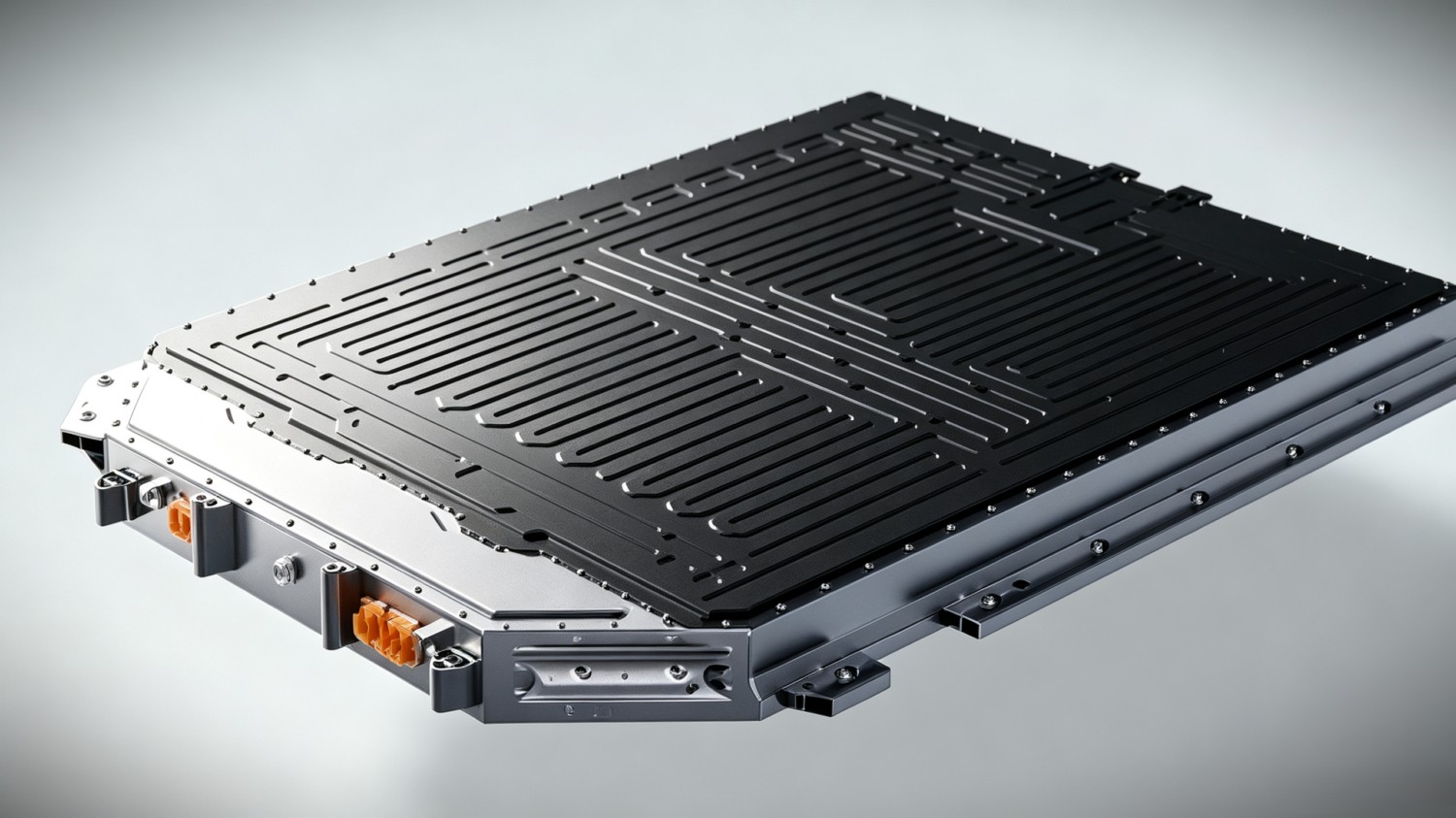
It’s officially past the 1,000 kilowatt mark. Geely just got certification for 1093 kW on their new Aegis Gold Brick battery. That’s peak vehicle-side input. Confirmed by the China Automotive Technology and Research Centre during strict state testing.
Why the rush? The range wars are stale. Everyone knows how to pack density. Now it’s about how fast you can refuel from the grid. This is where Geely thinks it has the edge. Short-blade lithium iron phosphate chemistry, running on a 900V architecture. They aren’t just throwing volts at it though. Thermal management is the real boss level here.
Cold Blood Under Pressure
Charging this hard turns the battery into a heater. A nasty one.
China’s national regulation says you stay below 65°C. Exceed that, you’re flirting with degradation, acid buildup, the usual chemical rot. Geely says their cells peaked at 64°C. Just barely in.
They did this by going aggressive with cooling.
Dual-sided 3D liquid cooling. The refrigerant wraps around the individual cell groups like a snug jacket.
- Surface area for heat exchange? Doubled.
- Path length for thermal conduction? Halved.
Software sits in the loop too, scanning telemetry multiple times a second. If a hotspot tries to form, the system diverts flow before it expands. No guessing.
“Maintaining the limit isn’t just about passing a test; it’s about keeping the chemistry from eating itself alive at the edge.”
Fast Numbers
The hardware doesn’t sit idle. It powers the Lynk & Co 1 series, specifically the new EVs hitting domestic shelves. The entry variant starts around 169,90 yuan, which runs roughly $25,000. Not bad for tech that shreds charging times.
Look at the metrics.
- 10% to 70% : 4 minutes 22 seconds. (Beating their own 9-minute preview targets).
- 10% to 96% 8 minutes 42 seconds total.
That’s about 2 km of range added per second. Do the math on a lunch break. You leave the coffee shop. You walk back. The car is ready.
Is this viable outside China? Maybe. Maybe not yet. But the speed is undeniable.
Chipping at BYD’s Walls
BYD isn’t sitting still. Their infrastructure boasts 1,500 kW terminals. On paper, they hit a 5-minute charge benchmark using that external brute force.
Geely’s strategy is different. Instead of forcing the station to push harder, they make the car accept faster.
- BYD approach : Huge station power, stress the cell interface.
- Geely approach : Optimize internal acceptance, protect the cell.
This protects the battery lifespan. The chemistry promises up to 4,500 full cycles. That projects to over 1 million kilometers. It outlives the chassis itself.
Geely even open-sourced 12 patents for the chassis structure. Let other makers use it. Accelerate compatibility. It’s a power move, plain and simple. The industry is splitting between who can build the biggest pump and who can build the thinnest straw.
For now, the straw wins on efficiency.
Whether that changes when the weather drops below zero is another question entirely. The lab results are clean. The streets are messy.