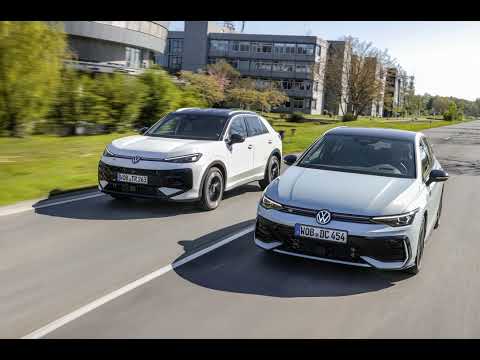
Volkswagen is expanding its electrified lineup by introducing a new full-hybrid powertrain for two of its most popular models: the Golf hatchback and the T-Roc SUV. Expected to arrive by the end of 2026, these models represent a strategic middle ground in the brand’s transition toward electrification.
The New Powertrain: How It Works
Unlike “mild hybrids” (which only assist the engine) or “plug-in hybrids” (which require a plug), these new models will be badged simply as “Hybrid.” The system utilizes a 1.5-liter turbocharged petrol engine paired with an electric motor and a compact 1.6kWh battery tucked into the boot floor.
The technology is designed to mimic the highly efficient e:HEV system found in the Honda Civic. This approach prioritizes electric driving through a specific operational logic:
* Low Speeds: The vehicle operates primarily as an electric vehicle (EV).
* Normal Driving: The electric motor drives the wheels while the petrol engine acts as a generator to charge the battery.
* High Speeds (above 40mph): The petrol engine takes over the primary driving task, while the electric motor acts as a “torque filler” to smooth out acceleration.
While Volkswagen has not yet confirmed the exact electric-only range, the system is designed to maximize efficiency without the need for external charging stations.
Positioning in the Volkswagen Lineup
The new hybrid option fills a critical gap in Volkswagen’s current portfolio, offering a different value proposition depending on the model:
- For the T-Roc: The hybrid will serve as the top-tier powertrain in the SUV’s lineup.
- For the Golf: It will occupy a middle ground, sitting between the entry-level eTSI mild hybrids and the high-end eHybrid/GTE plug-in hybrids.
The system will be available in two distinct power outputs: 136bhp and 170bhp. While the more powerful 170bhp version is confirmed for global markets like the US, the specific configuration for the UK market remains unannounced.
Why This Matters: The “Sweet Spot” of Electrification
This move highlights a growing trend in the automotive industry: the demand for a “no-compromise” hybrid.
As many consumers hesitate to adopt full Battery Electric Vehicles (BEVs) due to range anxiety or Plug-in Hybrids (PHEVs) due to the inconvenience of daily charging, the full hybrid offers a solution. It provides lower emissions and fuel costs than a standard petrol engine, but without the lifestyle changes required by a plug-in or a fully electric car. By offering a system that is cheaper to purchase than a PHEV but more efficient than a mild hybrid, Volkswagen is targeting the pragmatic driver looking for improved economy without the “plug.”
Summary
Volkswagen’s new “Hybrid” models aim to bridge the gap between traditional petrol engines and full electrification, offering improved efficiency through a sophisticated, Honda-style dual-motor system. These models are slated for release in the fourth quarter of 2026.