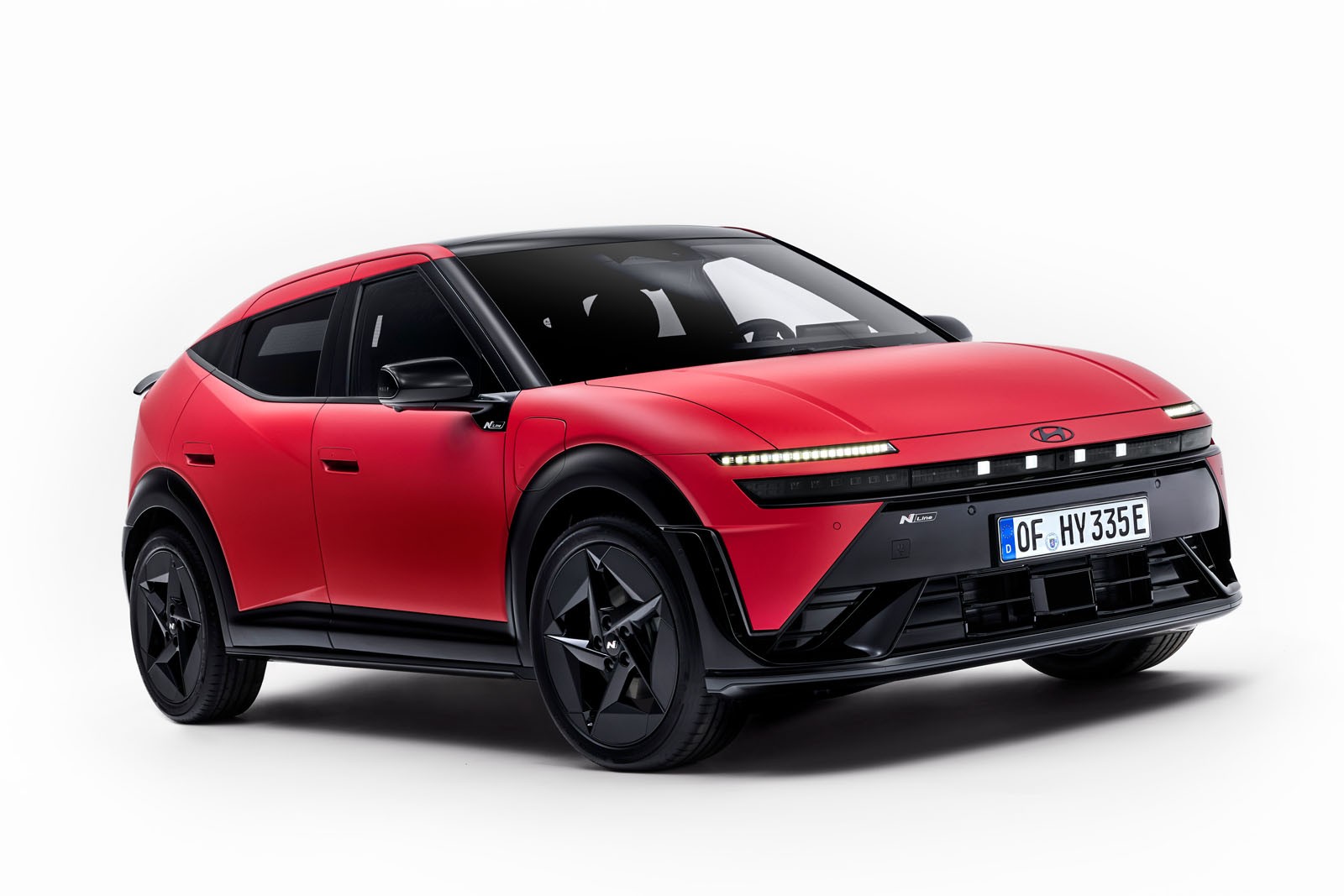
Hyundai has officially revealed the Ioniq 3, a new electric hatchback designed to compete in the increasingly crowded entry-level EV segment. Set to arrive in the UK later this year with a starting price of approximately £25,000, the Ioniq 3 aims to bridge the gap between compact city cars like the Renault 5 and larger hatchbacks such as the Volkswagen ID.3.
The “Aero-Hatch” Concept
Rather than following traditional hatchback styling, Hyundai has branded the Ioniq 3 an “aerohatch.” This design philosophy prioritizes aerodynamic efficiency to maximize battery range—a critical factor for consumers transitioning from internal combustion engines to electric power.
The vehicle features several distinct aerodynamic elements:
– A raked roofline: Reminiscent of the classic Hyundai Veloster, tapering toward the rear.
– An integrated duck-tail spoiler: A prominent rear lip molded into the boot edge (with a sportier extension available on the N Line trim).
– Minimized frontal area: A sculpted front end designed to slice through the air with minimal resistance.
These design choices have resulted in a highly competitive drag coefficient of 0.26, outperforming the Renault 5 (0.29). This efficiency directly impacts the vehicle’s utility, offering two range options depending on the battery choice:
– 42.2kWh battery: Up to 208 miles per charge.
– 61kWh battery: Up to 309 miles per charge.
Balancing Form and Function
While the radical silhouette aids efficiency, it presents practical challenges that Hyundai engineers had to address through clever packaging. The sloping roofline inherently reduces interior volume, affecting both rear headroom and luggage capacity.
To mitigate these compromises, Hyundai implemented several solutions:
* Increased Cargo Capacity: Because the front-wheel-drive layout and small nose preclude a “frunk” (front trunk), engineers utilized the space under the floor. This increases the boot capacity from 322 to 441 litres, a strategy similar to the “Gigabox” found in the Ford Puma Gen-E.
* Optimized Headroom: To reclaim lost space caused by the raked roof, designers “carved” into the interior headlining to provide extra millimeters of clearance for rear passengers.
A European-Centric Interior
The Ioniq 3 marks a milestone for the brand as Hyundai’s first electric car designed in Europe. Utilizing the new “Art of Steel” design language, the cabin focuses on a minimalist, driver-centric philosophy.
The interior layout follows a “hands on the wheel, eyes on the road” approach. By simplifying the dashboard and reducing digital distractions, the designers aim to create a more intuitive and focused driving experience.
Why this matters: As the EV market matures, manufacturers are moving away from “one-size-fits-all” designs. The Ioniq 3 represents a trend where efficiency is no longer just about battery size, but about radical body shaping to squeeze more distance out of smaller, more affordable battery packs.
The Hyundai Ioniq 3 is a strategic attempt to offer high-efficiency, stylish electric motoring at a competitive price point, balancing aerodynamic performance with clever interior engineering.