Hybrid drivers love the idea of zero-waste driving. You stop at a red light. The gas engine cuts out. You creep forward on electricity alone. Zero emissions. Zero wasted fuel. It’s efficient. But what if that efficiency didn’t stop when you killed the engine?
Most people assume plug-in hybrids solve this. You plug them in. The battery fills. You drive further before the gas motor coughs to life. It works. But it relies on the grid. And the grid is dirty. Most power comes from burning coal. You’re just shifting pollution from your tailpipe to a smokestack hundreds of miles away.
Some automakers are looking up. Way up. To the sun.
Solar panels aren’t new technology. We’ve been putting them on roofs to dodge utility bills for decades. But putting them on cars? Historically, it was too expensive. The tech didn’t justify the cost. That’s changing. Toyota. Audi. They are integrating photovoltaic cells into hybrid models.
Gas prices are volatile. Environmental concerns are real. Solar might seem like a magic bullet for fuel economy. But does it work? Can it power the electric motor? Or does it just run the radio and AC? What’s the price tag? Is it worth the premium?
Let’s break down the reality of solar-equipped hybrids.
The Physics of a Solar Roof
You might think a car roof is huge. It isn’t. Compared to a house, it’s a postage stamp. A typical sedan roof offers about 1.5 to 2 square meters of surface area. Even with high-efficiency panels, you’re not generating megawatts. You’re generating watts. Maybe 100 to 200 watts under perfect peak sunlight.
This matters. You can’t power a 300-horsepower electric motor with a solar roof. The math doesn’t work. The energy density of sunlight over a car’s footprint is too low.
So, what do these panels actually do?
They don’t replace the grid. They don’t replace the gas engine. They trickle-charge auxiliary systems. Think of them as a way to keep the battery topped off without idling. Or without plugging in.
Toyota: The Pioneer of Practical Solar
Toyota was early to the party. The Prius Prime (a plug-in hybrid) featured a solar roof option years ago. It wasn’t just a gimmick. It was integrated into the vehicle’s thermal management system.
Here’s the specific utility: The solar panels power the ventilation fan. When you park in the sun, the cabin can get hot. The solar panel runs a small fan that circulates air. It keeps the interior cooler. This saves the main battery from having to power the air conditioning immediately when you get back in. That small efficiency gain extends range.
But it goes further. The solar system also charges the 12-volt auxiliary battery. This is the battery that starts the car and runs lights, infotainment, and locks. In a traditional gas car, the alternator does this while the engine runs. In a plug-in hybrid, the engine isn’t running when parked. A dead 12-volt battery is a headache. Solar panels prevent this. They keep the small battery healthy.
“The solar roof doesn’t add significant range to your electric drive. It adds convenience and protects your vehicle’s health when parked.”
Audi: Sunroof as Energy Harvester
Audi took a different approach with the A7 e-tron concept and later integrated similar tech into their plug-in hybrids. They didn’t just put panels on the roof deck. They embedded photovoltaic cells directly into
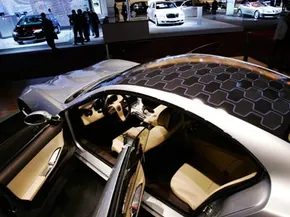
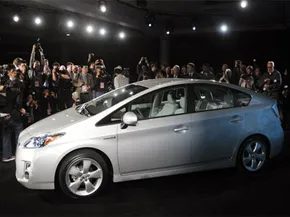
Toyota and Fisker aren’t kidding around. They’re putting photovoltaic cells on roofs. The third-generation Toyota Prius gets the treatment. So does the Karma, that plug-in hybrid from Fisker Automotive. Even the Audi A8 —a beast of a sedan running on gasoline—wields a solar roof.
It sounds like sci-fi. It feels like the holy grail of green driving.
But here is the cold, hard reality. The big question haunting every OEM right now is simple. How much extra power does that panel actually give you? Can you really boost electric range? Can you make eco-driving sunnier and more effective?
The answer is mostly no.
For the 2010 Prius, an unnamed Toyota source called the move a “symbolic gesture.” Not a propulsion tool. A gesture. Moving a vehicle using only sunlight is physically difficult. The energy density just isn’t there. Solar panels generally have zero impact on a hybrid’s fuel efficiency. You aren’t getting miles per gallon back. You aren’t extending your EV range.
The materials don’t help. Silicon is expensive. Automakers are trying to cut costs, not inflate them with pricey photovoltaics.
This isn’t new. Mazda tried it in 1992. The Eunos 800 and Sentia rolled off the line with rooftop cells. It failed. The systems were too costly. Drivers didn’t want them. The market rejected it.
So if the roof doesn’t move the car, what does it do?
It cools you.
Kyocera Corporation built the panels for the Prius. They don’t spin the wheels. They power the air conditioning. Part of the A/C unit, at least. It’s an option. You pay extra for the privilege of staring at the sun while your cabin gets chilled.
Smaller systems work better. That’s the Audi A8 lesson. The A8 uses the solar array to run its A/C. Conventional gasoline engine. Standard car. But the solar input is minor. It’s a helper. Not a hero.
The physics are unforgiving. You can’t power a 3,000-pound car with a sheet of silicon. You can maybe run a fan. Maybe run a compressor. That’s it.
“It’s very difficult to generate enough power to move a vehicle with energy from the sun’s light.”
We want it to be more. We hope it’s more. But the numbers don’t lie. Silicon costs too much. Sunlight is too diffuse. The tech is still in its symbolic phase.
If you want actual range extension, you need bigger batteries. Not bigger roofs.
Follow the links if you’re still curious about hybrid cars or green driving. The Venturi Astrolab has a different approach. But for now, the solar roof is just a fancy sunshade.